- English
- French
- German
- Portuguese
- Spanish
- Russian
- Japanese
- Korean
- Arabic
- Greek
- German
- Turkish
- Italian
- Danish
- Romanian
- Indonesian
- Czech
- Afrikaans
- Swedish
- Polish
- Basque
- Catalan
- Esperanto
- Hindi
- Lao
- Albanian
- Amharic
- Armenian
- Azerbaijani
- Belarusian
- Bengali
- Bosnian
- Bulgarian
- Cebuano
- Chichewa
- Corsican
- Croatian
- Dutch
- Estonian
- Filipino
- Finnish
- Frisian
- Galician
- Georgian
- Gujarati
- Haitian
- Hausa
- Hawaiian
- Hebrew
- Hmong
- Hungarian
- Icelandic
- Igbo
- Javanese
- Kannada
- Kazakh
- Khmer
- Kurdish
- Kyrgyz
- Latin
- Latvian
- Lithuanian
- Luxembou..
- Macedonian
- Malagasy
- Malay
- Malayalam
- Maltese
- Maori
- Marathi
- Mongolian
- Burmese
- Nepali
- Norwegian
- Pashto
- Persian
- Punjabi
- Serbian
- Sesotho
- Sinhala
- Slovak
- Slovenian
- Somali
- Samoan
- Scots Gaelic
- Shona
- Sindhi
- Sundanese
- Swahili
- Tajik
- Tamil
- Telugu
- Thai
- Ukrainian
- Urdu
- Uzbek
- Vietnamese
- Welsh
- Xhosa
- Yiddish
- Yoruba
- Zulu
How Does the GMS 250-5X4X14 Centrifugal Pump Handle Slurry?
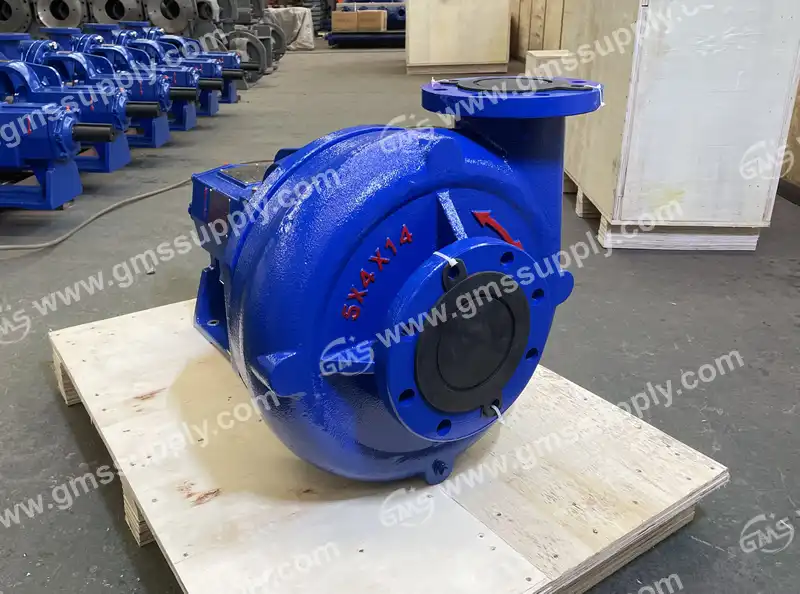
The GMS 250-5X4X14 Centrifugal Pump works well with slurry thanks to its special blade design, long-lasting building materials, and advanced sealing technology made just for rough, particle-filled fluids. This pump doesn't clog or wear down easily and keeps the same flow rate even when conditions are tough. This makes it perfect for filling, solid control systems, and oil and gas drills where dependability is very important.
Introduction
Dealing with slurry is still one of the hardest parts of managing industrial fluids in many fields. When working with slurry—high-density fluids full of abrasive particles that speed up wear, lower efficiency, and raise maintenance costs—conventional pumping equipment often has trouble. This is especially true when dealing with drilling mud in the oil and gas industry or abrasive fluids in chemical processing plants.
GMS has been helping procurement managers, maintenance engineers, and technical decision-makers get reliable equipment that works well under pressure for more than ten years. We know what these practical problems are and how to solve them. The GMS 250-5X4X14 Centrifugal Pump (P/N: GMS-250-5X4X14) shows our dedication to providing advanced slurry-handling technology that directly solves these issues. This complete guide will show you how this pump works, why its design is important, and how it can be a key part of your fluid control systems.
We want to give you clear, useful information that helps you make sure you're getting the best deal on our products by knowing the technical benefits that make them better in terms of sturdiness, dependability, and total cost of ownership.
Understanding the Challenges of Slurry Handling with Centrifugal Pumps
Slurry operations have special problems that make them different from normal fluid handling tasks. When you mix floating solids, particles of different sizes, and high viscosity, you get conditions that quickly break down standard pump parts.
Particles in the slurry are rough and scratch interior pump parts, especially the blade and housing of a centrifugal pump. This steady grinding wears away at metal surfaces, changes the gaps, and makes the hydraulics work less well. When digging for oil, the mud used in the pumps can contain rock chips and solids from the formation. If the equipment isn't properly designed, this wear can get so bad that the pumps stop working completely within weeks.
In situations involving slurry, the mechanical seal system is a major weakness. Particulates can get inside seal faces and score them, building up heat that causes the seal to fail completely. Based on our field experience, we know that regular ceramic-carbon seals can't handle the shock loads that come up during drilling. That's why our GMS 250 Centrifugal Pumps have tungsten carbide seal faces that can handle these tough conditions.
Dense slurry can cause grit to build up in pump volutes and outlet tubes, which slows down flow and uses more energy. Uneven loads on the turbine vanes are caused by particles that are spread out in different ways. This causes vibrations, bearing stress, and early component failure. These problems have a direct effect on working stability and cause more unplanned downtime, which raises repair costs and makes equipment less useful overall.
Knowing about these problems helps explain why different types of pumps are needed. Generic centrifugal pumps just can't provide the dependability that factories need when working with rough, particle-filled fluids for long periods of time.
Design and Technical Features of the GMS 250-5X4X14 Pump for Slurry Applications
The GMS 250-5X4X14 Centrifugal Pump was designed by engineers who have a deep knowledge of how slurries move and the unique needs of managing industrial fluids. As our customers go about their daily business, each part of the design solves a different operating problem.
The GMS 250-5X4X14's centrifugal pump impeller has vane angles and path lengths that are designed to keep hydraulic efficiency high while reducing particle impact. We chose high-chrome metal materials instead of regular cast iron because they are more resistant to wear. This choice of material makes parts last a lot longer than other options, which lowers the total cost of ownership and the number of times that parts need to be replaced.
The rotor design has bigger gaps than water pumps, so solids can pass through without getting clogged up while still providing good hydraulic performance. This balance between longevity and effectiveness is very important in situations like solid control systems, where the drilling mud has different amounts of formation solids.
There is a big technical benefit with the mechanical seal system (P/N: Seal Mechanical-GMS-250). Because the matching faces are made of tungsten carbide, this seal arrangement is much harder than normal materials, so it can resist the entry of abrasive particles. The rubber parts are made of FKM (Viton) materials that don't break down chemically when they come in contact with drilling fluids that are based on hydrocarbons and stay flexible at a wide range of temperatures.
The way we designed our seals makes sure that the faces of the seals stay clean and cool while they are working. This care for thermal management stops heat checking and face distortion, which happen a lot when people push equipment past its thermal limits in slurry applications.
The GMS 250-5X4X14's shaft width and bearing arrangement are designed to handle radial and axial loads caused by fluids that are thick and full of particles. Oversized bearings and a strong shaft keep deflection to a minimum, which is important for keeping the seal face straight and stopping wear before it's time. This level of structural stability directly leads to longer mean time between breakdowns and fewer upkeep tasks.
All of these technical parts work together to make a whole machine. Individual parts like the pump body, impeller, shaft, bearing frame, and mechanical seal don't work well on their own. Instead, they work best when they're carefully matched to handle slurry in oil and gas pumping situations.
How the GMS 250-5X4X14 Pump Operates Effectively with Slurry
Understanding practical principles helps engineers and repair teams get the most out of equipment and make it last as long as possible in MCM 250 pump parts replacement. The GMS 250-5X4X14 Centrifugal Pump works using standard centrifugal force principles, but it has some modifications that make it better at handling slurry.
When slurry goes into the pump's suction, the spinning blade gives the fluid speed and pressure. The wider passageways and improved turbine shapes make it possible for suspended particles to move through without getting stuck or blocking the flow. This design keeps sediment from building up, which is a problem with regular pumps. This means that the pump can keep running even when it's dealing with digging mud that has a lot of solids in it.
The hydraulic design of the pump keeps the flow moving at the right speed throughout the path, so particles don't get stuck in the volute or outlet paths. This ability to clean itself cuts down on upkeep needs and increases the time between shutdowns.
Slurry pumps need to be inspected and fixed on a regular basis, even if they are built to last. During operation, you should keep an eye on the vibration levels, bearing temperatures, and seal status signs. When these factors change, it means that problems are starting to form before they fail without warning.
As part of routine checks, the wear rings' clearances, the impeller's width, and the state of the volute liner should all be measured. Keeping track of these measures over time shows trends of wear and helps figure out how often to replace things. Our ISO 9001 approval makes sure that new parts keep the same sizes, which lets you accurately track and plan for wear.
It is very important to keep the right stuffing box pressure by setting up the seal flush setups correctly. Particles can get into seal faces if there isn't enough space, and too much pressure can throw off the hydraulic balance and cause the seal to fail early. In abrasive work, the best seal life is achieved by following the manufacturer's instructions for setting up the seal straight and keeping an eye on it.
When operators follow these maintenance procedures, parts usually last longer than 2,000 hours before they need to be replaced. This performance has a direct effect on plant output and maintenance funds.
Procuring and Supporting the GMS 250-5X4X14 Pump
We know that technical success isn't the only thing that affects procurement choices. Delivery trustworthiness, pricing, and support after the sale all play a big role in choosing equipment, especially for MRO buyers and fleet managers who are in charge of keeping operations running smoothly.
The GMS 250 Centrifugal Pumps (P/N: GMS-250) are kept in stock at our sites, so basic configurations can be delivered within a week. This inventory pledge shows that we know that when unplanned equipment breaks down, we need to replace it right away, and the length of the lead time affects the cost of working downtime. Our ability to respond quickly helps repair teams get things back up and running quickly, which cuts down on output losses.
All GMS 250 Centrifugal Pumps are made with quality control systems that are ISO 9001 certified. This makes sure that they always meet international production standards. This certification gives purchasing managers peace of mind that the products they're buying meet certain standards and keep the same sizes across production runs. These are important things to keep in mind when handling extra parts and making sure that parts can be swapped out.
We keep a full system in oil drilling pump systems for after-sales support, which includes technical help, spare parts availability, and field service advice. Our team knows that the success of equipment rests on more than just the quality of the parts. It also depends on how they are installed, commissioned, and used.
Technical support lines are available to help fix practical problems, improve performance, and suggest maintenance times based on the needs of each application. This ongoing partnership method helps customers get the most out of their tools for as long as it works.
Keeping a lot of essential wear parts like mechanical seals, impellers, and bearing assemblies in stock ensures that new parts can be quickly found when they are needed. This ability to support spare parts cuts down on machine downtime and makes it easier for maintenance teams to keep track of repair plans. With more than ten years of experience in the field, we've gained a lot of application knowledge that guides both product development and customer service, creating a cycle of constant improvement.
Conclusion
The GMS 250-5X4X14 Centrifugal Pump is reliable at moving slurry because it was designed to handle the problems that come with using gritty, particle-filled fluids. Its strong construction, advanced sealing technology, and well-thought-out hydraulic design make it last as long as oil and gas drilling activities need it to. In addition to making sure our products work well, we also keep them in stock, deliver them quickly, and offer full after-sales service to all of our customers. This gives procurement managers and maintenance engineers a complete value proposition that helps them lower operational risks and keep total ownership costs low. Our name is based on providing solutions that consistently work in tough settings, backed by quality that is ISO-certified and quick customer service.
FAQ
1. What slurry types can the GMS 250-5X4X14handle?
The pump is made to handle drilling mud, cement slurries, and other rough fluids that are popular in solid control systems and oil and gas drills. The high-chrome turbine materials and tungsten carbide seal faces make the pump very resistant to wear from solids in the fluid.
2. How often should mechanical seals be replaced?
The working conditions have a big impact on seal life, but tungsten carbide seals in the GMS-250 design that are flushed properly usually last for 2,000 hours or more. Keeping an eye on the seal state signs and making sure the stuffing box pressure is right will greatly increase the service life. Rapid failure in less than 500 hours is generally a sign of problems with the fitting or not enough seal tightness.
3. Are GMS pumps compatible with existing equipment?
For sure, the GMS 250 Centrifugal Pumps are made to work with pumps from MCM, Mission Magnum, Halco, Mattco, Harrisburg, and SPD Mud Hog. This interchangeability makes updating easier and lets new systems work with old ones without any changes. It also gives buyers more choices while keeping operations running smoothly and making installation simpler.
Partner with GMS for Reliable Slurry Pumping Solutions
We want procurement managers, maintenance engineers, and expert decision-makers to see for themselves how purpose-built slurry handling tools can make a difference. As a well-known GMS 250-5X4X14 Centrifugal Pump supplier with ISO certification, big inventory, and short wait times, we can meet your operational needs with quick service and a track record of dependability. You can email our team at sales@gmssupply.com to talk about your unique application needs, get full technical specs, or get prices on the GMS 250-5X4X14 Centrifugal Pump and other parts that go with it. We're dedicated to providing solutions that lower your running costs and make your tools more reliable.
References
1. Satterfield, R. (2019). Centrifugal Pump Design for Abrasive Slurry Applications. Industrial Press.
2. Wilson, K. C., & Sellgren, A. (2018). Slurry Transport Using Centrifugal Pumps (4th ed.). Springer.
3. American Petroleum Institute. (2017). API 610: Centrifugal Pumps for Petroleum, Petrochemical and Natural Gas Industries (12th ed.). API Publishing Services.
4. McNally, G. (2020). Mechanical Seal Technology for Demanding Industrial Applications. Technical Publishing International.
5. Hydraulic Institute. (2021). Effects of Slurry Characteristics on Centrifugal Pump Performance. Hydraulic Institute Standards.
6. Roberts, T. M. (2018). Materials Selection for Slurry Pump Components in Oil Field Applications. Journal of Industrial Equipment Engineering, 45(3), 112-128.
Learn about our latest products and discounts through SMS or email