- English
- French
- German
- Portuguese
- Spanish
- Russian
- Japanese
- Korean
- Arabic
- Greek
- German
- Turkish
- Italian
- Danish
- Romanian
- Indonesian
- Czech
- Afrikaans
- Swedish
- Polish
- Basque
- Catalan
- Esperanto
- Hindi
- Lao
- Albanian
- Amharic
- Armenian
- Azerbaijani
- Belarusian
- Bengali
- Bosnian
- Bulgarian
- Cebuano
- Chichewa
- Corsican
- Croatian
- Dutch
- Estonian
- Filipino
- Finnish
- Frisian
- Galician
- Georgian
- Gujarati
- Haitian
- Hausa
- Hawaiian
- Hebrew
- Hmong
- Hungarian
- Icelandic
- Igbo
- Javanese
- Kannada
- Kazakh
- Khmer
- Kurdish
- Kyrgyz
- Latin
- Latvian
- Lithuanian
- Luxembou..
- Macedonian
- Malagasy
- Malay
- Malayalam
- Maltese
- Maori
- Marathi
- Mongolian
- Burmese
- Nepali
- Norwegian
- Pashto
- Persian
- Punjabi
- Serbian
- Sesotho
- Sinhala
- Slovak
- Slovenian
- Somali
- Samoan
- Scots Gaelic
- Shona
- Sindhi
- Sundanese
- Swahili
- Tajik
- Tamil
- Telugu
- Thai
- Ukrainian
- Urdu
- Uzbek
- Vietnamese
- Welsh
- Xhosa
- Yiddish
- Yoruba
- Zulu
M11-1026-010 Retaining Ring Performance in Harsh Drilling Conditions
When oil and gas drilling operations push machines to their limits, the smallest part, M11-1026-010 Retaining Ring, can mean the difference between uninterrupted work and costly breaks. The M11-1026-010 internal retaining ring is an important safety feature in top drive systems; it keeps bearings and seals in place in bore assemblies even when there are high temperatures, constant shaking, and rough materials present. This precision circlip is made from NBR and synthetic materials and was built to OEM-equivalent standards. It provides reliable axial positioning in harsh oilfield environments where failure is not an option.
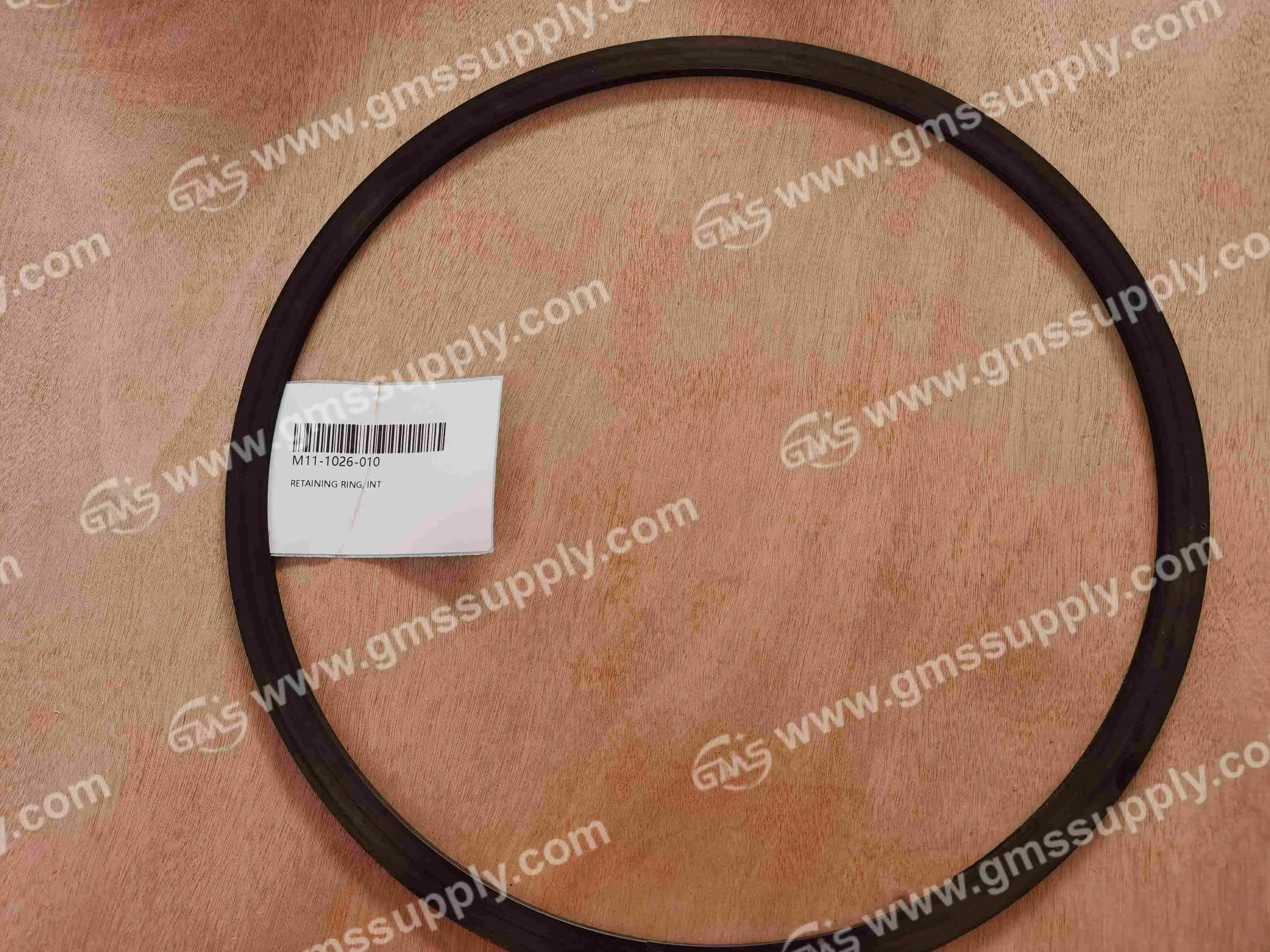
Understanding the M11-1026-010 Retaining Ring: Specifications and Functions
The internal retaining ring with the part number M11-1026-010 is a unique way to fasten things that is made to withstand the tough conditions of oil and gas drilling tools. Instead of compressing around a shaft like external snap rings do, this internal type grows outward within a bore or housing groove, making a rigid shoulder that stops parts from moving while the machine is running. This part, with the part number C80350080, is sold by GMS and is designed to work with Canrig top drive types such as the 8050, 8035, and 6027AC systems.
Our M11-1026-010 retaining ring is made from NBR and synthetic materials, which is a material that is perfect for the harsh conditions that come with drilling. This makes sure that the ring keeps its elasticity even after being stressed many times. This hardness requirement means that the part can take on big thrust loads without permanently deforming. This is an important property for holding bearings or seals in place when they need to stay in place despite constant shock and shaking.
The tensile strength of the material is high enough to withstand the axial forces that are created during drilling, where sudden changes in pressure and direction can loosen parts that aren't properly secured. Surface processes that are used during production make things less likely to rust, which means they will last longer even when they are exposed to drilling fluids and formation contaminants.
In top drive bore assemblies, this internal retaining ring's main job is to keep moving or stationary parts securely in place along their axes. When put in a machined groove correctly, the ring spreads load forces evenly around its entire diameter. This creates even contact and stops the stress buildup that happens with threaded fasteners. This 360-degree load distribution is especially useful in situations where standard bolted connections can't be used because of a lack of room.
To install something, you need special internal retaining ring tools that can squeeze the part so it fits into the hole. When you let go of the ring, it grows to fit tightly inside the groove. This makes an interference fit that stops both rotational and axial movement. Getting rid of threaded fasteners cuts down on assembly time and gets rid of possible failure places where bolts could wear out or come M11-1026-010 Retaining Ringloose from vibration.
Performance Optimisation in Harsh Drilling Conditions
In oil drilling settings, mechanical parts are hit by a lot of damaging forces at once, which quickly show up any flaws in the design or choice of materials. The retaining ring and its body have different rates of thermal expansion when the temperature changes from room temperature on the surface to high temperatures deep underground. As the drilling fluid moves through the hole, it brings abrasive particles with it that can speed up the wear on surfaces that are visible. Also, the rotary drilling process itself causes constant cyclical stresses.
Many drilling operations have shown that internal holding rings tend to fail in the same ways over and over again. One of the most common problems is groove wear, which happens when the ring and housing materials don't have enough difference in stiffness, letting the circlip slowly machine away the groove walls. These small but steady damages finally let the ring move or come loose, freeing the part it was meant to hold in place.
Another major cause of failure is using the wrong software methods. Over-compression during installation can push the ring past its elastic limit, forever deforming the part and making it less stable. On the other hand, partial seating leaves some of the ring unsupported, which builds up stress and speeds up fatigue cracking. Our expert team suggests checking visually that the grooves are fully engaged around the whole circumference after installation. This will make sure that the seating is even before putting the equipment back into service.
Over long periods of service, drilling fluids that contain hydrogen sulphide or chlorides can eat away at the ring's structure. Regular inspections let you find surface cracking or changes in size early, which are signs that the product is getting close to the end of its useful life. By replacing parts before they break because of what a check shows, you can stop unexpected failures that could cause more damage to nearby parts.
To get the best results from the M11-1026-010 retaining ring, you must first prepare the grooves correctly. The groove has to stay within certain tolerances for size accuracy and have smooth sides that don't have any burrs or machining marks that could cause stress risers. The groove's depth and width should be set so that it can handle the ring's compressed and expanded sizes while still supporting the expected thrust loads.
Choosing the right pliers tip design during installation makes sure that the compression force is spread evenly around the ring's circumference. Rapid placement after compression shortens the time of over-stress conditions, which lowers the risk of permanent deformation. When you slowly and carefully let go, the ring can expand easily into the groove without snapping into place with too much force, which could cause localised yielding.
After installation, check to make sure that the ring sits flat on the bore surface and doesn't have any jutting parts that could get in the way of component movement or cause wear. With a feeler gauge and a light circumferential check, gaps between the ring and groove bottom can be found. This means that the seating isn't complete and needs to be fixed before M11-1026-010 Retaining Ring, the equipment starts up.
Strategic Procurement Considerations for B2B Clients
Finding important parts like internal retaining rings requires a buying method that strikes a balance between low cost and high dependability. Component failure in drilling operations can lead to unplanned repair shutdowns and possible safety incidents. This is why it's important to do more than just compare prices when evaluating suppliers. GMS addresses these worries with our ISO 9001 certification, which shows that we are dedicated to maintaining quality in all of our production processes.
When looking at possible suppliers for the M11-1026-010 internal retaining ring, procurement workers should give more weight to partners who have experience with drilling applications. Our more than ten years of experience working with oil and gas exploration companies has given us a deep knowledge of the exact performance needs these parts must meet. This means that when designers make products, they take into account how they will work in the real world instead of using general specs that might not work well in the field.
Lead time reliability represents another critical supplier selection criterion, particularly for operations managing lean inventory strategies to minimise carrying costs. Our stock availability of the M11-1026-010 retaining ring (P/N: C80350080) supports rapid fulfilment, with typical delivery within two weeks for standard quantities. This responsiveness helps maintenance teams avoid extended equipment downtime while awaiting component delivery.
Organisations operating multiple drilling rigs can achieve significant cost advantages through consolidated purchasing programs. Bulk orders of internal retaining rings allow negotiation of volume pricing while establishing stable supply relationships that support predictable procurement cycles. Our flexible order quantity accommodation serves both large-scale operators managing fleet-wide maintenance programs and smaller operations requiring individual component replacement.
Establishing strategic inventory levels for wear components like retaining rings requires balancing carrying costs against downtime risk exposure. Historical failure data from similar equipment in comparable operating environments provides the foundation for statistically-based spare parts planning. Our technical support team can assist in developing appropriate stocking levels based on equipment population, utilisation intensity, and maintenance interval strategies.
Real-World Applications and Performance Validation
The M11-1026-010 internal retaining ring demonstrates its value proposition most clearly through field performance in active drilling operations. Within Canrig top drive systems, these rings secure critical bearing assemblies that enable the rotational torque transmission essential for efficient drilling. The component's ability to maintain secure positioning despite the severe mechanical loading and environmental exposure inherent to this application, M11-1026-010 Retaining Ring, validates the engineering principles underlying its design.
Top drive technology revolutionised drilling efficiency by moving the rotational drive mechanism from the rig floor to the travelling block, enabling continuous pipe rotation during tripping operations. This operational advantage depends entirely on the mechanical integrity of internal components subjected to extraordinary stress combinations. The M11-1026-010 retaining ring fulfils its retention function within these assemblies, preventing components migration that would compromise alignment tolerances and generate destructive vibration patterns.
During drilling operations, the top drive experiences cyclical loading as the weight-on-bit varies with formation characteristics and drilling parameter adjustments. These load fluctuations generate corresponding stress cycles in retention components, creating the potential for fatigue failure if material properties or geometric design prove inadequate. Field experience with the M11-1026-010 configuration demonstrates fatigue resistance sufficient for extended service intervals when properly installed and maintained within recommended operational parameters.
The compact envelope of top drive assemblies places a premium value on space-efficient retention solutions. Internal retaining rings eliminate the axial length requirements associated with threaded retention methods, allowing more compact bearing stack configurations that reduce overall system weight and improve handling characteristics during rig-up operations.
Ongoing materials research continues to advance the performance capabilities of mechanical retention components. Manufacturing process innovations, deliver tighter dimensional tolerances and more consistent mechanical properties across production lots.
These technological developments position internal retaining rings for continued relevance even as drilling operations push into increasingly challenging environments. Deeper wells, higher pressures, and more corrosive formation fluids demand components that can maintain functional integrity under conditions that would have proven destructive to earlier generation designs. GMS remains committed to incorporating beneficial innovations into our product offerings as they achieve proven field validation.
Conclusion
The M11-1026-010 internal retaining ring is a good example of how small parts can have big effects on the stability of the whole system. Its precise engineering, careful choice of materials, and proven success in the field make it an important part of keeping the top drive system intact during tough drilling campaigns. With the right installation methods and regular maintenance, these rings can last longer, which improves working efficiency and lowers the costs of unplanned downtime. As drilling processes get more complex and time-consuming, working with experienced suppliers is the best way to make sure you can get parts that are designed to work well in real life, not just meet minimum requirements.
FAQ
1. Can internal retaining rings be safely reused after removal?
Industry best practices strongly discourage reusing internal retaining rings following removal from service. The extraction process typically over-compresses the component beyond its elastic limit, permanently altering its dimensional characteristics and reducing the interference fit that provides retention force. Installing a previously used ring creates a significant risk of premature failure under operational loading, potentially causing component migration and subsequent damage to surrounding elements. The modest cost of replacement components represents sound economics compared to the potential consequences of retention failure during drilling operations.
2. What inspection indicators signal approaching retaining ring replacement needs?
Visual examination during scheduled maintenance intervals can reveal several warning signs of deteriorating ring condition. Surface corrosion, particularly localized pitting, suggests material degradation that compromises structural integrity. Visible deformation or loss of circularity indicates the component has experienced loading beyond its design capacity. Wear patterns on groove contact surfaces may signal inadequate hardness differentials or contamination issues requiring attention. Any of these conditions warrants proactive replacement rather than returning the questionable component to service.
Partner with GMS for Reliable M11-1026-010 Retaining Ring Supply
GMS combines manufacturing expertise with customer-focused service to deliver internal retaining rings that M11-1026-010 Retaining Ringmeet the demanding requirements of oil and gas drilling operations. Our M11-1026-010 retaining ring (P/N: C80350080) provides reliable performance in Canrig top drive systems, backed by ISO 9001 quality assurance and over ten years of industry experience. We maintain stock availability supporting rapid two-week delivery timelines, helping your maintenance teams minimise equipment downtime. Our technical support staff understands the critical nature of these components and stands ready to assist with application questions, installation guidance, or troubleshooting support. Whether you're managing fleet-wide procurement programs or sourcing individual replacement components, GMS delivers the product quality and service responsiveness that oil drilling operations demand. Contact our team at sales@gmssupply.com to discuss your retaining ring requirements with knowledgeable professionals who understand your operational priorities.
References
1. Anderson, M.J. (2019). Mechanical Fastening Systems in Rotating Equipment: Design Principles and Application Guidelines. Industrial Press.
2. Bhandari, V.B. (2020). Design of Machine Elements. McGraw-Hill Education, 4th Edition.
3. Deutschman, A.D., Michels, W.J., & Wilson, C.E. (2018). Machine Design: Theory and Practice. Pearson Education.
4. International Organisation for Standardisation. (2021). ISO 9001:2015 Quality Management Systems – Requirements. ISO Standards Publication.
5. Shigley, J.E., & Mischke, C.R. (2021). Mechanical Engineering Design. McGraw-Hill, 11th Edition.
6. Wilson, B.L. (2020). Oilfield Equipment Maintenance and Reliability: Best Practices for Drilling Operations. PennWell Books.
Learn about our latest products and discounts through SMS or email