- English
- French
- German
- Portuguese
- Spanish
- Russian
- Japanese
- Korean
- Arabic
- Greek
- German
- Turkish
- Italian
- Danish
- Romanian
- Indonesian
- Czech
- Afrikaans
- Swedish
- Polish
- Basque
- Catalan
- Esperanto
- Hindi
- Lao
- Albanian
- Amharic
- Armenian
- Azerbaijani
- Belarusian
- Bengali
- Bosnian
- Bulgarian
- Cebuano
- Chichewa
- Corsican
- Croatian
- Dutch
- Estonian
- Filipino
- Finnish
- Frisian
- Galician
- Georgian
- Gujarati
- Haitian
- Hausa
- Hawaiian
- Hebrew
- Hmong
- Hungarian
- Icelandic
- Igbo
- Javanese
- Kannada
- Kazakh
- Khmer
- Kurdish
- Kyrgyz
- Latin
- Latvian
- Lithuanian
- Luxembou..
- Macedonian
- Malagasy
- Malay
- Malayalam
- Maltese
- Maori
- Marathi
- Mongolian
- Burmese
- Nepali
- Norwegian
- Pashto
- Persian
- Punjabi
- Serbian
- Sesotho
- Sinhala
- Slovak
- Slovenian
- Somali
- Samoan
- Scots Gaelic
- Shona
- Sindhi
- Sundanese
- Swahili
- Tajik
- Tamil
- Telugu
- Thai
- Ukrainian
- Urdu
- Uzbek
- Vietnamese
- Welsh
- Xhosa
- Yiddish
- Yoruba
- Zulu
When Should You Replace a 30151875 Shot Pin Assembly?
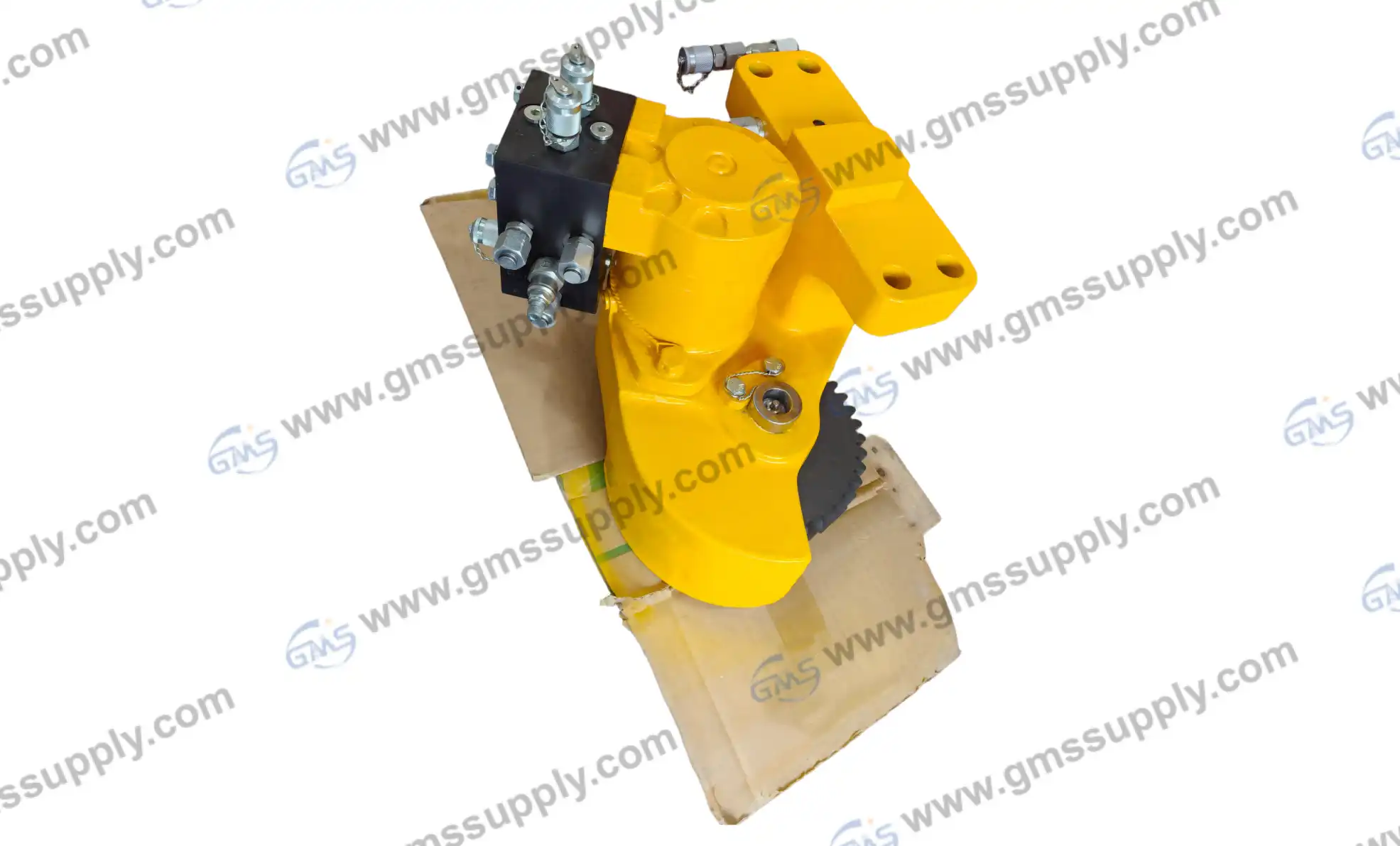
If you're in oil and gas drilling operations, you know that top drive systems don't allow any space for component failure. Shot Pin Assembly 30151875: The 30151875 shot pin assembly is a precise locking and positioning component utilized in TDS-11 and TDS-9SA top drive systems, motor housing, and transmission applications. Knowing when this assembly has to be replaced is not rocket science, it's a question of observable wear indicators, operating cycle counts, and field diagnostics. Replace it when you see pin deformation, failure to retract, seal deterioration, or positional inaccuracy outside allowable tolerances.
Understanding the Function and Wear Signs of the 30151875 Shot Pin Assembly
The 30151875 shot pin assembly is a lock of hardened steel situated inside the top drive transmission systems. Its duty is to drive a precise pin into a particular bushing that maintains the pieces aligned under stress. This design, assuming it works out well, preserves the appropriate geometry during drilling rounds, avoiding costly positional change.
Wear is a gradual process, but there are clues something's going to fail before it does. These are the major symptoms you need to repair your shot pin assembly:
-
Surface deformation or scoring: Shear stress overload is indicated by visible wear marks, flat areas, or galling on the pin tip and is often caused by misaligned fixture loading or absence of lubrication.
-
Excessive positional play: Repeatable positional accuracy of more than 0.05mm indicates wear of bushings or internal backlash, which directly affects transmission alignment.
-
Corrosion or pitting of the housing bore. Downhole conditions subject components to drilling fluids and pressure cycling. Corrosion in the bore hastens seal failure. Incomplete extension or retraction indicates the pin does not always traverse full stroke. This may be caused by a bloated, filthy, or worn-out interior seal.
Key Factors Influencing Replacement Timing
The wear rates of the shot pins are not the same. There are several factors that impact the longevity of a particular unit's field. Understanding these concerns helps procurement and maintenance teams to make better replacement plans rather than wait for products to break down without having planned for them.
The materials used for the structure are of the utmost importance. The 30151875 shot pin assembly is made of hardened alloy steel. This gives it great resistance to shear stress. But even strengthened steel gives way to abrasive drilling fluids, high temperatures, or cyclic impact stresses.
The qualities of the object are as important as the circumstances of use. When the drilling cycles are carried out, the pin is pushed laterally more in high-pressure deposits. During the connection and disconnection stages, the TDS-11 or TDS-9SA applies intermittent shear forces to the 30151875 shot pin assembly while in transmission. For pneumatic versions, if the working pressure is beyond the range of 3 to 8 bar, the seal life is dramatically decreased.
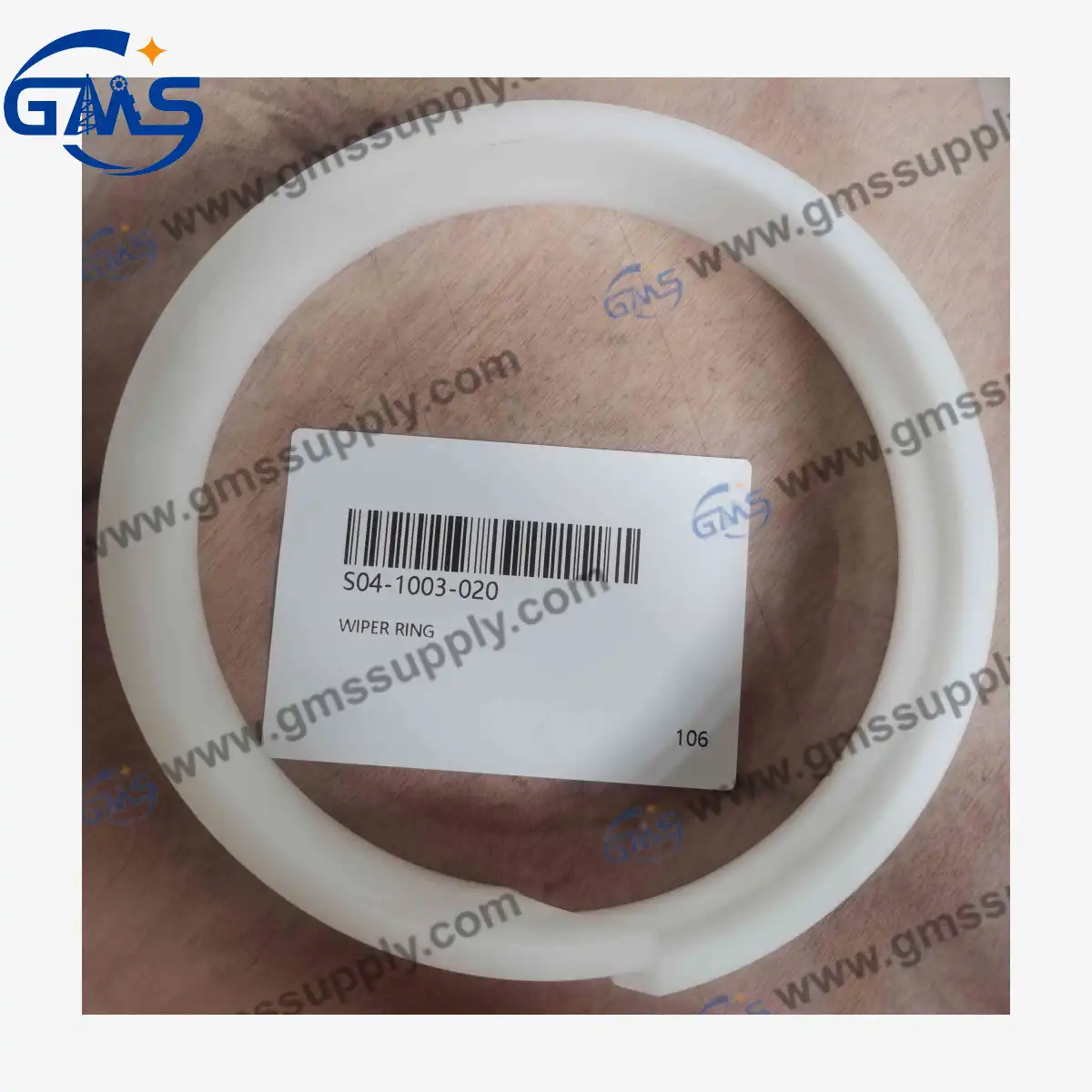
Another issue that has a direct bearing on service life is the level of maintenance. Unexpected failure rates are usually lower for teams who clean and examine the wiper seal every 500,000 cycles and replace the complete seal kit every 2 million cycles or once a year. If you don't take these pauses, dirt and other things may seep inside the casing and speed up internal wear that is difficult to notice from the outside.
Instead of providing your staff with a set calendar window for replacement, take into account these real-world considerations, and you will have a better handle on equipment downtime.
Troubleshooting Common Problems Leading to Replacement
It is recommended to go through a standardized diagnostic procedure before replacing a whole unit. End-of-life failure seems to be one of the typical difficulties but is really fixable with focused care.
One of the most common concerns in the sector is not retracting entirely. Common reasons include clogged exhaust ports, seal swelling from incompatible lubricants, or lateral binding from fixture misalignment. This is commonly solved without replacement by cleaning the exhaust port and flushing with appropriate lubricant.
The cost-benefit equation is simple: planned replacement during a scheduled maintenance window is a fraction of the cost of an emergency replacement in the middle of a drilling operation.
Installation and Post-Replacement Best Practices
The longevity of a new component is closely connected to the quality of its installation. If a well-sourced item is installed incorrectly, it will fail quickly and create the exact downtime problem the replacement was meant to address.
Prior to installation, check that the bushing hole of the mating part is not scored or shifted in dimensions. Apply a suitable lubricant to the pin and wiper seal, and clean any surfaces that will contact. Align the pieces carefully so that the pin is not laterally loaded at the mounting location. Over time, this causes the bushing to wear out quicker. Even a tiny angle change.
After installation, run the system through at least five complete cycles of expansion and contraction without load before placing it in operation. Record the date of installation, the number of cycles since replacement, and any comments you have about the condition of the old unit. Keeping these data builds up a dependable service history which makes it simpler to anticipate when the next replacement will be required.
Visually inspect the wiper cover every 500,000 revolutions in the long term. The full seal kit is planned to be changed every 2 million cycles or during the annual repair window, whichever is first.
Conclusion
Replacing the 30151875 shot pin assembly at the right time protects your top drive system from secondary damage, keeps drilling operations on schedule, and reduces total maintenance costs over the equipment lifecycle. The decision should come from field diagnostics, measurable wear indicators, and a realistic assessment of whether repair still delivers acceptable performance. When the numbers say replace, acting quickly with a correctly specified, quality-certified assembly is the most cost-effective path forward.
FAQ
1. How often should I inspect the 30151875 shot pin assembly?
Visual inspection of the wiper seal should occur every 500,000 operating cycles. A full dimensional check, including pin diameter and positional accuracy, is recommended at each scheduled maintenance interval or annually. Early detection prevents escalating damage to the housing bore.
2. What positional accuracy should a replacement assembly maintain?
A correctly functioning shot pin assembly should maintain repeatable positional accuracy of 0.05mm. Readings beyond this tolerance indicate bushing wear or internal backlash requiring replacement.
3. Does GMS Supply provide ISO-certified 30151875 assemblies?
Yes. GMS Supply holds ISO 9001 certification and controls the full production process. The 30151875 shot pin assembly is available with a standard lead time of 10 weeks. Contact sales@gmssupply.com for specifications and pricing.
Source Your 30151875 Shot Pin Assembly Supplier Through GMS Supply
GMS Supply has served the oil and gas drilling industry for over a decade, providing quality replacement parts for TDS-11 and TDS-9SA top drive systems. Our 30151875 shot pin assembly meets ISO 9001 standards and ships with a lead time of 10 weeks from stock. Whether you need a single unit or a bulk procurement order, our team responds quickly with competitive quotes. Reach out to us at sales@gmssupply.com to get your order moving today.
References
1. Shigley, J. E., & Mischke, C. R. — Mechanical Engineering Design, McGraw-Hill, 2011.
2. Hamrock, B. J., Schmid, S. R., & Jacobson, B. O. — Fundamentals of Machine Elements, McGraw-Hill, 2005.
3. American Petroleum Institute — API Specification 7K: Drilling Equipment, API Publishing Services, 2020.
4. International Organization for Standardization — ISO 286-1: Geometrical Product Specifications — Limits and Fits, ISO, 2010.
5. National Oilwell Varco — TDS Top Drive Service Manual, NOV Technical Publications, 2018.
6. Society of Petroleum Engineers — SPE Drilling & Completion Journal: Equipment Reliability in Upstream Operations, SPE International, 2019.
Learn about our latest products and discounts through SMS or email