- English
- French
- German
- Portuguese
- Spanish
- Russian
- Japanese
- Korean
- Arabic
- Greek
- German
- Turkish
- Italian
- Danish
- Romanian
- Indonesian
- Czech
- Afrikaans
- Swedish
- Polish
- Basque
- Catalan
- Esperanto
- Hindi
- Lao
- Albanian
- Amharic
- Armenian
- Azerbaijani
- Belarusian
- Bengali
- Bosnian
- Bulgarian
- Cebuano
- Chichewa
- Corsican
- Croatian
- Dutch
- Estonian
- Filipino
- Finnish
- Frisian
- Galician
- Georgian
- Gujarati
- Haitian
- Hausa
- Hawaiian
- Hebrew
- Hmong
- Hungarian
- Icelandic
- Igbo
- Javanese
- Kannada
- Kazakh
- Khmer
- Kurdish
- Kyrgyz
- Latin
- Latvian
- Lithuanian
- Luxembou..
- Macedonian
- Malagasy
- Malay
- Malayalam
- Maltese
- Maori
- Marathi
- Mongolian
- Burmese
- Nepali
- Norwegian
- Pashto
- Persian
- Punjabi
- Serbian
- Sesotho
- Sinhala
- Slovak
- Slovenian
- Somali
- Samoan
- Scots Gaelic
- Shona
- Sindhi
- Sundanese
- Swahili
- Tajik
- Tamil
- Telugu
- Thai
- Ukrainian
- Urdu
- Uzbek
- Vietnamese
- Welsh
- Xhosa
- Yiddish
- Yoruba
- Zulu
Why the 120262-1 Shim Gear Matters for Gear Backlash Control?
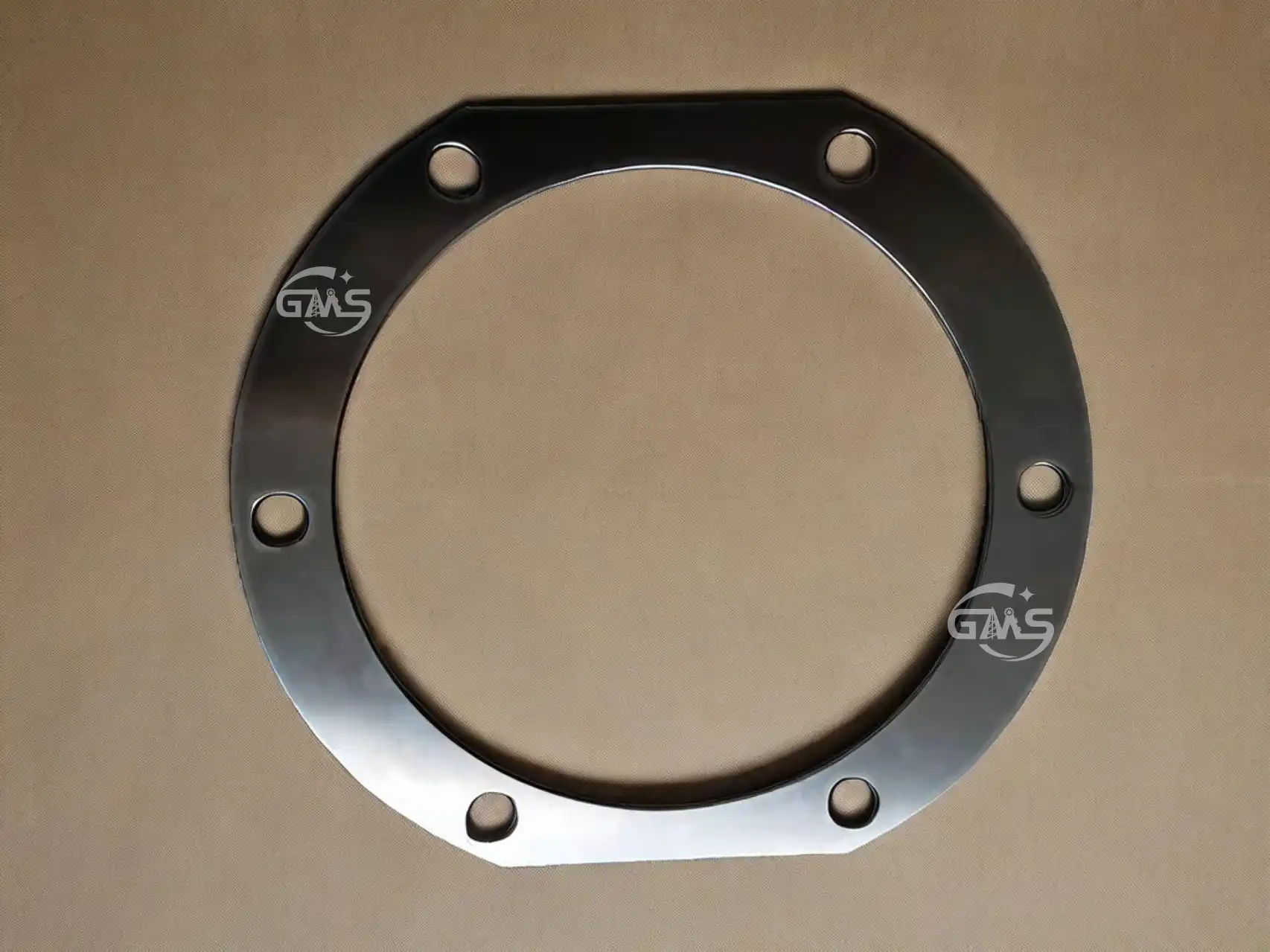
It's often the tiny parts that are to blame when precision drilling processes have unplanned downtime. The 120262-1 Shim gear is an important part of NOV Varco top drive systems for keeping the gear mesh aligned properly. This carefully made part, which can be bought from GMS under the number 11S02250, fixes gear backlash, which is the space between two gear teeth that can make or break how well they work together. In compound gear assemblies of TDS-11SA and TDS-9SA top drive models, these shims enable micrometer-level adjustments that prevent destructive vibration, reduce noise, and extend equipment lifespan. Knowing why this small-looking part is so important helps purchasing managers and maintenance engineers make smart choices that have a direct effect on the uptime of drilling and the costs of running it.
Understanding Gear Backlash and Its Impact on Top Drive Performance
Gear backlash is the space between gear teeth that is meant to be there. This space is needed so that oil can flow and heat can expand. However, too much backlash makes operations very difficult. When drilling, where top drive systems apply a lot of torque to the drill string, uncontrolled clearance leads to inaccurate positioning, increased vibration, and faster wear on parts.
The effects are felt right away. Excessive clearance between compound gears generates impact loading during direction changes, creating characteristic hammering sounds that signal impending failure. This contact between metals speeds up the wear and tear on the tooth surfaces through a process called spalling. In this process, small pieces of material break off the gear faces. As a result, the uneven surfaces cause more vibrations to spread through the whole drivetrain, which shortens the life of the bearings and damages the seals.
Normal wear from cyclic stress, thermal switching between working temperatures, and tolerance buildup during assembly are some of the most common reasons. When materials are compressed under long-term high loads, the clearances gradually get bigger than what is allowed. In oil drills, where top drives work all the time under changing loads, keeping the gear mesh perfect is very important to avoid catastrophic breakdowns that stop operations.
The Technical Role of Precision Shim Components in Gear Assemblies
The 120262 line has five different thicknesses that are all made to work with compound gear assemblies in top drive systems. From 120262-1 Shim gear (GMS P/N 11S02250) to 120262-5 (GMS P/N 11S02254), each variant offers different ways to change the dimensions. With this graduated method, techs can get exact clearances by stacking things in smart ways.
Strict quality control is needed to make sure that these parts are made to exact specs for the TDS11SA shim. To keep the bearing races from being unevenly loaded, the shims must stay flat within 0.002mm. Surface finish requirements below 0.8µm Ra reduce friction and stop fretting rust, a common way for materials to break down when tiny movements happen between surfaces that touch. When choosing a material, it's important to find a balance between hardness (for resistance to compression) and ductility (to avoid brittle fracture during installation torque application).
When setting both the bearing preload and the gear mesh depth at the same time, accuracy in the dimensions is very important. For the TDS-11SA and TDS-9SA models, the compound gear assembly needs exact spacing to make sure that the load is spread evenly across the gear tooth faces. Maintenance workers use calibrated micrometres to measure the current clearances and figure out what combinations of shim thicknesses are needed. As a normal adjustment, 120262-2 and 120262-4 variants might be used together to get a certain total thickness matching field measurement.
The properties of a material directly affect how well it works and how long it lasts. High compression strength stops the width from slowly decreasing over time, which would let backlash get worse over time. Corrosion protection is important, especially in drilling settings where drilling fluids and changing temperatures can damage parts. The engineered specs make sure that these shims keep their shape even during rough operating cycles.
Installation Procedures and Maintenance Protocols for Extended Service Life
Whether precision shims work as designed depends on how they are installed correctly. The first step is to clean all the areas that will be touching very well to get rid of any leftover grease, old seal material, and dirt. It's possible for tiny bits stuck between surfaces to affect how precise these parts are.
Accurately measuring the current clearances sets the starting point for making changes. At different places around the circumference, techs use depth micrometres or dial indicators to measure the distance between the bearing cup faces and the housing shoulders. This shows any distortion or misalignment in the housing that needs to be fixed before the shims are installed. Taking readings every 90 degrees makes sure that the review is complete.
To choose the right shim combination, you need to do some math, not just guess. The total thickness of the shim that is needed is found by adding the measured clearance to the specified bearing preload value. Then, technicians choose combinations from the five different types (P/N 11S02250 to 11S02254) that meet this goal with a 0.001mm error. Instead of using a single thick shim, it is often better to use several smaller ones to get better surface conformity and load distribution.
The order of assembly is very important for the NOV Varco top drive overhaul service. When you install shims with sides that are straight and don't have any burrs, you protect the closing surfaces next to them. By applying the right amount of pressure to the housing bolts in the right order, you can avoid distortion that would ruin your careful shimming work. By following the manufacturer's suggested torque patterns, you can be sure that the clamping force is spread evenly around the outside of the assembly.
During maintenance times, the wood should be looked at visually for signs of damage to the edges, cracking, or compression. Best practice in the industry says that replacement should happen during big overhauls. However, inspections during routine upkeep can spot problems before they get too bad. If there is discolouration, surface pitting, or visible compression, it means that it needs to be replaced before the due date. If you pay attention to these warning signs, you can keep expensive gear and bearing parts from getting damaged again.
Regular lubrication schedules work with proper shimming by lowering the heat caused by friction that can affect the stability of the dimensions. Monitoring vibration signatures through predictive maintenance programs helps identify developing backlash issues before they progress to failure. Vibration data that shows trends over time shows that clearance is gradually increasing, which means that something needs to be adjusted.
Strategic Procurement Considerations for Critical Drivetrain Components
When looking for trusted providers of precision parts, you need to look at more than just the unit price. The dependability of lead times has a direct effect on planning maintenance and managing inventory. Businesses that need to make repairs quickly for reasons that weren't planned for benefit from suppliers keeping stock on hand instead of waiting longer for parts to be made. It is possible for GMS to meet urgent needs right away because they keep the whole shim 120262 line (P/N 11S02250-11S02254) in stock.
Quality approval is very important for parts whose precise measurements are needed for them to work well. ISO 9001 certification shows that quality management is carried out in a planned way throughout the whole manufacturing process, from checking the raw materials to doing the final inspection. This certification shows that there are set procedures for measuring accuracy, process control, and handling nonconformances that keep buyers safe from getting parts that don't meet standards.
Professional suppliers are different from basic sellers because they can verify the materials they sell. Buyers can make sure that specifications are correct before installing when sellers offer material certifications, hardness test results, and dimensional inspection reports. These written records of quality are especially helpful when trying to explain the choice of a component to engineering teams or meeting regulatory requirements.
It's very important for suppliers to have experience in certain types of industries. Providers who work with oil and gas drilling know the working conditions, common failure modes, and important requirements that are specific to this tough job. This knowledge is turned into technical support skills that help maintenance teams fix problems with installation or make adjustments more effectively.
Value, not just cost, should be reflected in how things are priced for 120262-1 Shim gear. It may seem easy to compare unit prices, but the total cost of ownership includes things like how reliable the shipping is, how much technical support is available, how to return wrong orders, and how quickly you can meet urgent needs. Getting to know responsive suppliers who understand the pressures of running a business is worth more than just the purchase price.
The global supply chain environment calls for assessing the security and capacity of suppliers. Managing risk is easier for procurement teams when they know if makers keep up their production capacity, quality standards, and delivery performance across all order amounts. Building relationships with well-known suppliers like GMS, which has more than ten years of experience in the field, gives you peace of mind about long-term part availability.
Field-Proven Performance in Critical Drilling Applications
The 120262 series has been shown to be reliable in a wide range of drilling settings and operating circumstances. Being compatible with both the TDS-11SA and TDS-9SA top drive models helps owners who have more than one type of rig standardise their fleet. Using the same precision shim parts for different types of tools makes managing supplies easier and keeps quality standards high.
Maintenance teams say that operations run more smoothly after following the right shimming steps. Vibration analysis data shows that characteristic frequencies related to gear backlash go down by a lot when the right shim pairs are used to optimise gaps. These changes directly lead to longer bearing life and fewer failed seals, which are extra benefits that make precision adjustment parts more valuable.
The graduated thickness method allows fine-tuning impossible with single-dimension shims. When field measurements indicate required clearances falling between standard shim thicknesses, the ability to combine multiple variants provides flexibility to match specifications precisely. This gets rid of the trade-offs that come with choosing dimensions that are "close enough" but don't improve performance.
The tech behind these parts is proven by how long they last under working loads. Compound gear units in top drive systems are put through shock loads, vibration, and thermal cycling that put the stability of the parts at risk. The 120262 line keeps its dimensions stable under these tough conditions, keeping the carefully set gaps over long periods of time. This dependability lowers the number of times that maintenance needs to be done and increases working uptime, both of which have a direct effect on the economics of drilling.
Having access to technical support makes the value of high-quality parts even greater. Access to application engineering experts helps maintenance teams improve installation processes, fix problems that come up out of the blue, and come up with best practices that fit the needs of the operation. At GMS, we offer responsive technical support to go along with our high-quality products. This helps our customers get the most out of their performance and service life.
Conclusion
Precision shimming is the key to making sure that gear mesh control works well in top drive systems. The shim, which includes P/Ns 120262-1,120262-2,120262-3,120262-4,120262-5, provides the precise dimensions and material qualities needed to keep the backlash in TDS-11SA and TDS-9SA compound gear systems at their best. If you choose and install these parts correctly, you can avoid the chain of failures that happen when there is too much space. This protects expensive drivetrain parts and increases operational efficiency. When making purchases, companies should give more weight to suppliers who can show they have quality certifications, enough inventory, and industry-specific knowledge. Precision shims are a small investment that pays off big time by increasing the life of parts, lowering the number of times they need to be serviced, and making drilling more efficient, all of which have a direct effect on operational profitability.
FAQ
1. What distinguishes the five variants in the 120262 series?
The versions have different nominal thicknesses, which allows for graded adjustment. The 120262-1 Shim gear (GMS P/N 11S02250) gauge is the thinnest, and the 120262-5 (P/N 11S02254) gauge is the thickest. Technicians mix these types to get the exact total clearance that matches measurements made in the field and the standards for bearing loading. This graduated system lets you get accuracy down to the micrometre level, which isn't possible with single-dimension parts.
2. Can these shim components be reused during subsequent overhauls?
As a general rule, it is better to replace something than to reuse it. Shims that have already been fitted may become compressed, fretting rust may happen, or they may lose their shape during service cycles. These changes make it less precise to set the gear mesh the right way. When you do a repair, using new shims makes sure that the dimensions are correct, which saves expensive gear and bearing parts.
3. How quickly can GMS fulfill urgent orders for these precision components?
We keep full stock of all five variant shims 120262-1,120262-2,120262-3,120262-4,120262-5, so we can ship in-stock items the same day. For time-sensitive needs, our logistics network offers choices for faster delivery. Get in touch with our team at sales@gmssupply.com to talk about the specific timelines you need for your operations.
Partner with GMS for Reliable 120262-1 Shim Gear Supply
Maintaining drilling processes means having reliable access to precise parts when you need them. As a 120262-1 Shim gear supplier with a lot of experience, GMS offers quality that is ISO 9001-certified, along with quick service that knows how important it is to meet operational needs. Our large stock of the whole 120262 series (P/N 11S02250–11S02254) guarantees immediate availability, avoiding delays that cause costly downtime to last longer. With detailed knowledge gained over more than a decade of working with oil and gas drilling operations, we help procurement professionals and repair teams. Contact our experts at sales@gmssupply.com to talk about bulk prices, technical details, or advice on how to use our products. We provide the high-quality parts and expert help that your top drive systems need to keep working at their best.
References
1. American Gear Manufacturers Association. "AGMA 2000-A88: Gear Classification and Inspection Handbook—Tolerances and Measuring Methods for Unassembled Gears." AGMA Technical Publications, 1988.
2. Norton, Robert L. "Machine Design: An Integrated Approach, 5th Edition." Pearson Education, 2013.
3. Budynas, Richard G., and J. Keith Nisbett. "Shigley's Mechanical Engineering Design, 10th Edition." McGraw-Hill Education, 2015.
4. Society of Tribologists and Lubrication Engineers. "Gear Lubrication and Wear: Mechanisms and Prevention Strategies." STLE Technical Paper Series, 2019.
5. International Organization for Standardization. "ISO 1328-1:2013: Cylindrical Gears—ISO System of Flank Tolerance Classification." ISO Standards Catalogue, 2013.
6. Deutschman, Aaron D., Walter J. Michels, and Charles E. Wilson. "Machine Design: Theory and Practice." Macmillan Publishing, 1975.

Learn about our latest products and discounts through SMS or email