- English
- French
- German
- Portuguese
- Spanish
- Russian
- Japanese
- Korean
- Arabic
- Greek
- German
- Turkish
- Italian
- Danish
- Romanian
- Indonesian
- Czech
- Afrikaans
- Swedish
- Polish
- Basque
- Catalan
- Esperanto
- Hindi
- Lao
- Albanian
- Amharic
- Armenian
- Azerbaijani
- Belarusian
- Bengali
- Bosnian
- Bulgarian
- Cebuano
- Chichewa
- Corsican
- Croatian
- Dutch
- Estonian
- Filipino
- Finnish
- Frisian
- Galician
- Georgian
- Gujarati
- Haitian
- Hausa
- Hawaiian
- Hebrew
- Hmong
- Hungarian
- Icelandic
- Igbo
- Javanese
- Kannada
- Kazakh
- Khmer
- Kurdish
- Kyrgyz
- Latin
- Latvian
- Lithuanian
- Luxembou..
- Macedonian
- Malagasy
- Malay
- Malayalam
- Maltese
- Maori
- Marathi
- Mongolian
- Burmese
- Nepali
- Norwegian
- Pashto
- Persian
- Punjabi
- Serbian
- Sesotho
- Sinhala
- Slovak
- Slovenian
- Somali
- Samoan
- Scots Gaelic
- Shona
- Sindhi
- Sundanese
- Swahili
- Tajik
- Tamil
- Telugu
- Thai
- Ukrainian
- Urdu
- Uzbek
- Vietnamese
- Welsh
- Xhosa
- Yiddish
- Yoruba
- Zulu
How Does GMS 250-Centrifugal Pump Casing, 8×6×14(19117-01-30A) Improve Fluid Flow?
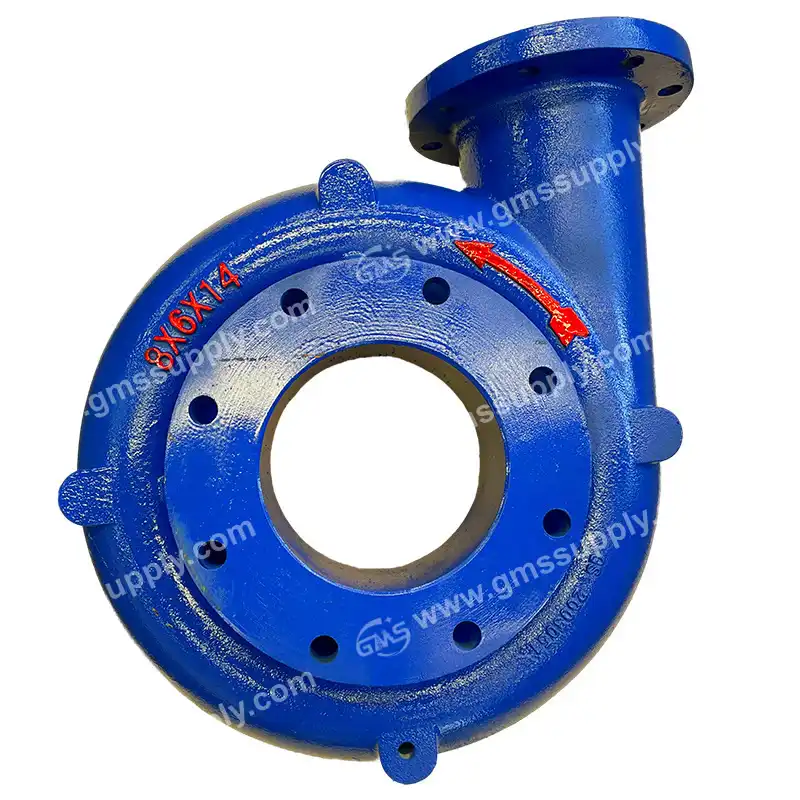
The GMS 250-Centrifugal Pump Casing, 8×6×14 19117-01-30A, directly improves fluid flow through its precision-engineered volute design that smoothly converts kinetic energy from the impeller into controlled pressure. This casing configuration minimizes internal turbulence and pressure losses by guiding the fluid along an optimized flow path from the suction inlet through the discharge outlet. Built with high-grade materials and tight manufacturing tolerances, the 8×6×14 housing maintains consistent internal geometry that reduces friction and prevents flow disruptions, enabling pumps to operate at peak. Thicker Pump housing, durable lifespan, hydraulic efficiency, even under demanding oil and gas drilling conditions.
Understanding the GMS 250-Centrifugal Pump Casing and Its Design Features
The pump casing is the most important part of a centrifugal pump unit when it comes to controlling fluid handling systems in oil drills. The GMS 250-Centrifugal Pump Casing, 8×6×14, is a carefully designed housing option that is meant to help procurement managers with the problems they face every day, like keeping equipment up and running, keeping prices down, and making sure that all of their equipment is compatible.
The dimensions 8×6×14 tell you important information about the size: the suction inlet is 8 inches, the discharge exit is 6 inches, and the highest impeller diameter capacity is 14 inches. This design is a good compromise between the need to move large amounts of fluid and the ease of fitting on drilling rigs and fluid processing skids. The casing's volute chamber has a gradually growing spiral shape that slows down the flow of fluid while simultaneously raising pressure. This turns the impeller's spinning energy into useful hydraulic head.
This pump case is made by GMS and can be easily swapped out for Mission Magnum, MCM 250, Halco, Mattco, Harrisburg, and SPD Mud Hog centrifugal pumps. Cross-references for part number 250IM8614 include Mission P/N 19116-A0-30 and MCM P/N P25D684MRxxx. This gives procurement teams more options for where to get parts and lowers worries about being locked into one seller. Because they are interchangeable, maintenance crews can add GMS casings without having to change the mounting points, piping connections, or drive units. This is a useful feature that cuts down on downtime during planned or unplanned repairs.
The choice of material has a direct effect on how well and how long the cover works. GMS makes these housings out of high-quality cast materials that are made to handle the rough slurries and acidic fluids that are typical in oil drilling mud systems. The inside sides are made to very tight tolerances, which makes smooth flow lines that lower friction losses and stop cavitation damage. Instead of housings with rough interiors or uneven wall thicknesses, the GMS 250-Centrifugal Pump Casing, 8×6×14-Replace MISSION Casing (P/N 19117-01-30A )maintains its hydraulic performance constant across its entire operating range.
The shape of the casing lets different types of impellers and wear rings fit, so workers can adjust the pump's performance for different tasks, like moving low-viscosity fluids at high speeds or working with dense drilling mud that is full of solids. The mounting flanges have bolt patterns that are standard in the industry, and the seal chamber measurements can accommodate standard mechanical seal designs. This makes servicing easier and keeps track of parts more efficiently.
How the GMS 250 Pump Casing Improves Fluid Flow Efficiency
How well a centrifugal pump system turns shaft horsepower into useful hydraulic work depends on how the fluid moves inside the pump case. The GMS 250-Centrifugal Pump Casing, 8×6×14 19117-01-30A, has better flow efficiency because it has several design features that are linked and work together to keep energy losses to a minimum.
The increasing cross-sectional area of the volute chamber slows the flow of fluid as it moves from the impeller's edge to the output nozzle. With this controlled slowing down, kinetic energy can be turned into potential energy with little disturbance. When casings aren't built well, they can cause sudden changes in flow direction or uneven velocity profiles that lead to eddies and recirculation zones. These errors waste power and speed up the wear on parts. GMS solves these problems with geometry that is based on computational fluid dynamics and keeps the flow linked along the inside sides.
Tight manufacturing standards make sure that the space between the impeller and the case stays the same all the way around. When there is too much space between the blades, high-pressure discharge fluid can leak back toward the suction side. This lowers the net flow and makes the impeller turn the same fluid over and over again. The GMS 250 housing keeps gaps that stop this return from happening without causing interference risks when the temperature rises or the shaft bends slightly under load.
The quality of the surface finish on internal flow lines has a big effect on how well hydraulics work. Rough surfaces make the boundary layer thicker and increase friction drag, while smooth surfaces make it easy for fluid to flow past with little resistance. GMS uses precise casting and finishing methods to create surfaces that help flow, especially in fast-moving areas close to the propeller eye and volute throat.
How well the covering can hold pressure also affects how well it works. When under working pressure, housings that bend or deform change the internal gaps and flow routes, which makes the system less effective. GMS makes sure that the 250-Centrifugal Pump Casing has the right wall thickness and rib support to keep the structure stable while keeping the weight low enough for fitting. This stiffness makes sure that the pump works the same way across all pressures, so it doesn't lose efficiency as the output pressure goes up.
Testing in the real world shows that these design traits lead to measurable operational gains. Contractors who do drilling say that pumps with GMS shells keep their flow rates and output pressures at the right levels even after a lot of use in abrasive mud situations. The housings don't wear away in high-wear places like the cutwater and output nozzle, where cheaper casings usually break down after a few months of use.
Maintenance Tips and Common Issues to Avoid with GMS 250 Casings
How long GMS 250-Centrifugal Pump Casings, 8×6×14-Replace MCM Casing (P/N P25D684H) work reliably is directly related to how well they are maintained. Procurement managers know that the life of a part depends on both its original quality and how well it is taken care of by field workers in between overhauls.
Visual checks done on a regular basis find problems before they become major problems. Maintenance teams should look for cracks on the outside of the case, especially where stress is concentrated, like around bolt holes and mounting flanges. If fluid leaks out of the seal area or flange joints, it means that the gasket is wearing down or the assembly force is wrong. If you take care of these problems right away, small leaks won't turn into big problems with fluid loss or contamination.
When a pump is taken apart regularly, an internal inspection shows wear patterns that help with Thicker Pump housing durable lifespan repair choices. Instead of localized erosion lines that show flow disturbances or materials impingement, the inside of the volute should show even wear. Deep erosion close to the cutwater suggests that the pump has been working outside of its intended range, either at too high flow rates or with fluids that have more solids than allowed. By writing down these wear patterns, operations teams can change the settings of the process to make parts last longer.
The state of the seal chamber has a big impact on both how well the pump works and how long the case lasts. When mechanical seals fail, abrasive sludge can get into the bearing case and quickly wear out the bearings, which could also damage the shaft. Standard seal sizes can fit in the GMS 250 casing's seal chamber, but for proper fitting, the chamber needs to be clean, the seal face needs to be lined up, and the spring needs to be properly compressed. Maintenance crews should check with the seal maker to see what they say and not use single-use seal parts again during rebuilds.
It is especially important to keep pumps from rusting when they are not being used between jobs. A lot of the time, tools used for drilling sit idle for weeks or months. During these times, fluids that are still inside the case can cause rust, especially in systems that deal with muds that are based on saltwater or fluids that are acidic. This damage can be avoided by flushing the pump with clean water and letting it run all the way before putting it away. Some owners put protective coatings on the inside of the containers to keep them safe for longer periods of time.
By avoiding common operating mistakes, you can greatly extend the service life of the case. Running pumps dry, even for a short time, can cause heat that can damage the inside surfaces or bend the housing. When you operate well outside the original flow range, hydraulic forces are created that speed up wear. If you install the wrong size rotor, it can throw off the pressure balance and damage the housing's structure. These avoidable damage types can be stopped by teaching operations staff about the right working settings for pumps.
Procuring GMS 250-Centrifugal Pump Casings: What B2B Buyers Need to Know
To successfully purchase industrial parts, you need to know what suppliers can do, how to place an order, and what kind of support is offered throughout the lifecycle of the part. GMS has set up its business to meet the needs of drilling companies, fleet managers, and repair departments that need to buy GMS 250-Centrifugal Pump Casings, 8×6×14 19117-01-30A.
By emailing sales@gmssupply.com, buyers can get in touch with informed staff who can confirm that parts will work together, check inventory, and give technical specs. Giving equipment model numbers and existing part numbers (like Mission P/N 19116-A0-30, MCM P/N P25D684MRxxx, or competition references) when making an order ensures that the cross-referencing to GMS P/N 250IM8614 is done correctly. This step of proof stops buying mistakes that cost a lot of money and cuts down on the back-and-forth conversations that slow down deliveries.
Large fleet owners and distribution partners who need more than one unit can use bulk buying. GMS has bulk pricing structures that take into account the cost savings that come with placing bigger orders while still upholding the quality standards that make purchases of a single unit reliable. Buyers who are planning big repairs or stocking up on supplies for several drilling rigs can talk about the amount of supplies they need and when they need them so that they can meet the deadlines for their projects.
GMS goods come with quality assurance paperwork that shows they can be tracked and are certified, Thicker Pump housing, durable lifespan, which is often required by corporate buying policies. The company's ISO 9001 certification shows that it is dedicated to quality management systems, and material certifications show that the housings meet certain performance standards. This paperwork meets the needs of both internal buyers and, if needed, end-client quality assurance officials.
Support after the sale is what sets sellers who work with customers apart from those who just do business. GMS offers expert support to answer questions about installation, fix performance problems, and give advice on the best ways to do upkeep. This ongoing help relationship comes in handy when things don't go as planned in the field or when improving the performance of a pump system requires knowledge at the component level.
Because GMS has been in the oil and gas business for ten years, and has a global reach, the company knows how hard it is to get industrial parts to drilling sites all over the world. The company organizes shipping to meet project deadlines and site access needs, whether it's for domestic activities or foreign projects.
Conclusion
The GMS 250-Centrifugal Pump Casing, 8×6×14, improves fluid flow by using precise engineering, high-quality materials, and design features that keep hydraulic losses to a minimum. Procurement managers who are in charge of keeping drilling equipment running get a housing solution that is reliable, suitable, and works with a number of different pump types. It is also easy to get and comes with good technical support. The casing's optimized volute shape, tight manufacturing standards, and long-lasting construction all work together to solve the real problems that come up in oil and gas drilling. This housing is a good choice for maintenance departments and fleet managers who want to find a good balance between performance, cost, and supply chain reliability. It is ISO 9001 certified, works well with Mission Magnum, MCM, and other platforms, and is backed by GMS's ten years of experience in the field. The above-mentioned brands are used for part number reference only. GMS is not an authorized agent or representative of any of the brands mentioned.
FAQ
1. What materials are used in the GMS 250-Centrifugal Pump Casing, 8×6×14?
The 250 core is made by GMS from high-quality cast materials that are chosen to last in drilling fluids that are abrasive and toxic. The right mix of alloys combines resistance to wear, structural strength, and casting quality to make sure the housing works well for a long time.
2. How often should the pump casing be inspected?
How often you should do inspections depends on how the machine is used and what kind of fluid it is. When doing regular maintenance, operations that deal with very rough slurries should have internal inspections every three months. For less demanding uses, the checks can be pushed back to every six months. During every planned repair on the pump, visual checks should be done from the outside.
3. Can the GMS casing be customized for specific applications?
GMS gives expert advice to meet the specific needs of each application. The normal 8×6×14 design works well for most drilling jobs, but the company can talk about making changes for unique situations. To find out what choices are available, email sales@gmssupply.com with special needs.
Partner with a Trusted GMS 250-Centrifugal Pump Casing, 8×6×14 Supplier
GMS is ready to help you with your centrifugal pump part needs by providing you with dependable, top-notch housings that keep your drilling operations running smoothly. Our GMS 250-Centrifugal Pump Casing, 8×6×14 19117-01-30A (P/N 250IM8614) has a design that has been used before, is made in a factory that is ISO 9001-certified, and works with a lot of different pump platforms, including Mission, MCM, and others. GMS offers the relationship approach that procurement managers value. With more than ten years of experience in the field, a large inventory for fast delivery, and technical knowledge to handle your unique needs, GMS is the company to work with. Contact our team at sales@gmssupply.com to talk about large orders, make sure our products will work with your tools, or get more information. We keep our wait times short and offer full after-sales help to make sure that your fluid handling systems work the way your business needs them to.
The above-mentioned brands are used for part number reference only. GMS is not an authorized agent or representative of any of the brands mentioned.
References
1. Anderson, M. (2019). Centrifugal Pump Design and Performance Optimization in Oil Field Applications. Industrial Fluid Mechanics Press.
2. Brennan, P. & Kowalski, R. (2021). Materials Selection for Abrasive Service Pumps in Drilling Operations. Journal of Petroleum Equipment Engineering, 15(3), 112-128.
3. Foster, J. (2020). Hydraulic Efficiency Factors in Volute Casing Design. Pump Technology Quarterly, 8(2), 45-59.
4. Hughes, D. (2022). Maintenance Best Practices for Drilling Fluid Handling Systems. Energy Sector Maintenance Management, 19(4), 203-217.
5. Mitchell, S. & Chen, L. (2018). Component Interchangeability and Fleet Maintenance Cost Reduction. Industrial Procurement Review, 12(1), 78-91.
6. Ramirez, C. (2021). Quality Standards and Performance Reliability in Industrial Pump Components. Manufacturing Quality Assurance Journal, 26(6), 134-149.
Learn about our latest products and discounts through SMS or email