- English
- French
- German
- Portuguese
- Spanish
- Russian
- Japanese
- Korean
- Arabic
- Greek
- German
- Turkish
- Italian
- Danish
- Romanian
- Indonesian
- Czech
- Afrikaans
- Swedish
- Polish
- Basque
- Catalan
- Esperanto
- Hindi
- Lao
- Albanian
- Amharic
- Armenian
- Azerbaijani
- Belarusian
- Bengali
- Bosnian
- Bulgarian
- Cebuano
- Chichewa
- Corsican
- Croatian
- Dutch
- Estonian
- Filipino
- Finnish
- Frisian
- Galician
- Georgian
- Gujarati
- Haitian
- Hausa
- Hawaiian
- Hebrew
- Hmong
- Hungarian
- Icelandic
- Igbo
- Javanese
- Kannada
- Kazakh
- Khmer
- Kurdish
- Kyrgyz
- Latin
- Latvian
- Lithuanian
- Luxembou..
- Macedonian
- Malagasy
- Malay
- Malayalam
- Maltese
- Maori
- Marathi
- Mongolian
- Burmese
- Nepali
- Norwegian
- Pashto
- Persian
- Punjabi
- Serbian
- Sesotho
- Sinhala
- Slovak
- Slovenian
- Somali
- Samoan
- Scots Gaelic
- Shona
- Sindhi
- Sundanese
- Swahili
- Tajik
- Tamil
- Telugu
- Thai
- Ukrainian
- Urdu
- Uzbek
- Vietnamese
- Welsh
- Xhosa
- Yiddish
- Yoruba
- Zulu
How Does the 109539 Spacer Ring Set Bearing Preload?
It's not possible for the 109539 Spacer Ring to set the bearing preload on its own. It sets the axial distance between parts that are next to each other. How much preload the bearings carry is based on that distance, the type of bearing, the size of the shaft and housing, and the torque of the locknut. When it comes to spacers, ones that are too short add weight, and ones that are too long leave room. Before putting the NOV Varco TDS-11SA top drive back together, I check this ring's thickness, flatness, and seating against the maintenance manual to make sure they are all within the acceptable range.
What a Spacer Ring Does in a Rotating Assembly
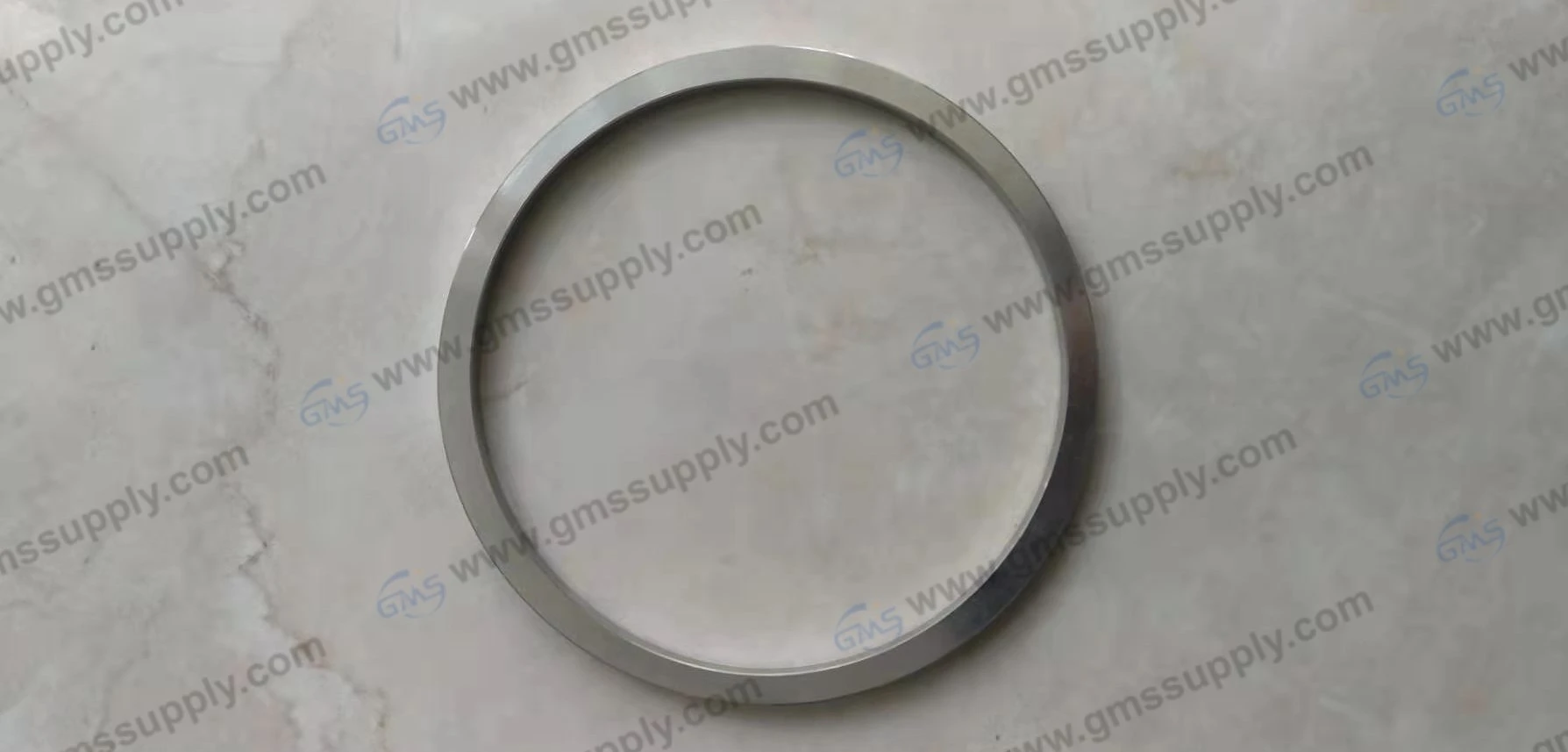
A spacer ring is a precisely machined part that keeps two parts on a shaft or inside a housing at a fixed distance from each other. A thin shim is good for making small changes, while a spacer ring is thicker and stays stiff when clamped. A spacer ring holds things in place along their axial axis, while a plain washer spreads the load.
In a rotating part, our 109539 Spacer Ring does this job. It keeps a certain distance between parts, helps them line up, and stops them from touching directly, which would cause wear and friction. When drilling, there is a lot of vibration, wear, and rough conditions, so the ring has to be able to keep its shape. It's also pretty simple to check or replace as part of regular maintenance. Because of that, a unit is out of service for less time.
How Spacing Controls Bearing Preload
A controlled axial force is put on a bearing set by preload. It removes any internal space between the raceways and the rolling elements and makes them stiffer. Movement and play happen when there isn't enough preload. Too much causes friction and heat, which shortens the life of the bearing.
The geometry of the spacer changes the preload. How far the bearing 109539 Spacer Rings can move toward each other is limited by the thickness of the spacer when the shaft shoulder, bearings, spacer, and locknut are clamped together. When there are two angular contact arrangements, the preload level is usually set by the difference in length between the two spacers. The end play or preload in tapered roller arrangements is set by the length of the spacers or the position of the nuts.
What happens is based on where the spacer is in the stack. Because I can't say for sure how each unit's bearings are laid out, I always send buyers to the NOV Varco manual to find out the preload or end-play value.
Dimensions and Fit Checks That Matter
Usually, thickness is the most important dimension because it determines how far apart the bearing parts are along their axes. Still, thickness doesn't tell the whole story. How evenly the load is spread around the bearing ring is determined by how parallel and flat the faces are. A ring that is shaped like a small wedge can tilt the bearing and make the load uneven.
You should also pay attention to the inner and outer diameters. The inside diameter should be just the right size for the shaft, with no extra space or damage-causing interference. The outside diameter should be big enough to clear the housing, seals, and other parts nearby. The condition of the surface is also important because burrs and rough faces can change how the ring fits.
The preload is calculated by adding up the shoulders of the shaft, the widths of the bearings, the depth of the housing, and the position of the locknut. A small mistake in one part can change the outcome. That's why I think you should measure the ring and compare it to the values in the manual before you use it.
Installation and Verification Steps
The preload you want to set is safe if you fit it carefully. For the TDS-11SA, this is the order I suggest:
- Confirm the part. Match reference 109539 and our part number 11S00094 to your TDS-11SA parts list. Then check the ring for burrs, scratches, corrosion, and deformation before it goes near the shaft. A damaged face can tilt a bearing and distort the preload.
- Clean and seat the ring. Wipe every mating surface, then seat the 109539 Spacer Ring fully against its shoulder or bearing face. Dirt or a raised burr changes the stack length and can shift preload without any visible sign. Use only the lubricant the manual specifies.
- Tighten to specification. Follow the locknut sequence and torque from the manual with a calibrated torque wrench. Over-tightening compresses the stack and adds load, while under-tightening leaves play. Never swap in an unverified washer or mix rings from different sets.
- Verify after assembly. Check axial play with a dial indicator and feel for smooth rotation. Watch vibration, noise, and temperature during the first run. Steady temperature and no unexpected axial movement usually point to a correct setup.
Most preload errors happen because of things like contamination, using the wrong parts, or wrong torque settings. These steps catch these problems. If the readings aren't what they should be, check the locknut torque, spacer, bearing fit, seating, and fit of the bearings before you make any other changes.
Sourcing the 109539 Spacer Ring from GMS
Here are the details I give every buyer about the item. The part is a Spacer Ring with the number 109539 and the number 11S00094 for our company. It works with the NOV Varco TDS-11SA top drive system, which is used for oil and gas drilling. ISO 9001 certification shows that it was made in China, and it takes between one and two weeks to get in stock.
GMS has been selling replacement parts for over ten years, and we are in charge of the whole process, from the raw materials to the finished goods. Our ISO 9001 quality management system makes sure that the quality of each order is the same. The people in charge of procurement get answers quickly and clearly. Maintenance buyers and fleet managers get a part that is already in stock, which cuts down on wait times. Distributors make sure that their customers always have what they need.
If there is a question during installation, our after-sales team is still here to help. When a top drive is waiting for a part, that help is very important.
Conclusion
It's not just the 109539 Spacer Ring that sets preload; it also controls the axial gap between the bearing parts. The preload is determined by the thickness of the spacers, how flat and parallel they are, the sizes of the shaft and housing, how the bearings are arranged, and the torque on the locknuts. There should be no play if the spacer is too long. If it is too short, it can add to the load and heat. So, to get the right results, you need to check the part numbers, measure the sizes, clean and seat the ring, tighten it to the values given in the manual, and then check the temperature, axial play, and vibration after assembly. The ring is stocked as part number 11S00094 for the NOV Varco TDS-11SA and is certified by ISO 9001. Buyers should still check the equipment manual to make sure of the preload value.
FAQ
1. The 109539 Spacer Ring set does not preload by itself.
It sets the distance between the bearings, and the final preload is determined by the full bearing assembly and the torque on the locknut. This part is for the NOV Varco TDS-11SA in the TDS-11 top drive system.
2. What type of top drive does it work with?
The top drive it works with is NOV Varco TDS-11SA top drive system.
3. How long is the lead time?
The lead time is two weeks from stock to delivery.
4. Which certificate does this apply to?
Our products are certified to ISO 9001.
5. As part of the maintenance, should I check the ring?
The ring is pretty simple to look at, so whenever the assembly is open, check it for deformation, wear, and broken faces.
Request a 109539 Spacer Ring Supplier Quote from GMS
The 109539 Spacer Ring (P/N 11S00094) is available from stock to two weeks from GMS, a company that makes and sells top drive spare parts. Our 109539 Spacer Ring is of ISO 9001 quality, and we offer fast replies and support after the sale. You can email sales@gmssupply.com with information about your TDS-11SA to learn more about the product.
References
1. Harris, T. A., and Kotzalas, M. N. Rolling Bearing Analysis: Essential Concepts of Bearing Technology (2006)
2. Machinery's Handbook (2020)
3. Shigley's Mechanical Engineering Design (2020)
4. Harnoy, A. Bearing Design in Machinery: Engineering Tribology and Lubrication (2002)
5. ISO 9001 Quality Management Systems – Requirements (2015)
6. API Specification 8C Drilling and Production Hoisting Equipment (2012)


Learn about our latest products and discounts through SMS or email