- English
- French
- German
- Portuguese
- Spanish
- Russian
- Japanese
- Korean
- Arabic
- Greek
- German
- Turkish
- Italian
- Danish
- Romanian
- Indonesian
- Czech
- Afrikaans
- Swedish
- Polish
- Basque
- Catalan
- Esperanto
- Hindi
- Lao
- Albanian
- Amharic
- Armenian
- Azerbaijani
- Belarusian
- Bengali
- Bosnian
- Bulgarian
- Cebuano
- Chichewa
- Corsican
- Croatian
- Dutch
- Estonian
- Filipino
- Finnish
- Frisian
- Galician
- Georgian
- Gujarati
- Haitian
- Hausa
- Hawaiian
- Hebrew
- Hmong
- Hungarian
- Icelandic
- Igbo
- Javanese
- Kannada
- Kazakh
- Khmer
- Kurdish
- Kyrgyz
- Latin
- Latvian
- Lithuanian
- Luxembou..
- Macedonian
- Malagasy
- Malay
- Malayalam
- Maltese
- Maori
- Marathi
- Mongolian
- Burmese
- Nepali
- Norwegian
- Pashto
- Persian
- Punjabi
- Serbian
- Sesotho
- Sinhala
- Slovak
- Slovenian
- Somali
- Samoan
- Scots Gaelic
- Shona
- Sindhi
- Sundanese
- Swahili
- Tajik
- Tamil
- Telugu
- Thai
- Ukrainian
- Urdu
- Uzbek
- Vietnamese
- Welsh
- Xhosa
- Yiddish
- Yoruba
- Zulu
How Efficient Is the 2500 Supreme Centrifugal Pump 8X6X14?
When looking at pumping equipment for tough industrial settings, how well it works has a direct effect on your prices and how long the equipment lasts. In oil and gas drilling, the 2500 Supreme Centrifugal Pump 8X6X14 works very well in solids control and filling systems because it has great hydraulic performance. With heads of up to 550 feet and flow rates of more than 2,000 GPM, this pump works very well even when it's dealing with rough drilling fluids that are full of cuttings. Its semi-open impeller design and changeable casing wear pad make it work well in harsh conditions, making it a cost-effective choice for procurement managers who want to keep important applications running smoothly and reduce downtime.

Understanding the Efficiency of the 2500 Supreme Centrifugal Pump 8X6X14
How well the impeller changes the spinning energy into fluid motion and pressure determines how efficient the centrifugal pump is. The number 8X6X14 means that the suction is 8 inches, the output is 6 inches, and the highest width of the impeller is 14 inches. This is a shape that works best for high-volume transfer tasks that are popular in drilling operations.
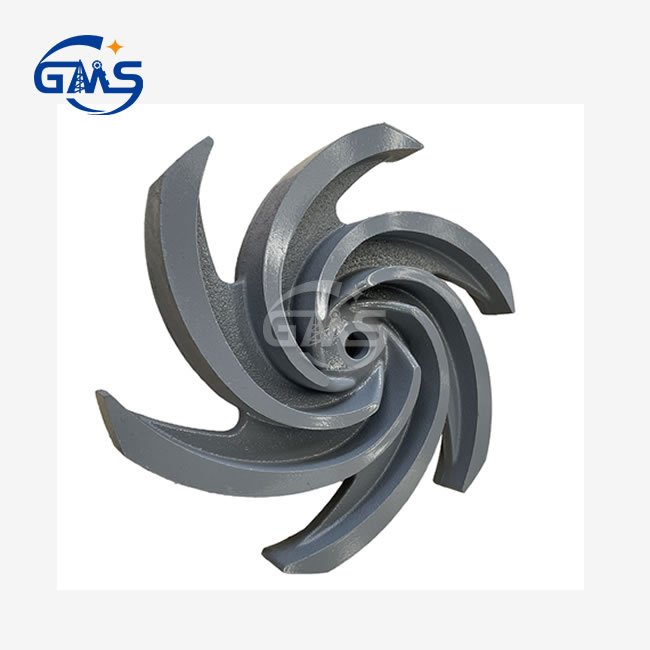
It works well because the 2500 Supreme Centrifugal Pump 8X6X14 has carefully planned gaps between the partially open rotor and the front wear pad. Because of how it's made, the pump can handle objects up to about an inch in diameter while still being more than 70% efficient at its best. The semi-open design lets cuttings pass through while the high-chrome iron construction (ASTM A532 Class III Type A equal) prevents erosive wear that lowers performance over time. This is in contrast to fully sealed impeller designs that get clogged when processing drilling mud. The flow features stay the same over a wide working range because the design of the concentric case spreads out the radial loads evenly. This lowers friction and stress on the bearings, which directly leads to less energy use and longer component life. When the pump is running normally at 1750 RPM, it keeps the output pressures high enough to feed desanders and desilters without using too much motor horsepower, which is an important thing to think about when figuring out how much it costs to run each barrel.
Work is slowed down by wear and tear. As abrasive wear makes the internal gaps bigger, internal recirculation losses rise, MISSION 2500 Supreme Semi open impeller and flow output go down even though power use stays the same. GMS deals with this by choosing materials in a smart way. The wet-end parts of the pump are made of a high-chrome iron metal that is harder than 62 HRC. This makes them resistant to wear and tear, which means that they don't need to be serviced as often. The Supreme setup is different from other designs because it has a changeable front wear pad built right into the case. Instead of buying a whole new expensive case when erosion happens, workers just switch out the wear pad as part of regular maintenance. This modular method cuts lifetime costs by a large amount while letting hydraulic efficiency be quickly restored. The 2.50-inch diameter shaft can handle torque loads without bending, keeping its line, which protects the seal and stops leaks that waste energy.
Efficiency isn't just about hydraulics; it also includes motor dependability. The GMS 2500-8X6X14 has a heavy-duty base system with one row of cylindrical roller bearings and two rows of angular contact outboard bearings. This arrangement controls both the radial and thrust loads that are created during operation, keeping the shaft concentricity that is needed to keep running gaps small. The labyrinth seal design keeps contaminants out of the bearing chambers, which keeps greasing working well and stops premature bearing failure that would stop activities. Managing temperature has an effect on productivity as well. The shape of the bearing case includes cooling fins that get rid of the heat that is generated when the machine is running continuously. Lower bearing temperatures keep gaps constant and prevent lubrication breakdown, both of which help the pump work well for longer amounts of time, which is usual in 24-hour drilling plans.
Installation, Maintenance, and Operational Tips for Efficiency Optimization
The basis for long-term effectiveness is set by proper installation. When put poorly, even well-designed pumps don't work as well as they should. Procurement managers blame poor setup for a lot of early failures that they think are caused by equipment quality rather than installation methods.
How well the pump and driver are aligned affects how long the bearings last and how well they work. Angular or offset mismatch causes vibrations that wear out bearings faster and use more power. Check that the coupling is lined up within 0.002 inches of the total stated runout using dial markers. The pedestal mounting feet should all touch the base evenly. Shimming only one corner creates interior stresses that show up as vibrations and seal failures that happen before they should. The design of the suction pipes has a direct effect on efficiency. To make sure the flow is spread out evenly, keep at least five pipe lengths of straight run before the pump suction. When elbows are right upstream, they lower the effective suction head and can cause cavitation even if the estimated Net Positive Suction Head Available is higher than what is needed. If you have to put elbows close to the suction because of limited room, use vanes to control the flow and stop spinning.
How well bearings are oiled decides how reliable they are. When running in constant drilling mud service, the 2500 Supreme Centrifugal Pump 8X6X14 bearing case needs to be greased every 24 hours. Only use the lithium-based grease that is listed as being safe for high temperatures. If you over-grease, the extra pressure can break seals. If you under-grease, metal can touch metal, which makes heat and shortens the life of the bearing. During heavy operations, check the space between the rotor and the wear pad once a week. As the gap widens due to wear, internal recycling MISSION 2500 Supreme Semi open impeller speeds up, and efficiency falls significantly. The front wear pad change lets you get back to the original specs without having to replace any parts. Back off the locknut on the bearing assembly, move the threaded wear pad holder forward to lower the space to the required level (usually 0.030 to 0.060 inches), and then tighten it back up. This five-minute change can bring back 10-15% of the flow capacity that was lost.
Maintaining the shaft seal stops air from getting in, which leads to cavitation and a loss of efficiency. Packing-style seals need to be tightened every so often to keep a small amount of leaks (about 40 to 60 drops per minute). When you tighten something too much, the heat turns the packing into carbon and makes cuts in the shaft sleeve. To keep the face from getting damaged, the mechanical seal uses clean, cool flush water. During regular upkeep, look at the seal faces for wear patterns that could mean they aren't aligned correctly or are contaminated. If the flow or pressure drops during operation, it means that problems are starting to form. When performance drops quickly, it's usually a sign of damage to the motor or a partial blockage. When performance drops slowly, it means that wear is getting worse. Take off the suction cover and look at the fan to see if any of the vanes are cracked or if there is any trash stuck to it. Even small cracks can get bigger when the load is put on them, which can damage the case. Bearing wear or an imbalanced turbine can cause too much shaking.
Procurement and Support: Making the Right Choice for Your Business
Strategic buying is more than just comparing technical specs. It also includes things like how reliable the seller is, how many parts are available, and how to get help after the sale. Industrial buyers who are in charge of important equipment know that the lowest price doesn't always mean the lowest total cost of ownership when parts are late, and there isn't enough support, which causes unexpected breaks to last longer.
We've built our name in the oil and gas business over ten years on three things: high-quality products that meet strict standards, a large inventory that lets you get parts when you need them, and expert support that helps you get the most out of your equipment. Our ISO 9001 approval isn't just a badge of honour; it's a way of managing quality that makes sure every part of the 2500 Supreme Centrifugal Pump 8X6X14 meets the required dimensions and materials, as shown by recorded tests. We keep a lot of full pump assemblies and wear parts in stock at our facility, so stock things can be sent out within one week. This speed is important when a broken pump could mean that digging operations have to stop, which would cost $50,000 per day. Engineers with real-world experience work on our technical team. They know the difference between what's written in a paper and how things really work in the field. If you have questions about how to use our tools, you'll get answers from people who have actually used them in tough situations.
The way GMS prices its products shows that it is a high-quality alternative provider, Casing with a wear pad, not a high-priced original maker. When compared to the price of the original equipment, our clients usually save 30 to 40 percent on the purchase of pumps and 25 to 35 percent on new parts. Over the course of longer project timelines and across multiple units, these savings add up, freeing up cash for other operational needs without lowering quality or performance. There are no problems adding the GMS 2500-8X6X14 to pump setups that are already there. All the mounting sizes, shaft heights, and connection points are standard in the industry. This means that you can use your current foundations, pipes, and fittings to replace a worn-out pump with a GMS unit. This interchangeability gets rid of the need for expensive modifications and long construction times that come with non-standard equipment.
The value offer is expanded by allowing components to be swapped out. Our bearings, seals, impellers, and wear pads can be used with matching parts from Mission Magnum, MCM, and other systems. This lets you keep a mix of parts on hand and gives you options for where to get them, which saves you from problems in the supply chain. GMS can be a solid backup source if your main supplier runs out of stock. It will keep operations going until the main routes reopen. We stand behind our goods with a full guarantee that covers both material flaws and mistakes made during production. The warranty protects your investment, and our expert support team helps you with the right way to set up, use, and maintain your equipment so that it lasts as long as possible. We see our ties with customers as partnerships, not deals. Your business growth depends on how well you run yours.
Conclusion
Careful planning, high-quality production, correct installation, and regular upkeep are all things that work together to make centrifugal pumps more efficient. The 2500 Supreme Centrifugal Pump 8X6X14 has the hydraulic performance and mechanical sturdiness that oil and gas drilling operations need. It is made of materials that can handle rough service and has design features that make upkeep easier. Our ISO-certified production and large collection of parts give procurement managers the supply chain stability they need. The value offer becomes clear when you look at the total cost of ownership, which includes the price of acquisition, the amount of energy used, the cost of upkeep, and the risk of downtime. We've helped a huge number of digging operations with equipment that keeps working well even after long periods of time without being serviced and costs a lot less than more expensive options.
FAQ
1. What flow capacity can the GMS 2500-8X6X14 achieve in typical drilling applications?
The 2500 Supreme Centrifugal Pump 8X6X14 has heads of up to 550 feet and flow rates of more than 2,000 GPM, based on how the impeller is set up and how fast it is running. The specific gravity of the stream and the amount of solids in it affect how well it works. To make sure you choose the right equipment, our technical team can give you thorough performance curves that are tailored to your unique working conditions.
2. How does the replaceable wear pad reduce maintenance costs?
When erosion happens, you don't have to replace the whole case, which would cost thousands of dollars. Instead, you just put in a new wear pad, which costs a lot less. During the pump's service life, this flexible design usually cuts down on maintenance costs by 40–50% while letting it quickly return to its original hydraulic efficiency when it's time for regular maintenance.
3. Is the GMS pump compatible with my existing Mission or MCM installation?
Of course. The GMS 2500-8X6X14 was made so that all of its dimensions can be switched out without any problems. This means that all of its mounting points, shaft heights, and connection points are in line with normal setups in the industry. You don't have to make any changes to your base, pipes, or coupling in order to install a GMS pump. This makes equipment improvements easy and affordable.
Partner With GMS for Reliable 2500 Supreme Centrifugal Pump Solutions
GMS Supply has been buying and selling industrial tools for ten years and can help you with your buying problems. We are a reliable company that makes and sells the 2500 Supreme Centrifugal Pump 8X6X14 because we offer ISO-certified quality, quick technical help, and parts that you can get to keep your business running. Our engineering team knows how hard it is to do oil and gas drilling work, and they're ready to give you full technical specs, advice on how to use our products, and low prices for buying a single unit or a whole fleet. Get in touch with our sales team at sales@gmssupply.com to talk about your unique needs and find out how GMS quality and value can help your business's bottom line and operational efficiency.
References
1. Karassik, Igor J., et al. Pump Handbook, Fourth Edition. McGraw-Hill Education, 2008.
2. Gülich, Johann Friedrich. Centrifugal Pumps, Third Edition. Springer International Publishing, 2014.
3. American Petroleum Institute. API Standard 610: Centrifugal Pumps for Petroleum, Petrochemical and Natural Gas Industries, Twelfth Edition. API Publishing Services, 2010.
4. Hydraulic Institute. Pump Life Cycle Costs: A Guide to LCC Analysis for Pumping Systems. Parsippany: Hydraulic Institute, 2001.
5. Bloch, Heinz P. and Allan R. Budris. Pump User's Handbook: Life Extension, Fourth Edition. Fairmont Press, 2014.
6. Brennan, Charles E. Cavitation and Bubble Dynamics. Cambridge University Press, 2013.
Learn about our latest products and discounts through SMS or email