- English
- French
- German
- Portuguese
- Spanish
- Russian
- Japanese
- Korean
- Arabic
- Greek
- German
- Turkish
- Italian
- Danish
- Romanian
- Indonesian
- Czech
- Afrikaans
- Swedish
- Polish
- Basque
- Catalan
- Esperanto
- Hindi
- Lao
- Albanian
- Amharic
- Armenian
- Azerbaijani
- Belarusian
- Bengali
- Bosnian
- Bulgarian
- Cebuano
- Chichewa
- Corsican
- Croatian
- Dutch
- Estonian
- Filipino
- Finnish
- Frisian
- Galician
- Georgian
- Gujarati
- Haitian
- Hausa
- Hawaiian
- Hebrew
- Hmong
- Hungarian
- Icelandic
- Igbo
- Javanese
- Kannada
- Kazakh
- Khmer
- Kurdish
- Kyrgyz
- Latin
- Latvian
- Lithuanian
- Luxembou..
- Macedonian
- Malagasy
- Malay
- Malayalam
- Maltese
- Maori
- Marathi
- Mongolian
- Burmese
- Nepali
- Norwegian
- Pashto
- Persian
- Punjabi
- Serbian
- Sesotho
- Sinhala
- Slovak
- Slovenian
- Somali
- Samoan
- Scots Gaelic
- Shona
- Sindhi
- Sundanese
- Swahili
- Tajik
- Tamil
- Telugu
- Thai
- Ukrainian
- Urdu
- Uzbek
- Vietnamese
- Welsh
- Xhosa
- Yiddish
- Yoruba
- Zulu
How to Install Housing, Hydraulic Outboard Bearing (P/N 22224-01-43 / 644324501)
Installing a Housing, Hydraulic Outboard Bearing (P/N 22224-01-43/644324501) correctly ensures your heavy-duty equipment operates smoothly with minimal downtime. The process involves careful pre-installation inspection, precise alignment of bearing seats, proper torque application on mounting bolts, and verification of seal integrity to prevent hydraulic fluid contamination. When handled systematically, this installation safeguards your investment in centrifugal pumps and hydraulic drive systems used across oil and gas drilling operations. Attention to cleanliness, dimensional fit, and manufacturer specifications protects critical components from premature wear while maximizing operational uptime in demanding industrial environments.
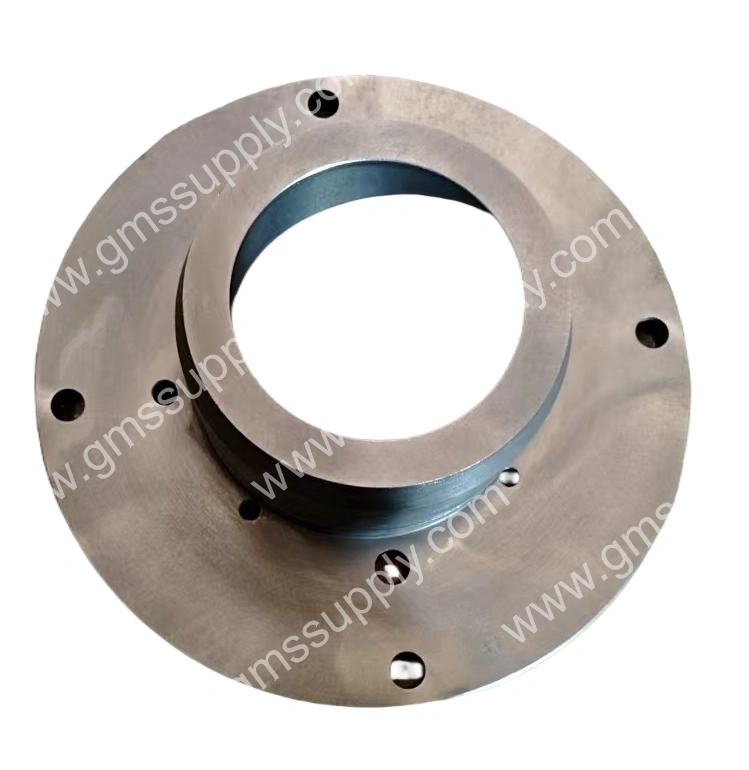
Understanding Hydraulic Outboard Bearing Housing and Its Function
Hydraulic outboard bearing housings are protective enclosures of spherical roller bearings for high-load applications. These particular housings are quite different from normal bearing mounts in that they have to take care of the radial load of the rotating equipment as well as the axial thrust forces associated with hydraulic systems. The sturdy structure is designed to meet the special needs of equipment such as concrete mixer reducers, centrifugal pump assemblies, and hydraulic drive trains where continual vibration and environmental pollutants threaten bearing integrity.
The P/N 22224-01-43 and P/N 644324501 housings are precision-machined components, particularly developed for use with the 22224 series spherical roller bearing. The inner bores of the bearings are machined to close tolerances so that the outer race of the bearing fits tightly without any slack. This interference fit eliminates the frequent failure mode of bearing spin, when the outer race spins in the housing, creating harmful friction heat. The housing is normally made of high-grade ductile iron, chosen for its good vibration dampening capabilities and its capacity to withstand impact stress during start-up and shut-down cycles.
Another important function of these bearing housings is load distribution. Hydraulic motors may drive big rotating masses. Concentrated forces tend to damage bad housings and cause bearing misalignment. Quality housings distribute these stresses across machined mounting flanges and structural ribs to guarantee geometric stability even under maximum operating circumstances. This immediately translates to a longer bearing service life and less frequent maintenance on your operations due to the structural integrity of this.
GMS bearing housings are manufactured as per ISO 9001 standards, assuring dimensional uniformity and material quality in every single unit. We use coordinate measuring machine verification and non-destructive testing in our manufacturing process to identify any possible casting problems before the components arrive at your plant. This quality assurance technique is in line with the dependability criteria that procurement managers seek when purchasing parts for essential oil drilling equipment and fluid handling systems.
Step-by-Step Installation Process for Hydraulic Outboard Bearing Housing
Successful installation begins long before you pick up a wrench. Pre-installation preparation determines whether your bearing housing will deliver years of trouble-free service or require premature replacement. Gather the necessary tools, including a torque wrench calibrated within the past year, a soft-faced mallet, precision measuring instruments, clean, lint-free rags, and appropriate hydraulic sealant recommended for your operating temperature range. Verify that the housing bore and bearing outer diameter match specifications by consulting technical documentation for both components.
Thoroughly clean the housing with a degreasing solution to remove any protective shipping oils, machining residues, or storage impurities. Using appropriate magnification and illumination, inspect the inside of the bore for any scoring, corrosion, pitting, or dimensional anomalies that might affect the bearing fit For sandmaster pump. The mounting flange surface must be absolutely smooth. A straightedge and feeler gauge may be used to check flatness within manufacturing tolerances. Any dirt, dried hydraulic fluid, or surface imperfections can produce stress concentrations when bolts are tightened, which may cause the flange to split during operation.
Check the bearing itself for shipping damage. Be sure the protective wrapping was not compromised and no moisture entered the sealed bearing. Check the bearing number printed on the side for 22224. Check the bearing OD at many places to check for true roundness. Any out-of-round condition is a sign of damage that will lead to premature failure, no matter how good the housing is. Prepare the mating surface of your equipment frame by cleaning and testing for flatness using the same requirements as the housing.
Apply constant, uniform pressure along the outside race circumference to insert the bearing into the housing bore. Never hit the inner race or rolling elements, since brinelling damage is unnoticeable but disastrous during operation. Sliding the bearing into position should be easy—excessive force indicates a dimensional mismatch that needs prompt inquiry. Install the housing assembly on the equipment mounting surface and engage alignment pins or dowels before bolting.
Start hand-threading mounting bolts to eliminate cross-threading. Tighten bolts in a star pattern to properly distribute clamping pressures throughout the flange perimeter and avoid bearing binding. Use your calibrated torque wrench to get each bolt to the manufacturer's required torque in three stages: 30%, 70%, and 100%. Progressive tightening minimises flange warping and maintains the needed bore geometry for bearing performance.
Use the right seal driver tool to gently install the oil seal into its machined recess without cocking or breaking the sealing lip. The seal must fit snugly on its shoulder. Avoid contaminating the bearing region by applying hydraulic sealant to the housing outside, as recommended in the assembly instructions. Make that the shaft rotates smoothly without binding or rough patches that indicate misalignment or contamination by hand.
Maintenance and Troubleshooting for Hydraulic Outboard Bearing Housing
Routine maintenance prolongs bearing housing life and avoids production-halting problems. Base your lubrication schedule on equipment duty cycle and operational conditions. The 22224 bearing is pre-greased for initial usage, although relubrication periods vary with temperature, shaft speed, and impurities. To determine baseline bearing housing temperature, use infrared thermography during normal operation. Temperature spikes beyond 20°F above baseline generally signal lubrication, bearing wear, or alignment issues that need quick attention.
Listen for strange operating noises. A continuous low-frequency hum indicates good bearing assemblies, whereas grinding, clicking, or screaming signals trouble. Use vibration analysis to uncover early problems—baseline your equipment when new, then monitor it regularly. High vibration amplitudes in certain frequency bands indicate failure modes, enabling you to plan repairs before catastrophic failure.
Monthly check for hydraulic fluid leaking around the housing perimeter and shaft seal for For sandmaster pump. Small seepage may indicate seal deterioration, whereas large leakage may indicate housing deformation or faulty installation. Use your calibrated torque wrench to check mounting bolt torque quarterly and tighten any heat-cycling- or vibration-loosened fasteners. To create reliability trends and optimise replacement schedules, record all maintenance operations, measurements, observations, and corrective actions.
Premature bearing failure, housing fractures, and leaking after seal replacement are common repair issues. Causes of premature bearing wear include contamination during installation, poor lubrication, and misalignment between the bearing housing and mating equipment. Mounting bolt holes usually fracture the housing due to over-torqued fasteners or uneven mounting surfaces. A continuous seal leaking after installation indicates housing bore wear preventing seal compression.
Optimizing Your Hydraulic Outboard Bearing Purchase and Supply Chain
Strategic sourcing of hydraulic bearing housings is more than just locating the exact part number. Managing lead time is crucial when equipment downtime costs thousands of dollars per hour. Keeping partnerships with providers that often carry P/N 22224-01-43 and P/N 644324501 ensures that you are protected against unexpected failures. Think over possible suppliers not only in terms of the unit pricing but also in terms of inventory depth, location, and order fulfilment dependability. Usually, the lowest-cost supplier also has lead times that negate any savings in purchasing price when considering the cost of downtime.
Build a formal supplier qualification process to evaluate production capabilities, quality systems, and service responsiveness. Before you place large purchases, get material certificates and dimensional inspection reports. Ask about their manufacturing capacity and their average lead times during high-demand periods. Do they have technical support capabilities? Can they give application engineering, troubleshooting, and installation help as needed? Strategic supply partners are defined by these qualities, not transactional suppliers.
Part number cross-referencing capabilities improve supply chain flexibility and decrease obsolescence risk. This means you can get functionally identical parts from other suppliers to keep things running when your equipment becomes older, and the original manufacturer’s support fades away. • Keep accurate records on equipment, including bearing housing specs, installation dates, and maintenance records. This documentation helps fast sourcing in emergencies and supports data-driven choices for preventative replacement scheduling.
Bulk buying deals may result in reduced per-unit prices and guaranteed availability in times of supply chain interruption. However, evaluate the expenses of holding inventory against the advantages of volume discounts—excess stock locks up money and risks obsolescence as equipment configurations change. Talk to your supplier about consignment inventory programs or planned supply agreements that optimise cash flow and yet provide timely parts availability.
Conclusion
Proper installation and maintenance of Housing, Hydraulic Outboard Bearing (P/N 22224-01-43/644324501) protects your investment in critical hydraulic systems supporting oil and gas drilling operations. The installation process demands attention to cleanliness, dimensional verification, and proper torque application to achieve optimal bearing life. Regular maintenance, including lubrication management, temperature monitoring, and vibration analysis, detects developing problems before catastrophic failure occurs. Strategic procurement decisions balance component quality, supplier reliability, and supply chain responsiveness to minimize downtime costs. Working with qualified suppliers who understand these technical requirements ensures your operations maintain the uptime and reliability that competitive markets demand.
FAQ
1. Can this housing work with bearings other than the 22224 series?
The housing design accommodates only 22224 series spherical roller bearings due to precisely machined bore dimensions. Installing different bearing sizes compromises the interference fit required for proper load transfer and will result in bearing spin and rapid failure. Always verify bearing designation matches housing specifications before installation.
2. What causes cracks in the mounting flange?
Flange cracking typically results from excessive bolt torque that exceeds the ductile iron's yield strength or from uneven mounting surfaces that create stress concentrations. Using a calibrated torque wrench and ensuring flat, clean mating surfaces prevents this failure mode. Inspect mounting surfaces for debris or distortion before installation.
3. How do I identify quality housings during procurement?
Quality housings include material certifications documenting ductile iron grade and mechanical properties. Suppliers should provide dimensional inspection reports confirming bore tolerances and mounting surface flatness. Look for evidence of non-destructive testing, such as magnetic particle inspection. ISO 9001 certification indicates systematic quality management throughout production.
Partner with GMS for Reliable Hydraulic Bearing Housing Supply
GMS delivers complete solutions for your hydraulic bearing housing requirements with ISO-certified quality and over a decade of industry experience serving oil and gas drilling operations. As a trusted supplier of Housing, Housing, Hydraulic Outboard Bearing (P/N 22224-01-43/644324501), and comprehensive 250 Series centrifugal pump components, we maintain substantial inventory for rapid delivery that keeps your equipment running. Our products are 100% interchangeable with standard components from major brands, providing the performance reliability your operations demand at competitive pricing. We support procurement professionals with flexible solutions, technical guidance, and responsive after-sales service that reduces your total cost of ownership. Contact our team at sales@gmssupply.com to discuss your specific requirements and discover how our inventory depth and manufacturing capabilities can strengthen your supply chain.
The above-mentioned brands are used for part number reference only. GMS is not an authorized agent or representative of any of the brands mentioned.
References
1. Bearing Installation and Maintenance Guide, Industrial Equipment Publishers, 2022.
2. Hydraulic System Component Specifications for Heavy Equipment, Mechanical Engineering Press, 2021.
3. Spherical Roller Bearing Application Handbook, Technical Publications International, 2023.
4. Ductile Iron Properties and Applications in Industrial Components, Materials Science Journal, 2020.
5. Preventive Maintenance Strategies for Hydraulic Drive Systems, Equipment Reliability Institute, 2022.
6. Quality Assurance Standards for Industrial Bearing Housings, Manufacturing Technology Review, 2021.
Learn about our latest products and discounts through SMS or email