- English
- French
- German
- Portuguese
- Spanish
- Russian
- Japanese
- Korean
- Arabic
- Greek
- German
- Turkish
- Italian
- Danish
- Romanian
- Indonesian
- Czech
- Afrikaans
- Swedish
- Polish
- Basque
- Catalan
- Esperanto
- Hindi
- Lao
- Albanian
- Amharic
- Armenian
- Azerbaijani
- Belarusian
- Bengali
- Bosnian
- Bulgarian
- Cebuano
- Chichewa
- Corsican
- Croatian
- Dutch
- Estonian
- Filipino
- Finnish
- Frisian
- Galician
- Georgian
- Gujarati
- Haitian
- Hausa
- Hawaiian
- Hebrew
- Hmong
- Hungarian
- Icelandic
- Igbo
- Javanese
- Kannada
- Kazakh
- Khmer
- Kurdish
- Kyrgyz
- Latin
- Latvian
- Lithuanian
- Luxembou..
- Macedonian
- Malagasy
- Malay
- Malayalam
- Maltese
- Maori
- Marathi
- Mongolian
- Burmese
- Nepali
- Norwegian
- Pashto
- Persian
- Punjabi
- Serbian
- Sesotho
- Sinhala
- Slovak
- Slovenian
- Somali
- Samoan
- Scots Gaelic
- Shona
- Sindhi
- Sundanese
- Swahili
- Tajik
- Tamil
- Telugu
- Thai
- Ukrainian
- Urdu
- Uzbek
- Vietnamese
- Welsh
- Xhosa
- Yiddish
- Yoruba
- Zulu
Sandmaster Pump Shaft 20939-02-33: Short Frame Pump Guide
When your business depends on constantly moving fluids in oil and gas drilling settings, it's important that all of the parts that rotate properly work together. The Sandmaster Pump shaft 20939-02-33 is the main part of short-frame centrifugal pumps. It transfers torque from the drive system to the impeller and can handle heavy loads in slurry applications that are rough. This guide walks you through specs, maintenance plans, and things to think about when buying something. This will help you make smart choices that will cut down on downtime and keep running costs low.

Understanding the Technical Profile of Part Number 20939-02-33
Precision-engineered and made from 42CrMo chromium-molybdenum alloy steel, the shaft with the number P/N 20939-02-33 is a rotating part. This choice of material gives the shaft great tensile strength and toughness, so it can handle the repeated stress patterns that come up in drilling mud circulation systems and hydraulic fracturing support operations.
Heat treatments are used on 42CrMo alloy steel to get it to a hardness range that balances resistance to wear with flexibility. The chromium content makes the material more resistant to corrosion when it comes into contact with drilling fluids that are based on water, and the molybdenum content makes it better at keeping its shape at high temperatures. The shaft can work reliably in solid control systems with abrasive particles constantly challenging the surfaces of parts because of its metal composition.
The short frame design cuts the overall length by about four inches compared to normal setups. This makes the footprint smaller, which is great for installing mobile equipment. This reduction in dimensions is especially helpful in frac truck uses where equipment selection is limited by space. Radial load distribution is affected by the shorter bearing span geometry, which means that precise manufacturing tolerances are needed to keep the alignment along the power transmission path.
Precision grinding is done on the journal surfaces of bearings to meet concentricity standards that stop vibrations at speeds up to 3500 RPM. Standardised profiles for keyway dimensions make sure that the impeller is securely attached and make field assembly possible without the need for special tools. The coupling end can be used with different drive setups, such as straight motor mounting and hydraulic motor configurations, which makes it useful for a range of pump skid designs.
This part is sold by GMS under the part number GMS-S023939, which is the same in size and material as P/N 20939-02-33 for MISSION Sandmaster. Our manufacturing process checks every step of the way, from making sure the raw materials are correct to making sure the final dimensions are correct. This makes sure that every shaft has the right mechanical properties for tough fluid handling jobs. Our quality control systems are governed by ISO 9001 approval, which gives procurement teams written proof of consistent processes.
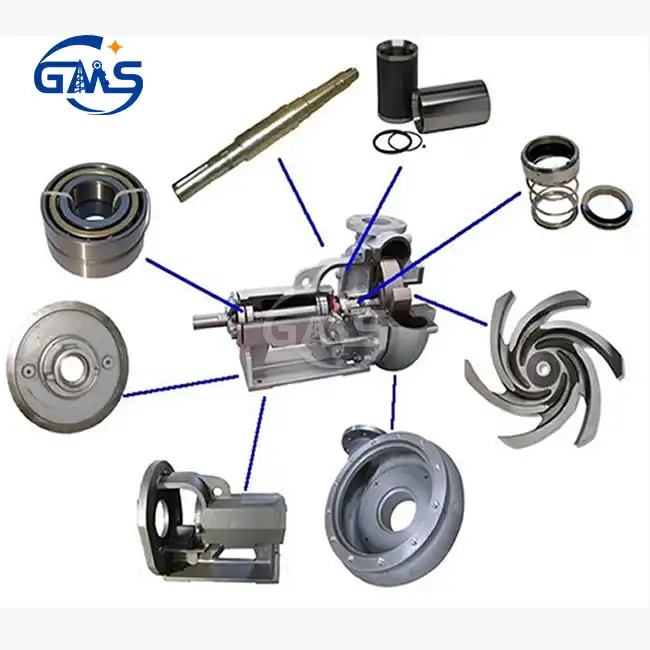
Other short frame parts that work with the shaft are the HT250 cast iron frame (P/N 20938-02-1), the QT700 ductile iron hydraulic bearing housing (P/N 2224-01-43), and the QT500 hydraulic drive adapter (P/N 22225-01-01). This assembly works with pump configurations from 3x2x13 models to 10x8x14 sizes. It can handle flow rates and discharge pressures that are common in charge pump and blending operations.
Installation Guidelines and Operational Maintenance
Following the right steps during installation will protect your investment and set the stage for a long-lasting work life. Before putting the shaft unit in place, make sure that the bores of the bearing case are smooth and free of corrosion or other debris. Bearing parts should be properly oiled according to the manufacturer's instructions, paying special attention to which types of grease work best with different temperature ranges.
When putting things together, you have to pay close attention to how the keyways are aligned so that stress doesn't build up and cause fatigue cracks. The placement of the impeller needs to take into account axial gaps that allow for heat expansion while keeping the hydraulic efficiency high. The right finish on the shaft surface is important for mechanical seals and packing arrangements, so these touch areas must be inspected before installation.
Setting up a preventive maintenance schedule makes parts last longer and stops them from breaking down when they're least expected. Monitoring the temperature of a bearing gives you early warning when the grease is wearing out or the bearing is not aligned properly. Unusual sound patterns can often show that problems are starting to happen, like bearing wear or an imbalanced impeller, so they can be fixed before they fail completely.
Measurements of shaft runout taken at regular maintenance times show that problems are getting worse. If the runout is more than 0.003 inches, the part needs to be replaced because continuing to use it could damage nearby parts like seals and bearings. Looking at keyways and threaded areas with the naked eye can help find fretting wear or thread damage that could weaken the assembly.
How often you need to lubricate depends on the operating conditions. Conditions that are rough need more frequent attention. Using the right type of lube is important for protecting bearings because greases that don't work well together can split or lose their viscosity at operating temperatures. Keeping detailed service records helps find problems that keep happening and makes maintenance schedules better based on real-world experience instead of general suggestions.
Most of the time, excessive vibration is caused by an imbalance, misalignment, or worn-out bearings. Many shaking problems can be fixed by making sure the couplings are lined up correctly and the impellers are installed correctly. Checking the condition of a bearing by measuring its temperature and listening for noise helps find the cause of vibrations that happen during operation.
Too much runout or bad conditions on the shaft surface can cause seals to fail too soon. Finding cracking or rust in the seal contact area can help you figure out a lot of seal problems. Putting protective sleeves over shaft surfaces that are exposed to rough fluids makes service intervals longer by keeping the primary shaft material material 42CRMO, from wearing down directly.
Shaft breakage is less common but can happen because of overloading or flaws in the metal. When you work against closed discharge valves, you get torque spikes that are higher than the material's yield strength. When foreign objects get stuck in the impeller, they cause similar stress concentrations. Material analysis after a failure helps figure out whether practical factors or poor quality of the materials led to the accident. This information is used to make decisions about both buying and operations.
Making Informed Procurement Decisions
When picking parts for important pump systems, you have to think about a lot of things, like technical specs, shipping reliability, and lifecycle costs. The short frame shaft configuration is used in certain situations where small dimensions make it possible to integrate equipment that standard-length parts can't accommodate.
When looking at suppliers, certification qualifications give you concrete proof that they can make things. ISO 9001 approval shows that quality management methods have been written down and include controlling nonconforming products, inspecting dimensions, and tracking materials. These systems lower the risk of procurement by setting standard ways of making things instead of relying on the judgment of each inspector.
Unexpected breakdowns of equipment create a sense of urgency that makes the procurement process harder. When suppliers keep goods on hand, businesses can respond quickly when they need to. GMS keeps P/N 20939-02-33 in stock, and normal amounts usually have wait times of one week. This helps maintenance teams keep downtime to a minimum during emergency repairs.
Delivery times may be longer if you need more inventory or have specific requirements, so planning ahead is helpful for planned maintenance tasks. Building ties with prompt suppliers gives you choices when you need them right away, since suppliers who already have customers tend to give them priority during times of high demand.
Pricing structures are based on a number of factors, such as the number of orders, the delivery requirements, and the terms of payment. Businesses that keep their own spare parts inventory usually find that bulk purchase agreements save them money. Instead of just looking at unit prices, it's better to compare seller offers based on the total acquisition costs, which include freight, handling, and expediting fees.
Building Confidence Through Quality Assurance
Our way of making things puts more emphasis on process control than just final inspection. Verification of the raw material proves the makeup of the alloy before any machining operations start for the Sandmaster Pump shaft 20939-02-33. This keeps non-conforming material from getting into production. The parameters of the heat treatment are tracked and recorded to make sure that the mechanical properties are the same from one production batch to the next.
Coordinate measuring tools are used for dimensional checking to check for important limits like bearing journal diameters, concentricity, and surface finish. Magnetic particle inspection and other non-destructive testing methods can find breaks in the ground that could cause fatigue cracks to form over time. With these quality controls, you can be sure that the parts will work as expected in tough situations.
Technical questions come up during both the evaluation of the procurement and the use of the product. Our team helps customers match the specs of parts to their operational needs by providing application support. When questions come up about installation or performance, the experienced technical staff can help because they know a lot about oil and gas drilling applications.
Documentation, such as dimensional drawings and material certifications, helps customers make sure the quality of their products meets regulatory standards. Keeping detailed records helps operations teams check the specs of parts when they are planning repair tasks or looking into problems with performance.
We've been in the oil and gas drilling business for over ten years, so we know what our customers want. Managers of procurement need deliveries to be reliable. Maintenance supervisors need parts that always work well, even when conditions are tough. When things go wrong quickly, operations teams need help right away. These ideas affect how we handle customer service and product quality.
Conclusion
The short frame pump shaft P/N 20939-02-33 is an important part of centrifugal pumps used in oil and gas drilling, where limited room and tough service conditions make it hard to build the right equipment. Choosing the right materials, making sure the part is manufactured accurately, and keeping it in good shape are what decide whether this part works reliably or causes costly downtime. Knowing the technical details, installation needs, and buying factors helps you make smart choices that improve the operational dependability and lifecycle costs of your fluid handling systems.
FAQ
1. How does the 42CrMo material benefit operational performance?
The chromium-molybdenum alloy has a high tensile strength and is still tough, so the shaft can handle being loaded and unloaded over and over again in fluids that are rough. The chromium content makes it resistant to corrosion from drilling mud, and the molybdenum content makes it stronger at high temperatures. In demanding oil and gas drilling jobs where part failure causes big problems with operations, this combination supports reliable operation.
2. What distinguishes short frame designs from standard pump configurations?
The length reduction of about four inches makes the assembly smaller, making it better for installing mobile equipment in places where standard frame pumps wouldn't fit. This design keeps the hydraulic performance while making the size smaller. This makes it especially useful for frac trucks and other mobile drilling support equipment, where limited space limits the choice of components.
3. Can welding repair damaged threads on the shaft?
Welding fixes weaken the heat-treated metallurgical structure of 42CrMo steel, causing stress clusters that usually lead to failure before their time. The thermal cycles that happen during welding change the properties of the material in unpredictable ways. When thread damage happens, replacement is the best way to fix it. This method keeps things reliable instead of putting them at risk of catastrophic failure because the material is getting weaker.
Partner With a Reliable Sandmaster Pump Shaft 20939-02-33 Supplier
GMS has been supplying oil and gas drilling operations across North America with centrifugal pump parts for more than ten years. As a well-known maker and supplier of Sandmaster Pump shaft 20939-02-33 assemblies, we keep a lot of them in stock so that we can quickly meet your operational needs. Our ISO 9001-certified manufacturing processes ensure consistent quality, and our low prices and flexible minimum order quantities make it easy to handle both emergency repairs and planned maintenance. Our skilled technical support team can help you choose the right parts and solve any problems you're having with installation or performance. You can talk to our buying experts at sales@gmssupply.com about your unique needs, get full product specs, or get prices for your next maintenance cycle. We're committed to helping your business succeed by giving you reliable products and quick service.
The above-mentioned brands are used for part number reference only. GMS is not an authorized agent or representative of any of the brands mentioned.
References
1. American Petroleum Institute. "Recommended Practice for Centrifugal Pump Installation and Operation in Oilfield Services." API Standard 610, 11th Edition, 2020.
2. Hydraulic Institute. "Centrifugal Pump Design and Application Guidelines for Industrial Fluid Handling Systems." Hydraulic Institute Engineering Standards, 2019.
3. Materials Engineering Society. "Heat Treatment and Metallurgical Properties of Chromium-Molybdenum Alloy Steels in Rotating Equipment Applications." Journal of Materials Processing Technology, Vol. 47, 2021.
4. National Association of Corrosion Engineers. "Material Selection for Pumps in Abrasive Drilling Fluid Service." NACE Publication 3T199, 2018.
5. Pump Systems Engineering Council. "Maintenance Best Practices for Centrifugal Pumps in Mobile Drilling Operations." Technical Bulletin PSE-2022-08, 2022.
6. Society of Petroleum Engineers. "Equipment Reliability Standards for Fracturing Support Systems and Auxiliary Pumping Equipment." SPE Monograph Series, Volume 28, 2020.
Learn about our latest products and discounts through SMS or email