- English
- French
- German
- Portuguese
- Spanish
- Russian
- Japanese
- Korean
- Arabic
- Greek
- German
- Turkish
- Italian
- Danish
- Romanian
- Indonesian
- Czech
- Afrikaans
- Swedish
- Polish
- Basque
- Catalan
- Esperanto
- Hindi
- Lao
- Albanian
- Amharic
- Armenian
- Azerbaijani
- Belarusian
- Bengali
- Bosnian
- Bulgarian
- Cebuano
- Chichewa
- Corsican
- Croatian
- Dutch
- Estonian
- Filipino
- Finnish
- Frisian
- Galician
- Georgian
- Gujarati
- Haitian
- Hausa
- Hawaiian
- Hebrew
- Hmong
- Hungarian
- Icelandic
- Igbo
- Javanese
- Kannada
- Kazakh
- Khmer
- Kurdish
- Kyrgyz
- Latin
- Latvian
- Lithuanian
- Luxembou..
- Macedonian
- Malagasy
- Malay
- Malayalam
- Maltese
- Maori
- Marathi
- Mongolian
- Burmese
- Nepali
- Norwegian
- Pashto
- Persian
- Punjabi
- Serbian
- Sesotho
- Sinhala
- Slovak
- Slovenian
- Somali
- Samoan
- Scots Gaelic
- Shona
- Sindhi
- Sundanese
- Swahili
- Tajik
- Tamil
- Telugu
- Thai
- Ukrainian
- Urdu
- Uzbek
- Vietnamese
- Welsh
- Xhosa
- Yiddish
- Yoruba
- Zulu
What Does a 694-22-0 Runner Guide Do in Top Drive Systems?
It is important for procurement managers to know what the 694-22-0 runner guide does when they are in charge of top drive operations in oil and gas drilling settings. During drilling cycles, this part moves the carriage unit smoothly along the guide beam as a precision guide device. One of the most important, the 694-22-0 runner guide keeps the alignment stable under dynamic loading conditions, which stops the drill bit from moving laterally and could lower its efficiency. Its steady performance has a direct effect on how well the equipment works, how safe it is, and how much it costs to run across all drilling projects.
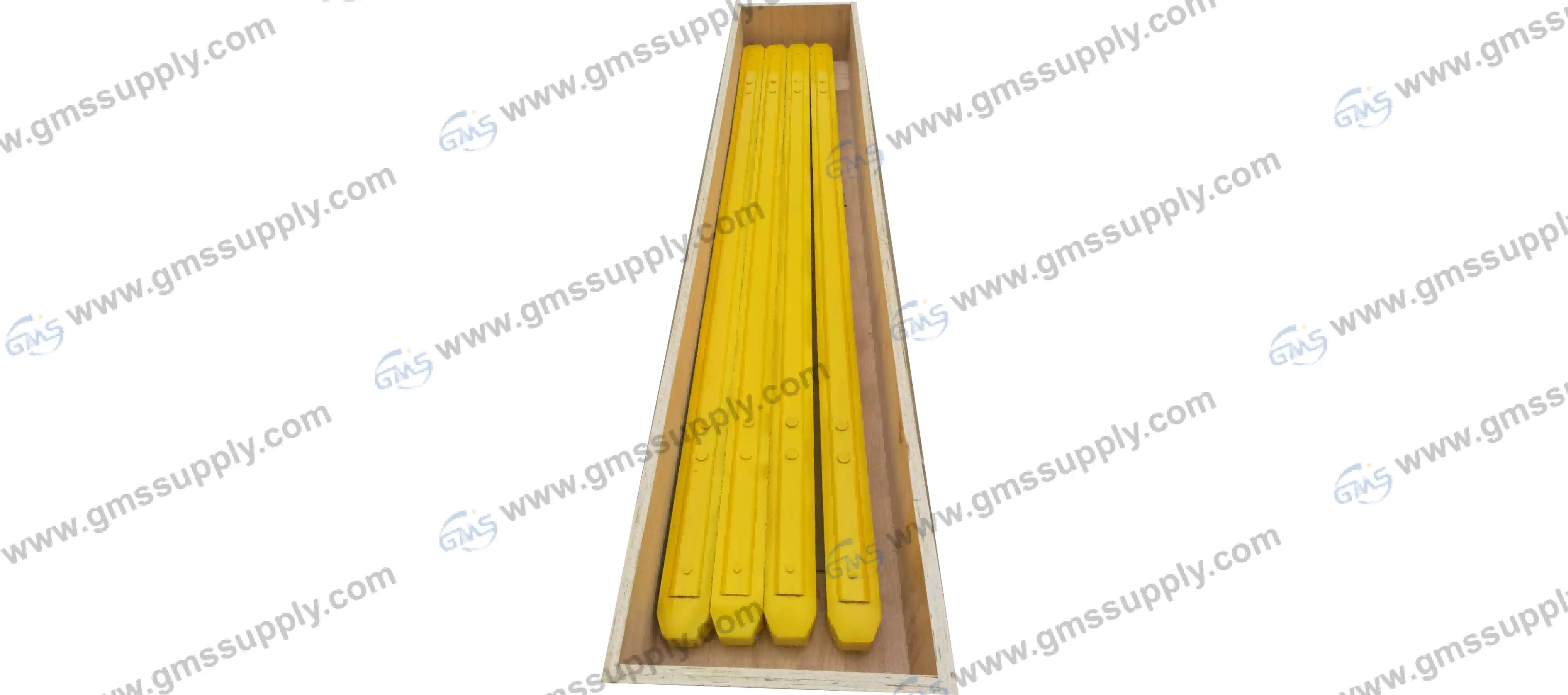
Understanding the 694-22-0 Runner Guide: Function and Importance
Within top drive systems, the 694-22-0 runner guide connects the moving carriage sections to the fixed guide beams. During drilling operations, this part takes the horizontal forces that come from torque transfer and keeps the carriage perfectly aligned vertically as it moves along the guide frame. Several important jobs are done at the same time by the running guide part. Spreading the contact loads across the bearing surfaces reduces the number of areas where wear is concentrated. The part also reduces shocks that are sent through the drilling string, which protects the hydraulic and electrical systems inside the top drive assembly. It keeps the rotational force from throwing off the alignment between the drive mechanism and the wellbore centerline by making constant contact with the guide beam. Material engineering is a key part of how well runner guides work. Wear-resistant alloys are used in the 694-22-0 runner guide to make it strong enough to work in drilling mud and keep its shape even when the temperature changes that are normal in drilling operations. During production, surface treatments are used to improve lubricity. This lowers friction coefficients, which would otherwise speed up wear rates and raise parasitic power usage. The 694-22-0 is especially useful for businesses that use Canrig 8035, 8050, and 6027 top drive types because it is compatible with those models. These systems depend on the runner guide to keep the main shaft and the drillstring link straight. This stops eccentric loads, which break down bearings and seals too soon. This part works with other parts that go with it, like guide beam kits, carriage mounting tools, and methods for distributing oil. When you have the right fitting limits, the load is spread evenly across the mating surfaces, which stops stress from building up that can cause fatigue cracks. When buying teams look at new parts, dimensional accuracy and material approval become the most important selection criteria.
Common Issues with the 694-22-0 Runner Guide and Maintenance Best Practices
As they work in oil drilling uses, the 694-22-0 runner guides have to meet tough service standards. When things are exposed to abrasive particles, corrosive fluids, and repeated loading patterns, they break down in certain ways that repair teams should be aware of. The most common type of deterioration is surface weathering. Sand and other abrasives in drilling mud work like a honing compound to remove material slowly from surfaces that touch. When you look closely, you can often see smooth wear tracks that line up with the carriage's path. When the amount of wear goes beyond the design limits, the accuracy of the guidance system decreases, allowing horizontal play that speeds up damage to secondary components. Corrosion pitting happens when protective coatings on the surface wear off, usually in places with a lot of chlorine or hydrogen sulfide. Pits raise stress and become places where wear cracks start when the load is cycled. Temperature cycling makes this process work worse because differences in thermal expansion between base materials and surface treatments cause tiny cracks that let acidic substances in. Another type of failure is caused by not having enough lubrication. Boundary lubrication conditions happen when systems that give lubrication don't work properly or when check times get too long. Metal-to-metal contact makes heat and speeds up the wear of adhesives, which leads to surface galling that makes contact patches rougher and raises the friction loads. To make running guides last longer, they need to be maintained in an organized way. Comparing measurements to normal dimensions helps figure out how long a service will last and when to replace it so that major failures don't stop operations. Managing lubrication has a direct effect on how long a 694-22-0 runner guide lasts. Check that the oil gets to the areas where the runner guides touch by looking at the integrity of the distribution lines and making sure that the grease is the right consistency for the temperature ranges that it will be used in. Flushing away the drilling mud that has built up during lubricant service stops gritty dirt from moving through the bearing surfaces. In situations where acidic contaminants are known to be present, inspecting more often lets problems be found early, before cracking weakens the structure.
How to Source and Purchase Canrig 694-22-0 Runner Guides?
Buying plans for 694-22-0 runner guide parts have to balance a lot of different factors, such as the cost, the availability of the parts, and the trustworthiness of the suppliers. Building partnerships with well-known distributors who keep stock and offer technical help has benefits that go beyond just comparing prices. Suppliers who are qualified show a few important traits. Traceability is important for quality control systems, and documentation, such as material certifications and dimensional inspection records, helps with this. Technical questions that come up during installation or troubleshooting can be quickly answered through responsive contact routes. Correctly identifying parts is the first step in making buying processes work well. The 694-22-0 runner guide is the main reference, but to avoid buying mistakes, make sure it works with the Canrig 8035, 8050, or 6027 top drive model numbers. Giving providers the model numbers and installation dates of equipment helps them make sure that it fits correctly, even if it has been changed or modified during its service life. Being clear about lead times helps with planning. When a supplier has stock, they can usually ship within days. However, for build-to-order parts, it could take weeks or months. When maintenance teams know these dates, they can arrange part replacements for planned breaks instead of having to rush for faster delivery when something goes wrong without warning. Buying in bulk for parts that are used a lot can lower the cost per unit while still making sure they are available. Long-term ties with suppliers bring more value over time. Established sellers get to know their customers' fleets of equipment, which lets them make proactive suggestions when better part designs become available or when usage patterns suggest that parts should be replaced before they break.
Benefits of Using Quality Runner Guides in Top Drive Systems
Decisions about the quality of parts have an effect on the whole drilling process and on many performance aspects at the same time. Quality 694-22-0 runner guide parts usually cost more to buy than cheaper ones, but the practical benefits always make up for the extra cost when looking at the whole span of the equipment. High-quality runner guides stay the same size over the course of their useful lives, which keeps the alignment accurate and stops nearby parts from wearing out faster. This dependability immediately leads to less time spent on non-productive tasks, which is the most important factor in drilling economy. When runner guides only need to be replaced during regular repair windows instead of having to be shut down without warning, operations can keep drilling going and avoid the added costs of equipment and people that aren't being used. Predictable behavior of parts makes planning upkeep easier. Quality parts have uniform wear patterns that let you replace them based on their state instead of replacing them too soon because you don't know how reliable they are. This predictability lowers the need for spare parts inventory because repair teams can plan replacements with trust instead of keeping parts on hand in case they break down early. Keeping the top drive properly aligned is good for safety reasons as well as practical ones. When things aren't lined up right, they put extra stress on structural parts and can even damage safety-critical systems like torque arrestors and emergency brake mechanisms. When these safety systems are needed, they will work as planned thanks to good runner guides that keep their precise guidance over time. When 694-22-0 runner guide parts are made using ISO 9001 quality management systems, they come with paperwork that can be tracked, which meets audit standards and shows that proper equipment maintenance was done. Total cost analysis shows benefits that aren't seen when prices are compared first. Maintenance work costs are lower when quality part lasts longer between replacements, which is because the expert hours spent changing out parts often cost more than the parts themselves. Longer service times also cut down on the number of maintenance jobs that need to be done in conjunction with runner guide changes, such as checking the alignment, replacing seals, and servicing the lubrication system. Secondary cost savings come from parts nearby wearing out less quickly.
Conclusion
The 694-22-0 runner guide is an important part of Canrig's top drive systems because it provides accurate direction that keeps operations running smoothly even during long drilling rounds. Procurement teams can make decisions that improve equipment efficiency and running costs by knowing how it works mechanically, how often it needs to be maintained, and where to get it. Even though they cost more at first, high-quality parts made to strict standards always work better than options when tested over their entire service lifecycles. As drilling operations are put under more and more pressure to be as efficient as possible while still following safety rules, strategic 694-22-0 runner guide sourcing stops being just a routine necessity and starts being a competitive advantage.
FAQ
Q1: What are the compatible top drive models for the 694-22-0 runner guide?
The part is made to work with Canrig top drive systems and has been tested to work with types 8035, 8050, and 6027. When looking for parts for other top drive models, it's still important to double-check the dimensions, since running changes within model families can cause fitting differences.
Q2: How often should runner guides be inspected during operations?
How often you inspect relies on the working conditions and job cycles. Drilling programs encountering highly abrasive formations or corrosive drilling fluids benefit from increased inspection frequency—potentially at each bit trip or every 250 operating hours. Taking measurements of sizes during checks gives objective information about wear that helps make plans for the future.
Q3: Can runner guides be refurbished, or must they be replaced?
When the surface wear on runner guides is within accepted limits, they can sometimes be fixed up by specialized service providers. But parts with rust pitting, fatigue cracking, or wear that goes beyond what can be fixed need to be replaced to keep things safe and reliable.
Get Reliable Canrig Top Drive Spares from GMS
For more than ten years, GMS has helped oil and gas drilling activities by offering high-quality replacement parts that meet the needs of important equipment systems. As a well-known 694-22-0 runner guide provider, we keep the Runner Guide 102 LG and other related parts in stock. These are made under ISO 9001 certification to meet the highest quality standards around the world. Our inventory level allows for quick fulfillment—many parts ship straight from stock, so there aren't any delays that could affect your maintenance plans. Besides having the products available, we also offer support during the whole buying process, helping to make sure they are compatible and answering questions about how to use them. Contact our team at sales@gmssupply.com to talk about the 694-22-0 runner guide you need and enjoy the peace of mind that comes from working with an experienced provider that wants to help your business succeed.
References
1. American Petroleum Institute. "Specification for Drilling and Production Hoisting Equipment." API Specification 8C, Ninth Edition, 2018.
2. Bellarby, Jonathan. "Well Completion Design: Developments in Petroleum Science, Volume 56." Elsevier Science, 2009.
3. Craft, B.C., Holden, W.R., and Graves, E.D. "Well Design: Drilling and Production." Prentice Hall, 1962.
4. Dykes, Chris, and Rowley, Derek. "Drilling Engineering: Principles and Practice." Society of Petroleum Engineers, 2012.
5. Mitchell, Robert F., and Miska, Stefan Z. "Fundamentals of Drilling Engineering." Society of Petroleum Engineers Textbook Series, 2011.
6. Rabia, Hussein. "Oilwell Drilling Engineering: Principles and Practice." Graham & Trotman Limited, London, 1985.
Learn about our latest products and discounts through SMS or email