N10000 Prox Sensors greatly enhance monitoring in oil and gas operations by enabling maintenance teams to detect wear trends and potential faults early, supporting predictive maintenance. The small form factor offers the best sensing capability while accommodating space restrictions typical of drilling equipment. Signal stability stays steady despite exposure to electromagnetic interference prevalent in industrial situations. Operators gain real-time awareness of component positions, improving control and reducing error-related risks. Engineering teams use continuous position feedback to develop advanced automated control algorithms, optimizing drilling performance while lowering operator workload and improving overall safety and operational efficiency.
- English
- French
- German
- Portuguese
- Spanish
- Russian
- Japanese
- Korean
- Arabic
- Greek
- German
- Turkish
- Italian
- Danish
- Romanian
- Indonesian
- Czech
- Afrikaans
- Swedish
- Polish
- Basque
- Catalan
- Esperanto
- Hindi
- Lao
- Albanian
- Amharic
- Armenian
- Azerbaijani
- Belarusian
- Bengali
- Bosnian
- Bulgarian
- Cebuano
- Chichewa
- Corsican
- Croatian
- Dutch
- Estonian
- Filipino
- Finnish
- Frisian
- Galician
- Georgian
- Gujarati
- Haitian
- Hausa
- Hawaiian
- Hebrew
- Hmong
- Hungarian
- Icelandic
- Igbo
- Javanese
- Kannada
- Kazakh
- Khmer
- Kurdish
- Kyrgyz
- Latin
- Latvian
- Lithuanian
- Luxembou..
- Macedonian
- Malagasy
- Malay
- Malayalam
- Maltese
- Maori
- Marathi
- Mongolian
- Burmese
- Nepali
- Norwegian
- Pashto
- Persian
- Punjabi
- Serbian
- Sesotho
- Sinhala
- Slovak
- Slovenian
- Somali
- Samoan
- Scots Gaelic
- Shona
- Sindhi
- Sundanese
- Swahili
- Tajik
- Tamil
- Telugu
- Thai
- Ukrainian
- Urdu
- Uzbek
- Vietnamese
- Welsh
- Xhosa
- Yiddish
- Yoruba
- Zulu
What Is N10000 Prox Sensor and How It Works?
What is the N10000 Prox Sensor and how it works? The N10000 Prox Sensor represents a critical proximity detection component designed for top drive systems in oil and gas drilling operations. This specialized sensor module uses advanced signal processing technology to detect object presence and measure distance parameters within drilling equipment. Operating through electromagnetic field detection, the N10000 Prox Sensor provides real-time monitoring capabilities essential for maintaining operational safety and equipment performance in harsh drilling environments.
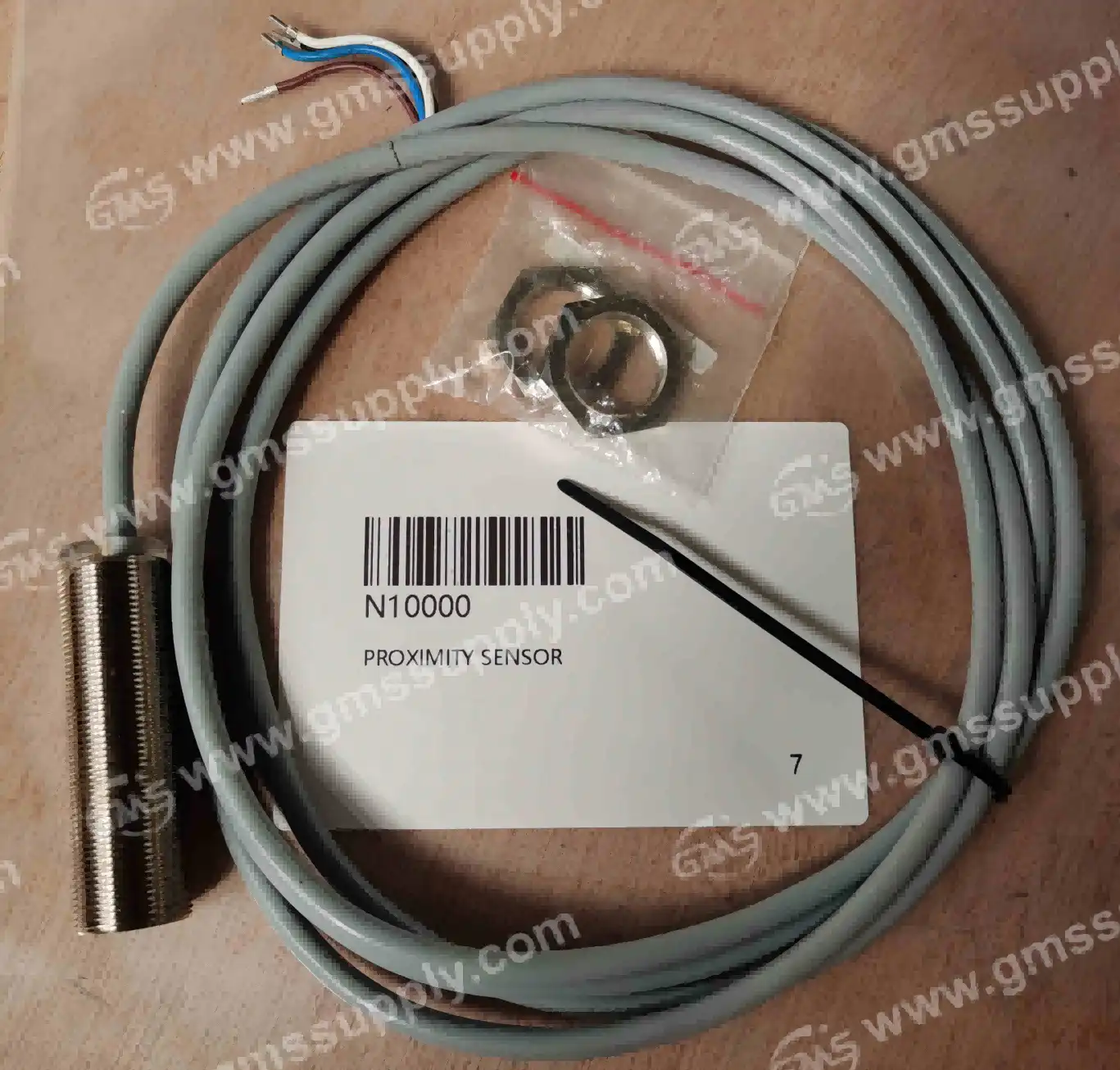

Understanding the N10000 Prox Sensor Technology
The N10000 Prox Sensor acts as a non-contact sensing device that monitors the location and movement of mechanical components inside Canrig top drive systems. This sensor module employs electromagnetic induction principles to produce a sensing field surrounding its active surface. When metallic objects reach this detecting zone, the sensor creates digital output signals that send positioning data to the control system. The sensor's primary technology depends on an integrated circuit architecture that handles analog data from the sensor's front end. This powerful signal processing capacity enables the gadget to filter ambient noise and offer precise proximity readings.
Performance Under Demanding Drilling Conditions
The N10000 Prox Sensor provides constant performance over temperature changes often seen in drilling operations, ranging from -40°C to +85°C. Environmental sensing characteristics make this proximity sensor especially effective in oil and gas applications. The gadget withstands vibration, stress, and exposure to drilling fluids while retaining excellent detection accuracy. Its durable structure comprises sealed housing that prevents contamination from accessing the sensor's internal components. Data gathering from the N10000 Prox Sensor provides real-time monitoring of important mechanical motions inside the top drive assembly. The sensor's quick reaction time provides prompt detection of position changes that might signal equipment breakdown or operating anomalies.
Core Applications and Problem-Solving Capabilities
Proximity detection is a key component of industrial automation systems used in drilling operations to provide equipment protection and operational safety. The N10000 Prox Sensor serves important monitoring demands inside Canrig top drive types 8050, 8035, and 6027AC by delivering continuous position input for moving components. Equipment protection is a main purpose of this proximity sensor technology. The system detects when mechanical parts move beyond safe operating limitations, activating automated safety actions that avoid expensive equipment damage. This proactive capacity cuts maintenance costs and extends equipment lives dramatically. Reliable proximity sensing in drilling equipment significantly increases operational efficiency.
Key Advantages and Performance Benefits
Reliability comes out as the key feature of the N10000 Prox Sensor design. The gadget doesn't need regular maintenance or calibration modifications to function continuously in demanding conditions. This consistent performance drastically lowers maintenance costs and operational downtime. The sensor's effective design is characterized by low power consumption, which makes it appropriate for battery-powered or energy-sensitive applications. The gadget contributes to the overall energy efficiency of the system by using very little current while retaining full operational capabilities. Installation flexibility enables the sensor to adapt to numerous mounting configurations inside top drive assemblies.
Target Applications and User Benefits
Conclusion
The N10000 Prox Sensor is a non-contact electromagnetic detector for Canrig top drive systems. It provides real-time position and distance feedback, enabling equipment protection, safety interlocks, and process optimization. Built for harsh drilling environments, it resists vibration and temperature extremes, offers fast response and stable signals, and supports predictive maintenance to reduce downtime and extend equipment life and operational reliability.
Contact GMS for Reliable N10000 Prox Sensor Solutions
GMS serves as your trusted N10000 Prox Sensor supplier, delivering quality replacement components that match performance specifications of drilling equipment requirements. Our ISO 9001 certified manufacturing ensures consistent quality standards while maintaining competitive pricing for industrial customers. Contact our technical team at sales@gmssupply.com to discuss your N10000 Prox Sensor requirements and receive detailed specifications for your specific top drive applications.
References
1. Industrial Proximity Sensors: Applications and Technology in Oil Field Equipment, Journal of Petroleum Engineering Technology, 2023
2. Automation Systems for Drilling Operations: Sensor Integration and Performance Analysis, Drilling Technology Review, 2022
3. Top Drive System Components: Maintenance and Monitoring Strategies, Oil and Gas Equipment Magazine, 2023
4. Proximity Detection in Industrial Applications: Design Principles and Implementation, Automation Engineering Quarterly, 2022
5. Safety Systems in Drilling Operations: Sensor Technology and Risk Management, Petroleum Safety Journal, 2023
6. Electromagnetic Sensors in Harsh Environments: Performance and Reliability Studies, Industrial Electronics Research, 2022

Learn about our latest products and discounts through SMS or email