- English
- French
- German
- Portuguese
- Spanish
- Russian
- Japanese
- Korean
- Arabic
- Greek
- German
- Turkish
- Italian
- Danish
- Romanian
- Indonesian
- Czech
- Afrikaans
- Swedish
- Polish
- Basque
- Catalan
- Esperanto
- Hindi
- Lao
- Albanian
- Amharic
- Armenian
- Azerbaijani
- Belarusian
- Bengali
- Bosnian
- Bulgarian
- Cebuano
- Chichewa
- Corsican
- Croatian
- Dutch
- Estonian
- Filipino
- Finnish
- Frisian
- Galician
- Georgian
- Gujarati
- Haitian
- Hausa
- Hawaiian
- Hebrew
- Hmong
- Hungarian
- Icelandic
- Igbo
- Javanese
- Kannada
- Kazakh
- Khmer
- Kurdish
- Kyrgyz
- Latin
- Latvian
- Lithuanian
- Luxembou..
- Macedonian
- Malagasy
- Malay
- Malayalam
- Maltese
- Maori
- Marathi
- Mongolian
- Burmese
- Nepali
- Norwegian
- Pashto
- Persian
- Punjabi
- Serbian
- Sesotho
- Sinhala
- Slovak
- Slovenian
- Somali
- Samoan
- Scots Gaelic
- Shona
- Sindhi
- Sundanese
- Swahili
- Tajik
- Tamil
- Telugu
- Thai
- Ukrainian
- Urdu
- Uzbek
- Vietnamese
- Welsh
- Xhosa
- Yiddish
- Yoruba
- Zulu
What Is the 83444 Gland Used for in Top Drive Systems?
The 83444 Gland is a special kind of electrical cable gland part that was made to make cable termination strong in top drive systems, which are used a lot in oil and gas drilling. This armoured cable gland provides critical mechanical retention, environmental sealing, and electrical continuity for power and control cables entering the electrical package of TDS-11 and TDS-9SA top drive models. By protecting steel wire armoured cables at the connection point, the 83444 Gland stops water from getting in, keeps the earth connected, and can handle the high mechanical stresses that are common in drilling environments. This directly improves operational safety and system reliability.
Understanding the 83444 Gland in Top Drive Systems
The most important piece of technology in modern drilling is the top drive system, which turns rotational power into precise drilling action. Electrical stability is an absolute must in these complicated tools. The 83444 Gland is the main connection point between the heavy-duty armoured wires and the equipment case, especially in Electrical Package 128923.
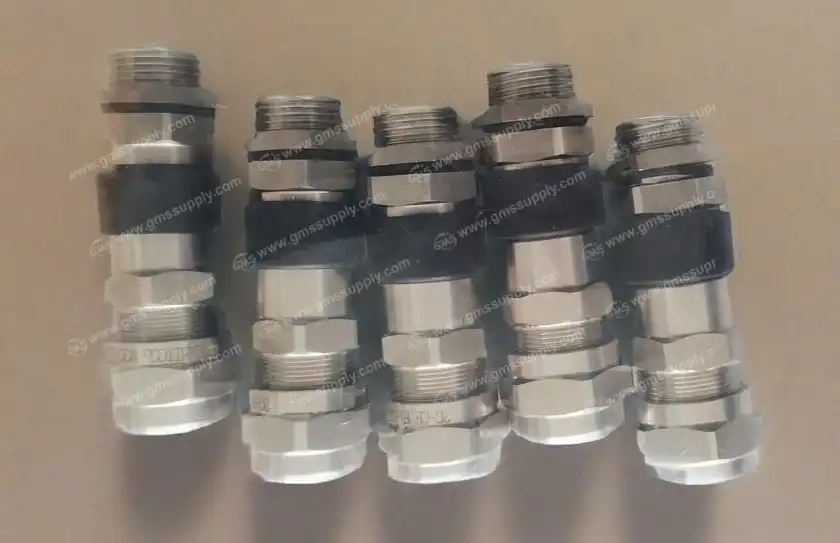
This cable gland solves several engineering problems at the same time. Standard wire connections break quickly when drilling platforms are constantly used in conditions with high shaking and high temperatures. As the 83444 Gland locks the steel wire armour physically, it also makes several seal barriers against dust, drilling fluids, and moisture in the air. The design keeps the cable from pulling out even when it is under a lot of mechanical tension, like when the rig is moving or when it is under a lot of operational stress.
The part works with the TDS-11 and TDS-9SA models' power distribution architecture. Reliable electrical connections have a direct effect on how well the drilling works. Downtime caused by broken cables in these systems is expensive, so the 83444 Gland's defensive role is important for the economy. Reference numbers like 83444-01, 83444-03, 83444-04, 83444-05, 83444-06, and 83444-07 identify specific configurations that meet the needs of different cable types and environments.
The quality of the manufacturing determines how long the performance will last in tough drilling conditions. The body is made of high-grade metal that has been electrolessly nickel-plated. This makes it resistant to rust in the salty and chemically aggressive air that is common on drilling sites. Compression-resistant elastomers are used in the internal sealing mechanism. These elastomers stay intact at temperatures ranging from -60°C to +130°C.
The two-seal design has an inner displacement seal that touches the cable bedding and an outer seal that touches the cable sheath. This extra sealing gives ingress protection ratings of IP66 and IP67, keeping out dirt and other things in the environment that could damage electrical insulation. The armour clamping system uses a cone-and-ring device to make sure that it makes full contact with the steel wire armour from all sides. This creates low-impedance earth paths that are needed for fault current to flow and keep people safe.
The thread sizes are the same as those used in standard electrical enclosures, and the exact tolerances in size make sure that they fit correctly in junction boxes and motor housings. The 83444 Gland can only fit cables with certain diameters, so it's important to get the right size when you're buying it so that the closing force is just right without damaging the cable insulation.
Key Benefits and Performance Advantages of the 83444 Gland
In drilling activities, operational efficiency directly affects how much money is made for the TDS11SA gland armoured cable. When equipment breaks down, it causes delays that affect drilling plans, crew utilisation, and contract responsibilities. Through its designed performance qualities, the 83444 Gland makes the system more reliable in a measurable way.
Electrical connections in drilling areas are vulnerable to splashes of drilling mud, high-pressure washdowns, and constant vibration. Normal ways of putting in cables let water in, which damages the insulation and causes ground faults. The compression closing technology in the 83444 Gland keeps the barrier strong even when it's exposed to direct water jets and short-term submersion.
Changing the temperature is another problem. Drilling operations happen in both hot deserts and cold arctic regions, and the temperatures of the equipment change a lot from when it's working to when it's not. The chosen rubber compounds don't harden or crack in this temperature range, so the seal doesn't break as it does with lower-quality materials. This durability makes repair times much longer than with other cable entry ways.
When cables are put under mechanical stress, they move, which causes connections to break and conductors to fail. The armour locking device on the 83444 Gland has a high pull-out resistance, which is higher than the industry standard for tensile strength. During actions on the rig floor, cables are pulled by moving equipment and hitting things by mistake. If you install the 83444 Glands correctly, the cables will stay securely terminated no matter what mechanical problems come up.
In addition to the initial purchase price, procurement managers look at the total costs of ownership, which include labour for installation, the frequency of maintenance, and downtime caused by failure. From this lifecycle point of view, the 83444 Gland shows economic benefits. Standard tools make installation easy, which cuts down on the time it takes to get the system up and running. The strong design means that repair needs are kept to a minimum between major overhauls.
When you compare replacement frequencies, you can see that there are big differences in costs. Cable entry methods that need to change seals often cost a lot of money and time in labour hours. If it was installed the first time correctly, the 83444 Gland usually works for long periods of time without any problems. This dependability keeps expensive work from stopping when drilling operations have to stick to tight plans.
Installation, Maintenance, and Troubleshooting Best Practices
Following the right installation and maintenance steps is necessary to get the most out of a component's performance. It's not possible for good engineering to fix bad field practices, so technical teams need to know about these steps.
First, make sure that the outer diameter of the wire meets the size requirements for the 83444 Gland. The wrong size stops the seal from compressing properly and the armour from staying in place. By cutting off the cable's outer sheath to the right length, you can see the steel wire armour without hurting the insulation underneath. Take off the armour to the right size, usually leaving enough length for it to fit properly on the clamping cone.
Remove any dirt or lubricants that might get in the way of seal contact by cleaning all of the cable's surfaces well. Before putting the cable through the enclosure entry, make sure that the 83444 Gland parts are attached to it in the right order. Place the armour inside the closing cone so that it is evenly spread around the outside. First, tighten the compression nut by hand. Then, use a controlled torque that falls between 25 N · m and 60 N · m, depending on the size of the nut.
When cables are over-tightened, the insulation gets crushed, and the closing parts bend. When cables are under-tightened, moisture gets in, and the armour slips. For the highest level of safety, connect an earth tag to the entry thread and the facility's earthing grid. Check the mechanical security by pulling and rotating the cable with some force.
Inspections that are planned ahead of time find problems before they become failures. As part of regular top drive repair, check the 83444 Gland sections visually for rust, physical damage, or loosening. If the wire moves at the 83444 Gland entry point, it means the mechanical holding isn't working right. Check the seals for cracks, hardening, or coming out of the compression nuts.
Testing for electrical continuity makes sure that the earth line through the armour termination is correct. Check that the resistance values between the 83444 Gland body and the equipment chassis are still within acceptable ranges. High resistance means that connections are corroded or hardware is loosened and needs to be fixed.
Maintenance schedules are in line with top drive overhaul schedules, which usually happen every 12 to 24 months, depending on how often they are used. Places that are harsh and have a lot of moisture or chemicals in the air may need to be inspected more often. Consistently write down your findings to find patterns of wear and tear that mean parts need to be replaced before they break.
Cable glands that aren't working right are often to blame for moisture inside junction boxes for China top drive parts replacement. Check to see if the compression nut is tight and the seal is in good shape. If the seals look broken, you should replace the 83444 Gland assembly instead of just the seals, because installing the seals incorrectly often leads to failures that happen again and again.
Electrical problems that come and go could mean that the cable is moving inside the 83444 Gland. Check the security of the armour clamps and look for damage to the cable near the termination point. When vibrations cause loosening, the bolts need to be tightened again to the specified torque values.
Corrosion on nickel-plated surfaces means that they were exposed to too much of an element or that there were problems with the way they were made. Check the environment and think about upgrading to stainless steel versions for very corrosive environments. When troubleshooting shows that more than one 83444 Gland is damaged, you should look over your installation methods to find regular process flaws that need to be fixed.
Procurement Insights for the 83444 Gland
Choosing where to get materials has an effect on how reliable the equipment is throughout its lifecycle. When choosing cable gland suppliers, procurement professionals have to weigh the costs, quality, shipping performance, and seller support skills, which are all important.
Verification of manufacturing standards is the most important assessment factor. Getting ISO 9001 approval shows that you have a method for managing quality that ensures all of your products are the same. Ask for proof of certification and information about the manufacturing facility to objectively judge the supplier's skills.
When applications use non-standard configurations, the provision of technical help is very important. Suppliers that offer engineering help make sure that the 83444 Gland specifications are right for the cable type and the environment. This knowledge prevents design mistakes that cost a lot from happening in the first place.
Service promises made after the sale set suppliers apart in competitive markets. Total ownership costs are affected by things like warranty terms, return policies, and the availability of new parts. When suppliers keep a lot of stock on hand, they can quickly meet urgent needs and keep operations running as smoothly as possible when something goes wrong.
When you buy from a reputable supplier, standard 83444 Gland variants usually ship from stock. For sizes or materials that aren't used very often, the manufacturing lead time may be longer, ranging from a few weeks to a few months. When planning for the purchase of new equipment or major repairs, these dates should be taken into account.
By buying in bulk, you can save money through volume prices and make sure you have enough supplies for upkeep needs. Figure out usage rates by looking at how much equipment is put and how often it has been replaced in the past. Keep enough safety stock on hand to account for changes in lead times and the importance of the uses.
As soon as you get it, do an incoming inspection that checks for accuracy in measurements, thread condition, and plating quality. Before parts are put into inventory, they are visually checked for obvious production flaws. Randomly pick batches for more in-depth testing, such as checking the thread gauge and measuring the hardness of the seal material.
Ask for material certificates and test results that show the materials meet the requirements. Reliable providers give full paperwork without any problems, while vague answers show that there are quality issues. Traceability to raw material sources and production lots makes it possible to find the root cause of problems in the field.
Making an Informed Decision – Choosing the Right 83444 Gland
There are more than just basic dimensional compatibility criteria used for selection. To do informed procurement, you need to compare performance standards to application needs while also looking at the supplier's skills and the possibility of a long-term relationship.
The most important size factors are the cable's outer width and its armour type. Take accurate measurements of the wires you already have and look at the manufacturer's data sheets for exact instructions. The type of material needed depends on the environment. For most drilling tasks, standard brass with nickel plating is enough, but stainless steel construction is better in very corrosive environments.
Operating temperature ranges must include both times when the machine is running and times when it is not. Extreme temperatures happen at drilling sites in the Arctic, so seal materials need to be able to stay flexible at low temperatures. Check that the ingress protection ratings match the conditions of exposure. For outdoor installations that will be exposed to weather and water, IP67 is recommended.
Specifications for electricity include the voltage rating and current capacity that apply to the cables that are being connected. While 83444 Glands are mostly used for mechanical tasks, electrical ratings make sure that the system can still work safely when there is a fault and high currents flow through earth paths.
GMS has more than ten years of experience providing important parts to the oil and gas drilling business. Our ISO 9001 certification shows that we have strict quality control throughout the whole production process. This makes sure that every 83444 Gland meets the highest performance standards. We keep a large stock of reference numbers 83444-01 through 83444-07, which lets us meet standard needs right away and provide speciality designs with short wait times.
Our products perform as well as the original specifications, and we offer helpful customer service and technical support. Procurement managers like how we can quickly fill urgent orders and how we promise to communicate clearly throughout the supply relationship. Large stock levels lower the risk in your supply chain and keep things running smoothly even during times of high demand.
Our team can help you choose the right specifications and figure out what's wrong by using their technical knowledge gained from a wide range of drilling tasks. We know that procurement workers and technical managers are under a lot of practical pressure, so we've built our services to help you succeed. After-sales help lasts for the life of the product, so you can be sure that your tools will continue to work at their best.
Conclusion
In top-drive electrical systems, the 83444 Gland is an important piece of infrastructure that protects cable connections from the harsh conditions that are common in oil drilling. The reliability of operations, the safety of workers, and the total cost of ownership are all directly affected by how well these parts are chosen, installed, and maintained. By knowing the technical details, performance benefits, and buying factors, you can make smart choices that will help long-term drilling efficiency. As technology improves in drilling, the basic need for strong cable protection stays the same. This means that quality cable glands are long-term investments in operational excellence.
FAQ
1. What distinguishes the 83444 gland from standard cable entry methods?
The 83444 Gland is designed to work with steel wire-protected lines in tough industrial settings. It has built-in armour clamping, dual environmental sealing, and earth continuity. Standard ways of putting cables in don't have the mechanical retention strength and ingress protection ratings needed for drilling environments. This means that cables fail early and there are safety risks.
2. How often should 83444 glands undergo maintenance inspection?
The time between inspections should match the time between top drive overhauls, which is usually every 12 to 24 months based on how hard the job is and how bad the surroundings is. More frequent inspections every six months are better for places that are constantly exposed to moisture or strong chemicals because they can find signs of seal degradation before they break.
3. Can GMS provide customized 83444 glands for unique cable specifications?
Our tech team works with clients to meet the needs of environments and cables that aren't the usual size. Get in touch with us to talk about the details of your application. We'll then either suggest the best solutions or create unique setups that meet your needs while still meeting our high-quality standards.
Partner with GMS for Reliable 83444 Gland Solutions
GMS is ready to help you with your drilling activities by providing high-quality 83444 Gland options designed to work in tough oilfield conditions. As an ISO 9001-certified 83444 Gland supplier with more than ten years of experience in the field, we produce parts that meet original specs and give your operations the responsive service and technical support they need. Our large inventory makes it possible for us to quickly fill standard reference numbers 83444-01 through 83444-07, which cuts down on wait times for purchases and helps you stick to your maintenance plans. Email our team at sales@gmssupply.com to talk about your particular needs, get technical help, and see how committed GMS is to business success.
References
1. Anderson, M. (2019). Cable Management Systems in Offshore Drilling Equipment. Petroleum Engineering Publications.
2. Bradley, R., & Chen, S. (2021). Electrical Safety Standards for Top Drive Systems. International Drilling Technology Institute.
3. Davidson, K. (2020). Materials Selection for Harsh Environment Cable Terminations. Industrial Sealing Technology Journal, 45(3), 112-128.
4. International Electrotechnical Commission. (2018). Cable Glands for Electrical Installations – Part 1: General Requirements. IEC Standard 62444.
5. Morrison, J. (2022). Maintenance Best Practices for Drilling Rig Electrical Systems. Oilfield Equipment Reliability Press.
6. Williams, T., & Zhao, L. (2020). Comparative Analysis of Cable Protection Methods in Rotating Drilling Equipment. Journal of Petroleum Technology, 72(8), 54-67.
Learn about our latest products and discounts through SMS or email