- English
- French
- German
- Portuguese
- Spanish
- Russian
- Japanese
- Korean
- Arabic
- Greek
- German
- Turkish
- Italian
- Danish
- Romanian
- Indonesian
- Czech
- Afrikaans
- Swedish
- Polish
- Basque
- Catalan
- Esperanto
- Hindi
- Lao
- Albanian
- Amharic
- Armenian
- Azerbaijani
- Belarusian
- Bengali
- Bosnian
- Bulgarian
- Cebuano
- Chichewa
- Corsican
- Croatian
- Dutch
- Estonian
- Filipino
- Finnish
- Frisian
- Galician
- Georgian
- Gujarati
- Haitian
- Hausa
- Hawaiian
- Hebrew
- Hmong
- Hungarian
- Icelandic
- Igbo
- Javanese
- Kannada
- Kazakh
- Khmer
- Kurdish
- Kyrgyz
- Latin
- Latvian
- Lithuanian
- Luxembou..
- Macedonian
- Malagasy
- Malay
- Malayalam
- Maltese
- Maori
- Marathi
- Mongolian
- Burmese
- Nepali
- Norwegian
- Pashto
- Persian
- Punjabi
- Serbian
- Sesotho
- Sinhala
- Slovak
- Slovenian
- Somali
- Samoan
- Scots Gaelic
- Shona
- Sindhi
- Sundanese
- Swahili
- Tajik
- Tamil
- Telugu
- Thai
- Ukrainian
- Urdu
- Uzbek
- Vietnamese
- Welsh
- Xhosa
- Yiddish
- Yoruba
- Zulu
When Does Bail Pin Bushing 109507 Need Replacement on TDS Rigs?
Finding specific wear signs during regular checks is needed to figure out when to replace the BUSHING, BAIL PIN 109507 on TDS rigs. This sleeve part (OEM No: 109507 | GMS No: 11S00343) guards the bail pin assembly on NOV Varco TDS-11SA and TDS-9SA top drive systems by soaking up friction and operating stress. Most of the time, replacement is needed when there is too much movement on the side, strange metallic sounds during operation, or wear patterns that can be seen on the bushing surface. As someone who sells top drive spare parts, I can say that careful tracking stops catastrophic failures that can stop drilling operations and cost a lot of money in lost time.
Understanding Bail Pin Bushing 109507 and Its Critical Role in TDS Systems
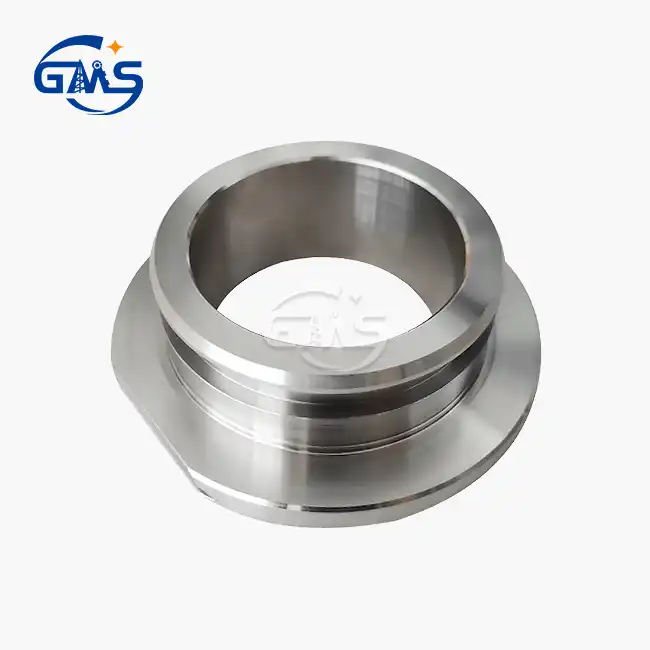
As a last resort, the BUSHING, BAIL PIN 109507 acts as a contact part in the top drive bail assembly. It is placed inside the bail pin. This part of the NOV Varco TDS-11SA and TDS-9SA models handles a lot of rotational loads during drilling operations. It keeps more expensive structural elements from coming into direct contact with metal.
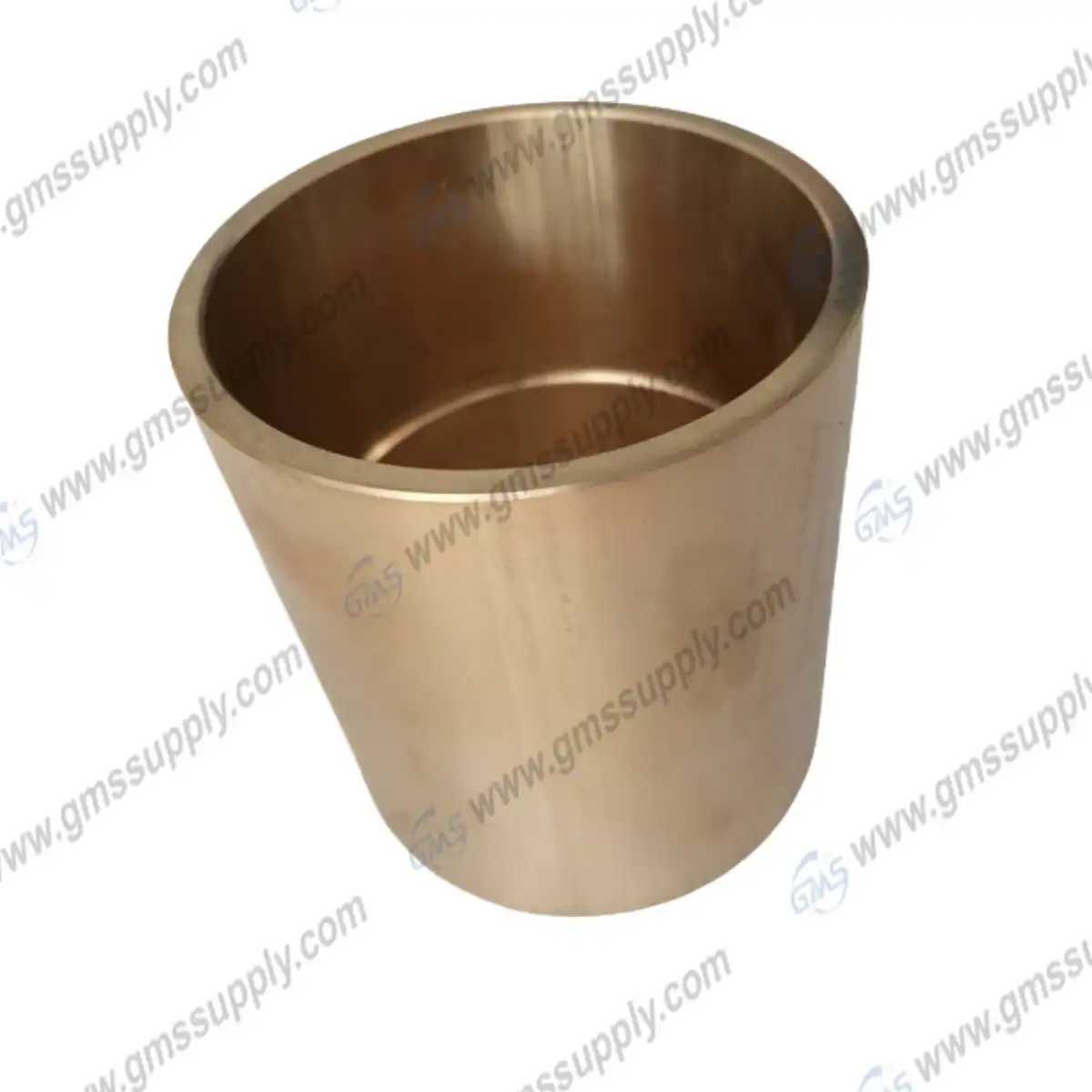

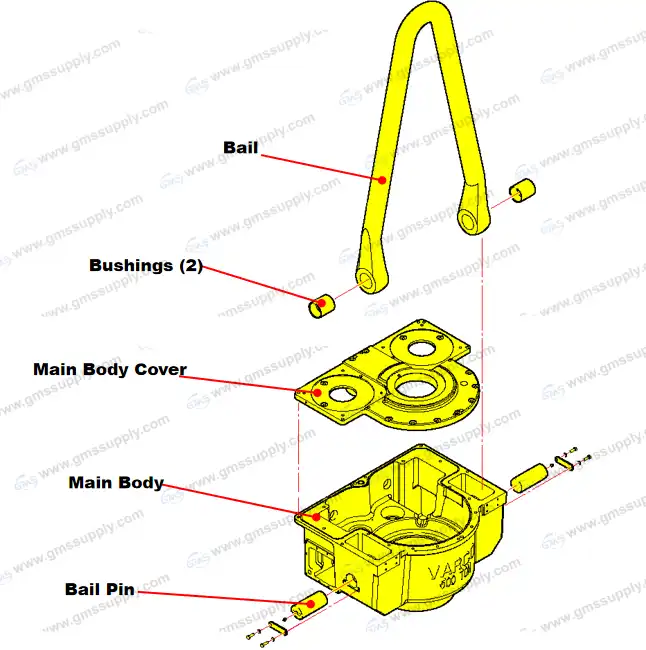
The managed wear point on this part is what makes it so important in oil and gas drills. Instead of letting the bail pin or case break down, which are much more expensive to replace or fix, the bushing concentrates wear on a single, simple component. This way of thinking about design cuts down on Mean Time To Repair and gets rid of the need for complicated machining steps during repair processes.
When making BUSHING, BAIL PIN 109507s at GMS, we use high-grade alloy steel formulas that make them more resistant to wear. Our ISO 9001-certified production process makes sure that every unit is the same size and made of the same material. The BUSHING, BAIL PIN 109507 has to fit into very strict tolerances to keep the right gaps and stop unwanted movement while it's working. This mix between fit and function decides how long the part will work and how reliable your top drive system is as a whole.
Similar bushing designs can also be found in building equipment, hydraulic systems, and industry processing machines, in addition to TDS rigs. But the drilling setting has its own problems, like constant shaking, being exposed to drilling fluids, changing temperatures, and big loads cycling back and forth all the time. Because of these practical stressors, bushings need to be specially designed to last in tough circumstances. We know exactly what material properties and production standards are most important for drilling uses because we've been in the business for ten years. We make sure that every BUSHING, BAIL PIN 109507 meets the performance standards your operations require by strictly controlling quality at every step of the production process, from choosing the raw materials to the final review.
Recognizing the Warning Signs: When Replacement Becomes Essential
To know when to change your NOV TDS11SA bushing, BUSHING, BAIL PIN 109507, you need to be aware of a few different signs that it is about to break. Since we've been selling top drive parts for ten years, we've kept track of the most common signs that something needs to be replaced right away.
One of the first signs that can be heard is a change in the volume. When bushings wear out too far, operators often hear clunking or knocking sounds when the top drive turns or when the load is transferred. These noises are caused by more space between the pin and the BUSHING, BAIL PIN 109507, which lets them hit each other instead of moving smoothly. When the equipment is under a lot of stress, the noise gets louder and may start to beat as it goes through its operating routines.
A closer look at the data shows more. Too much movement or "play" on the side of the bail pin assembly means that the bushing surfaces are worn. During routine checks, maintenance teams can find this by trying to move the pin so that it is not parallel to its axis. Movement that goes beyond what the maker says is okay—usually between 1.5 mm and 3 mm, based on the system—means that it needs to be replaced right away. When fitting new bushings, we suggest writing down the baseline measures so that you have something to compare them to in the future.
Another important sign is metal debris in the greasing system. If you see metal bits, particles, or discoloured grease while greasing or removing lubrication points, it means that the material is breaking down. This junk means the bushing surface is breaking down, which speeds up the wear on the bail pin if it's not fixed right away.
Environmental factors and working activity have a direct effect on when to change something. TDS rigs that work in rough digging settings with a lot of dust, a lot of water, or big changes in temperature wear out their bushings faster. Additionally, rigs that work nonstop with little break go through the wear life of the bushing faster than machines that are only used sometimes.
If you don't change it on time, it will have effects all over the top drive unit. Wear on the bushings starts, then damage to the bail pins, and finally damage to the solid frame. At each step, the financial effects get much worse. Replacing a BUSHING, BAIL PIN 109507 might have little downtime and a modest cost for parts, but fixing a broken housing needs a lot of removal, precise cutting, and long periods of time without the equipment. We've helped customers whose rigs had to be shut down unexpectedly because they didn't change the bushings on time, which caused the whole bail assembly to fail. This caused practical losses that were much higher than the investments in preventative maintenance.
Practical Assessment and Measurement Techniques
To accurately assess the state, you need to follow a set of regular inspection and measurement processes. We suggest setting up regular check times that are in line with how much you use the rig—usually every three to six months for rigs that are always working, or after every 1,000 to 1,500 hours of use.
Before checking the dimensions, the bail pin area needs to be cleaned well to get rid of any drilling fluid, grease, or other waste that has built up. Use measured micrometres or inside callipers to find the inner diameter of the 109507 bushing BUSHING, BAIL PIN 109507 several times along its length and around its circumference. To find the real clearance, compare these measures to the original specs and the bail pin's outside diameter. Instead of a round bore, progressive wear usually makes a hole that is egg-shaped or long.
The measurement of the bushing's outer diameter shows that it hasn't come loose inside its housing hole. Even though interference fits are used to keep bushings from rotating, heavy loads or bad fitting can cause them to move, which wears down the housing hole. By looking at the outside circle and the housing for fretting lines or discolouration, you can tell if the fitting is solid.
Visual inspection goes along with measuring in terms of dimensions. On the surface of the BUSHING, BAIL PIN 109507, look for cutting, galling, heat discolouration, or cracks. Asymmetric wear patterns mean that the part is not aligned correctly, isn't oiled enough, or is under too much side pressure. Uniform wear patterns mean that the part is under normal working stress. If it is possible, testing the surface hardness of the bushing can show if it was overheated or not heated enough during production.
Evaluating the state of the lubrication is also very important. Check the consistency, colour, and amount of contamination of the fat. When greasing breaks down, it becomes thin, discoloured, or contaminated with particles. The new grease looks smooth and uniform. The lubrication channels or holes that were carved into the inside of the bushing should stay clear and work so that grease can spread evenly across the load-bearing surfaces.
Documentation makes useful historical data that can be used to plan repairs ahead of time. By writing down measurements, notes, and working hours, you can set baselines for the wear rate that are specific to your equipment and the way it is used. This information helps make more accurate predictions about replacements and plans for stock. Customers can get measurement templates and inspection plans from us, which help maintenance teams make their inspection processes the same on all of their rigs or operating sites.
Selecting Quality Replacement Components and Reliable Suppliers
When picking out new BUSHING, BAIL PIN 109507s, you have to think about a lot of technical and financial factors that have an effect on the long-term performance and total cost of ownership. The choice of material is the most important thing to think about. For TDS uses, high-grade alloy steel works best.
Precision in measurements is very important. Tight specs are used to make sure that the bushings fit properly inside the housings and that the bail pins have enough room to run. When we do quality control, we use coordinate measuring tools to make sure that the parts we machine meet strict tolerance requirements. This level of accuracy stops premature tightening, unwanted movement, and faster wear patterns.
The quality of the surface finish affects both how well it works at first and how smoothly it runs over time. To keep friction to a minimum during the beginning operation, the inner thickness of the bushing needs to be carefully finished. We get surface finishes of Ra 0.8µm or better on load-bearing surfaces, which helps a good grease film form and lowers the risk of galling when the equipment is first turned on.
Care should be taken when choosing a supplier. Aside from the standard of the product, you should also think about its availability, lead times, and technical support. We keep a large stock of P/N 109507 (GMS No: 11S00343) and other TDS parts, so we can quickly fill orders for planned repair or replacements in case of an emergency. Our big inventory makes you less vulnerable to problems in the supply chain and lets you use just-in-time purchasing methods that keep your storage costs to a minimum.
Certification and proof of quality give you even more peace of mind. Our ISO 9001 certification shows that we are dedicated to consistent manufacturing practices and constant growth.
In important scenarios, the availability of technical help sets different sellers apart. Our tech team helps with installation, fixes problems, and makes sure everything works together. When repair teams need to make quick decisions about replacements or wear patterns that don't make sense, having direct access to technical tools with lots of knowledge helps them do so. We've built long relationships with procurement managers and maintenance supervisors by being quick to respond and focused on finding solutions, especially when machine breakdowns are necessary right away and cost a lot of money.
Real-World Performance: Lessons from the Field
Having worked in the oil and gas drilling business for ten years with Varco top drive overhaul spare parts, we've seen how proactive maintenance plans improve operations and how delaying choices about replacements leads to costs that could have been avoided.
Instead of watching for signs of failure, one drilling contractor with multiple TDS-11SA-equipped rigs set up a structured BUSHING, BAIL PIN 109507 replacement routine based on working hour limits. Over the course of 18 months, they cut down on unexpected top drive failures by 73% by changing bail pin bushings every 1,200 hours, no matter how good the condition looked. The planned maintenance routine helped make better use of resources, cut down on the cost of getting emergency parts quickly, and increased the rig's total availability. Their maintenance records showed that bushings that were replaced proactively showed wear but stayed within acceptable limits. This proved that the gap between replacements stopped the wear from getting worse and eventually leading to failure.
On the other hand, one operator used a "run-to-failure" strategy, meaning they only replaced bushings when they were clearly broken. At first, this plan seemed like a good way to save money because it would not require "premature" repairs. Their repair logs, on the other hand, showed that three times, old bushings damaged bail pins and had to be replaced along with the bushings. In one case, the housing bore was damaged, and repairs had to be made with precise machinery during a rig move. This added five days to the downtime. For two years, the direct fix costs and lost work time added up to more than the cost of replacing all the bushings in their fleet on a regular basis.
Extreme temperature changes in some drilling areas sped up bushing wear by a lot. When operations took place in places where temperatures stayed high for a long time, the lubrication broke down, which shortened the useful life of the bushings. The maintenance teams fixed this by cutting down on the time between inspections and putting in place better grease standards that were more stable at higher temperatures. This change brought the bushings' projected lifespan back into the normal range and stopped them from breaking too soon.
These events serve to reinforce a number of important ideas. Reactive repair costs more than planned replacement based on operating data. Standard upkeep times need to be changed based on the environment. Unpredictability in failure is reduced by using quality parts from dependable sources that follow uniform manufacturing standards. Data-driven maintenance optimisation starts with keeping records and measuring things.
We've also learned that working together with suppliers is a direct way to make operations run smoothly. Customers who work with us early on in the planning process for repair can see what we have in stock, get expert advice, and choose how to receive it. When drilling plans change or machine configurations change, responsive suppliers change to support operating goals instead of making it harder to buy things.
Conclusion
Manage the replacement of BUSHING, BAIL PIN 109507s on TDS rigs well by inspecting them regularly, noticing signs of wear, and acting quickly before the damage gets so bad that it breaks the whole thing. The BUSHING, BAIL PIN 109507 (GMS No: 11S00343) is an important safety feature in NOV Varco TDS-11SA and TDS-9SA top drive systems. It absorbs operating stress that would otherwise damage costly structural parts. Maintenance teams can see how wear is progressing and plan replacements for planned breaks by measuring dimensions, looking at things visually, and keeping an eye on greasing on a regular basis. Choosing high-quality parts that are made to exact specs and working with suppliers who keep stock on hand and offer expert support can lower the total cost of ownership while increasing operating reliability.
FAQ
1. How often should the BUSHING, BAIL PIN 109507s on TDS rigs be checked?
How often you inspect relies on how busy your operations are and what the surroundings are like. Every three to six months or every 1,000 to 1,500 hours of operation, rigs that are always working should be inspected. Equipment that is in difficult circumstances, like high dust, high wetness, or extreme temperature changes, needs to be checked more often. Measurements that are written down during each check set baselines for wear rates that are specific to your operating profile.
2. Is it possible to change the BUSHING, BAIL PIN 109507 without taking off the whole bail pin assembly?
Different types of top drives have different replacement methods, but for most, the bail pin assembly has to be taken apart at least partially in order to remove the old bushing and install the new one. Most of the time, interference fits are used to place bushings, which requires special tools or thermal methods. We suggest that you follow the repair instructions provided by the maker and talk to experienced support staff before replacing anything.
3. How long do you think good BUSHING, BAIL PIN 109507s will last?
High-quality BUSHING, BAIL PIN 109507s usually last between 12 and 24 months under normal working conditions and with the right amount of upkeep and lubrication. Actual lifespan is affected by many factors, such as how hard the machine is used, how often it is loaded and unloaded, its exposure to the environment, and how consistently it is oiled. Setting standard wear rates through regular measurements helps you make more accurate replacement predictions for the tools and processes you use.
Partner with GMS for Reliable Bail Pin Bushing Supply
To keep all of your TDS rigs running at their best, you need to be able to get top drive parts that are made to strict standards. GMS is a reliable BUSHING, BAIL PIN 109507 source whose production is ISO 9001 approved. They keep a large stock of P/N 109507 bushings for NOV Varco TDS-11SA and TDS-9SA systems. We've been helping oil and gas drilling operations for ten years, so we know how important it is for parts to work reliably and how quickly your repair plans need to be followed. We have short lead times because we keep a lot of stock on hand, flexible options that can be changed to fit your needs, and quick technical help when you need it. You can talk to our team at sales@gmssupply.com about your BUSHING,BAIL PIN 109507 needs, get detailed details, or place orders that will keep your business running smoothly. Our name is based on providing consistent quality and reliable service that lowers your running costs and increases the amount of time your equipment is available for use.
References
1. American Petroleum Institute. (2019). Recommended Practices for Maintenance of Top Drive Systems in Drilling Operations. API Publishing Services.
2. International Organization for Standardization. (2018). ISO 286-1:2018 Geometrical Product Specifications - ISO Code System for Tolerances on Linear Sizes. ISO Standards Catalogue.
3. Society of Tribologists and Lubrication Engineers. (2020). Bearing Technology and Lubrication Practices for Industrial Applications. STLE Technical Publications.
4. National Association of Corrosion Engineers. (2021). Materials Selection and Protective Coatings for Oil Field Equipment. NACE International Publication.
5. Machinery Lubrication Magazine. (2022). Predictive Maintenance Strategies for Heavy Industrial Equipment Components. Noria Corporation Technical Library.
6. Drilling Contractor Magazine. (2023). Top Drive Maintenance Best Practices and Cost Optimization. International Association of Drilling Contractors Industry Reports.
Learn about our latest products and discounts through SMS or email