- English
- French
- German
- Portuguese
- Spanish
- Russian
- Japanese
- Korean
- Arabic
- Greek
- German
- Turkish
- Italian
- Danish
- Romanian
- Indonesian
- Czech
- Afrikaans
- Swedish
- Polish
- Basque
- Catalan
- Esperanto
- Hindi
- Lao
- Albanian
- Amharic
- Armenian
- Azerbaijani
- Belarusian
- Bengali
- Bosnian
- Bulgarian
- Cebuano
- Chichewa
- Corsican
- Croatian
- Dutch
- Estonian
- Filipino
- Finnish
- Frisian
- Galician
- Georgian
- Gujarati
- Haitian
- Hausa
- Hawaiian
- Hebrew
- Hmong
- Hungarian
- Icelandic
- Igbo
- Javanese
- Kannada
- Kazakh
- Khmer
- Kurdish
- Kyrgyz
- Latin
- Latvian
- Lithuanian
- Luxembou..
- Macedonian
- Malagasy
- Malay
- Malayalam
- Maltese
- Maori
- Marathi
- Mongolian
- Burmese
- Nepali
- Norwegian
- Pashto
- Persian
- Punjabi
- Serbian
- Sesotho
- Sinhala
- Slovak
- Slovenian
- Somali
- Samoan
- Scots Gaelic
- Shona
- Sindhi
- Sundanese
- Swahili
- Tajik
- Tamil
- Telugu
- Thai
- Ukrainian
- Urdu
- Uzbek
- Vietnamese
- Welsh
- Xhosa
- Yiddish
- Yoruba
- Zulu
Why M10117 Cylindrical Roller Bearing Matters in Heavy Equipment?
The Bearing M10117 is an important part of Canrig's top drive systems and has a direct effect on how regularly your equipment works or whether it will breaks down for no reason very often. This cylindrical roller bearing is more than just a mechanical part, it's the important contact that keeps machinery turning, lowers friction during drilling movement, and keeps spinning accurately in some of the roughest working conditions. Figuring out why this particular arrangement of Bearing M10117 is important can mean the difference between planned repair and having to shut down in an emergency.
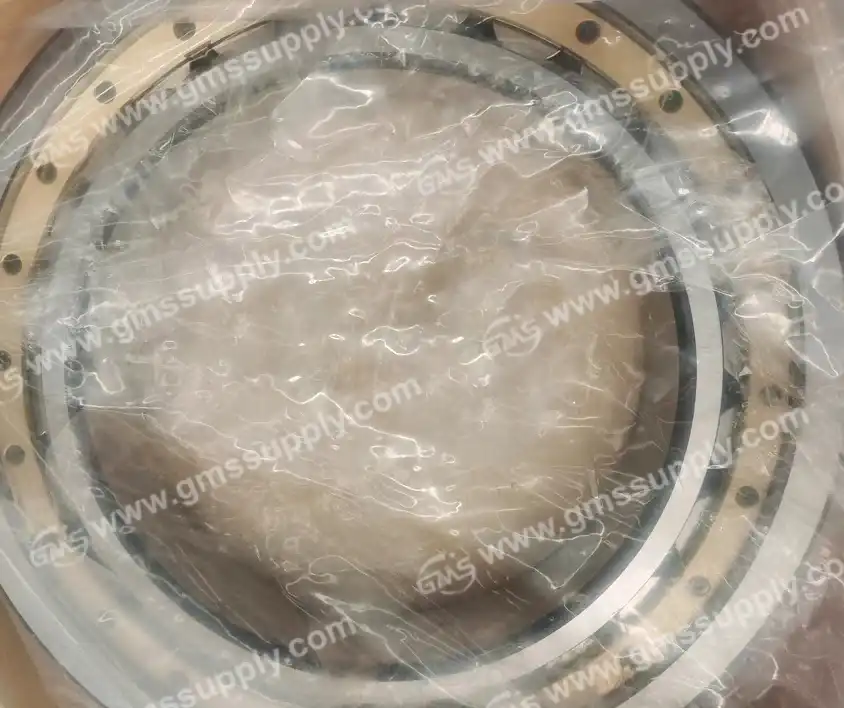
Understanding the M10117 Cylindrical Roller Bearing Design
One thing that makes the Bearing M10117 stand out is that it was designed to work with Canrig Top Drive models 8050, 8035, and 6027. It has a large load-bearing surface area that is needed to handle the rotary forces that are created during drilling operations. The cylindrical roller form spreads loads across line contact instead of point contact, which makes it much better at handling rotational loads than ball bearings. The makeup of the material is very important for how long a bearing lasts. High-carbon chromium steel gives the structure the hardness it needs to keep the surface from deforming under constant load cycles. The roller and cage joint design keeps the exact distance between rolling elements and reduces internal friction, which keeps heat production low during long periods of operation. This thermal management is especially important for top drive systems, where the combination of atmospheric temperatures and working heat makes for tough thermal conditions. Another important parameter is the temperature range. Within the temperature ranges found in oil and gas drilling settings, the Bearing M10117 keeps its shape and material properties. These temperature ranges usually go from below zero in offshore areas to high temperatures caused by friction and outside weather conditions. Specifications for load capacity are directly related to how reliable the equipment is. The Bearing M10117 can handle both static loads when the rig is not in use and dynamic loads when it is. During active drilling, shock loads from bit contact and torque changes cause different stress patterns. This two-in-one feature makes sure that the bearing keeps its shape across the entire operating range, rather than just working best in one loading situation.
Critical Role in Top Drive System Applications
One of the toughest jobs for bearings in industrial gear is the top drive systems used in oil and gas drilling. The Bearing M10117 is an important part of the Canrig Top Drive models 8050, 8035, and 6027, as it holds up the main spinning assembly that sends force to the drill string. During drilling, this bearing handles axial thrust loads from downhole pressure, radial loads from pipe handling, and rotational forces from spinning all at the same time, which is often done while the drilling rig is vibrating from bit contact hundreds of feet below the surface. In a top drive system, the whole drilling process stops when a bearing breaks. For replacement, workers will have to take down the whole rig, possibly pull the drill pipe, and get expert staff ready. These tasks can take anywhere from 12 to 48 hours, based on how the rig is set up and how quickly you can get the parts. Canrig's engineering models show that the M10117 has to fit the housing bore measurements, shaft journal specs, and axial positioning requirements. This precise fit makes sure that the load is evenly spread around the whole diameter of the bearing, rather than concentrating stress in one area, which speeds up wear. Accuracy in measurements within narrow tolerances stops bearings from moving inside the case, which is important for keeping the gear mesh in place and the seal working well. Standardization around tried-and-true bearing specs helps drilling companies that use more than one rig, mainly the Canrig 8050, 8035, and 6027 types, which lets inventory be consolidated, which means that buying teams don't have to keep track of as many unique part numbers. Standardization makes it easier to plan upkeep, train employees, and get emergency parts. These are all practical issues that affect working efficiency in ways other than the bearing's mechanical function.
Strategic Procurement Considerations for Drilling Operations
When choosing where to get important top drive parts like the Bearing M10117, you have to think about quality guarantee, supply stability, and the total cost of ownership. Verification of quality starts with proof of approval. With ISO 9001 certification, you can be sure that the whole process of making something follows written quality control methods, from checking the raw materials to making sure the end measurements are correct. This approval doesn't promise that the bearing will work, but it does show that the manufacturing process is consistent, which is very important when parts need to work reliably across production runs. When planning a contract, lead time often ends up being the deciding factor. Long periods of machine downtime while waiting for parts to arrive are not possible for drilling activities. Suppliers who keep goods in stock offer two-week shipping windows, which let companies respond quickly to both planned repair and unplanned breakdowns. Drilling workers who work in rural areas will benefit the most from this inventory access because faster shipping costs a lot and still takes days to arrive. Those who place a lot of orders usually get better prices, but this has to be weighed against the cost of keeping supplies and the chance that the specifications will change. When drilling companies have fleets of similar equipment, they can explain bigger orders on a cost-effective level by spreading their inventory across multiple operating sites to make it easier for customers to get to and save money at the same time. Authentication is still a problem in the supply chain for the Bearing M10117. Sometimes fake bearings get into the distribution lines. They look a lot like real ones, but they are made with lower-quality materials and less-than-perfect methods. Some of the parts that are checked during verification are the uniformity of the packaging, making sure that the markings on the parts match the manufacturer's standards, and asking for mill certificates that show the material makeup and heat treatment processes.
Installation and Maintenance Protocols
Service life estimates are directly affected by how well the bearings are installed. Because the Bearing M10117 is very precise in its measurements, it needs clean mounting surfaces, proper interference fits, and controlled heating during installation. When installing, contamination from dirt, metal bits, or the wrong kind of lubricants can cause the bearing to fail early, even if it meets all quality standards. Thermal expansion methods are often used in mounting processes. When you heat the bearing, the inner ring gets bigger, which lets it slide over the shaft journal without using too much force, which could damage the cage sections or rolling surfaces. How evenly loads move from spinning shafts to fixed housings is affected by the finish on the mounting surfaces. High spots are caused by rust or damage from a previous installation that will increase stress, which could lead to bearing creep or fretting corrosion. It doesn't take long to clean these areas and check the limits for dimensions compared to having to repeat the installation steps after they failed early. The type of lubricant used and how it is applied affect both the life of the bearings and how often they need to be serviced. In top drive uses, the M10117 usually works with grease lubrication, which is chosen because it stays in place even when it vibrates and keeps out contaminants. When picking a grease, you have to find a mix between the right viscosity for the temperature where it will be used and the ease of pumping at start-up. If you grease something too much, it causes too much internal friction and heat, but if you grease it too little, the wheels and raceways can touch each other. Regular maintenance checks should check the temperature of the bearings, the patterns of vibration, and the state of the lubrication. Vibration analysis can find small problems early on, before they become big problems that need to be fixed right away. This way, the parts can be replaced during regular maintenance, instead of having to be shut down for repairs. Certain types of failure are linked to strange noise patterns like grinding, clicking, or rumbling. Grinding means that dirt and dust are wearing down bearing surfaces. If you hear clicking, it could mean that the rollers or raceways are broken. Rumbling usually happens when there isn't enough grease, which makes friction worse. Figuring out the pattern of symptoms helps with fixing the problem, whether it's adding more oil, getting rid of the source of the contamination, or replacing the Bearing M10117 before it causes more damage.
Conclusion
The Bearing M10117 is more than just a common part used in oil and gas drills, it protects system operators against costly downtime in top drive systems. It gives the Canrig 8050, 8035, and 6027 types the radial load capacity and thermal stability they need. This directly supports drilling consistency and equipment reliability. To keep performance standards high while lowering total ownership costs, strategic buying strikes a balance between quality certification, inventory access, and technical help from suppliers. Installing and maintaining this Bearing M10117 correctly can make it last longer, protecting both the investment in the bearing and the bigger equipment it supports.
FAQ
Q1: What material composition does the M10117 bearing use?
High strength alloy steel is used to make the M10117, which gives it the strength and wear protection it needs to work continuously under heavy radial loads. The makeup of this material gives it the toughness needed for tough jobs while keeping its shape over a wide range of temperatures commonly found in oil and gas drilling sites.
Q2: How does lead time vary for the M10117 bearing?
If the Bearing M10117 is bought from sources that keep inventory on hand, it can be delivered within two weeks. Drilling operations benefit from buying from sources that already have a lot of parts in stock. This lowers the risk of downtime during planned repair or when parts break down without warning.
Q3: Can the M10117 bearing fit non-Canrig top drive systems?
The M10117 fits perfectly with Canrig Top Drive types 8050, 8035, and 6027 thanks to its size and cylindrical roller design. Even though these measurements might fit other things, they need to be properly applied by making sure that the load ratings, tolerances, and mounting arrangements meet the engineering needs of the target system. If you use bearings outside of the conditions they were made for, they could fail early and damage your equipment.
Partner with GMS for Reliable Bearing M10117 Supply
Parts for oil and gas drilling activities need to be delivered on time and function perfectly. GMS Supply keeps the Bearing M10117 in stock, so you can get it in two weeks to meet your maintenance plans or immediate replacement needs. Our quality control procedures, which are ISO 9001-certified, make sure that every bearing meets the material and size requirements needed for Canrig top drive compatibility. Get in touch with our sales team at sales@gmssupply.com to talk about your bearing needs, whether you need to repair a single unit or place bulk orders as a trusted Bearing M10117 source for multiple rigs. We give procurement managers and repair engineers the paperwork and application help they need to make smart choices about where to get quality top drive spare parts.
References
1. American Petroleum Institute. "Specification for Top Drives." API Specification 8C, Eighth Edition, 2018.
2. Harris, Tedric A. and Kotzalas, Michael N. "Rolling Bearing Analysis: Essential Concepts of Bearing Technology." CRC Press, Fifth Edition, 2006.
3. International Organization for Standardization. "Rolling Bearings - Dynamic Load Ratings and Rating Life." ISO 281:2007, 2007.
4. National Oilwell Varco. "Top Drive Systems Maintenance and Operations Manual." Technical Documentation Series, 2019.
5. Society of Tribologists and Lubrication Engineers. "Bearing Lubrication and Maintenance Guidelines for Industrial Applications." STLE Technical Report, 2020.
6. Timken Company. "Bearing Damage Analysis with Lubrication Reference Guide." Engineering Technical Manual, 2017.

_1761873555778.webp)
Learn about our latest products and discounts through SMS or email