- English
- French
- German
- Portuguese
- Spanish
- Russian
- Japanese
- Korean
- Arabic
- Greek
- German
- Turkish
- Italian
- Danish
- Romanian
- Indonesian
- Czech
- Afrikaans
- Swedish
- Polish
- Basque
- Catalan
- Esperanto
- Hindi
- Lao
- Albanian
- Amharic
- Armenian
- Azerbaijani
- Belarusian
- Bengali
- Bosnian
- Bulgarian
- Cebuano
- Chichewa
- Corsican
- Croatian
- Dutch
- Estonian
- Filipino
- Finnish
- Frisian
- Galician
- Georgian
- Gujarati
- Haitian
- Hausa
- Hawaiian
- Hebrew
- Hmong
- Hungarian
- Icelandic
- Igbo
- Javanese
- Kannada
- Kazakh
- Khmer
- Kurdish
- Kyrgyz
- Latin
- Latvian
- Lithuanian
- Luxembou..
- Macedonian
- Malagasy
- Malay
- Malayalam
- Maltese
- Maori
- Marathi
- Mongolian
- Burmese
- Nepali
- Norwegian
- Pashto
- Persian
- Punjabi
- Serbian
- Sesotho
- Sinhala
- Slovak
- Slovenian
- Somali
- Samoan
- Scots Gaelic
- Shona
- Sindhi
- Sundanese
- Swahili
- Tajik
- Tamil
- Telugu
- Thai
- Ukrainian
- Urdu
- Uzbek
- Vietnamese
- Welsh
- Xhosa
- Yiddish
- Yoruba
- Zulu
Why Stabbing Bell 829-15-0 Is Essential in Drilling Ops
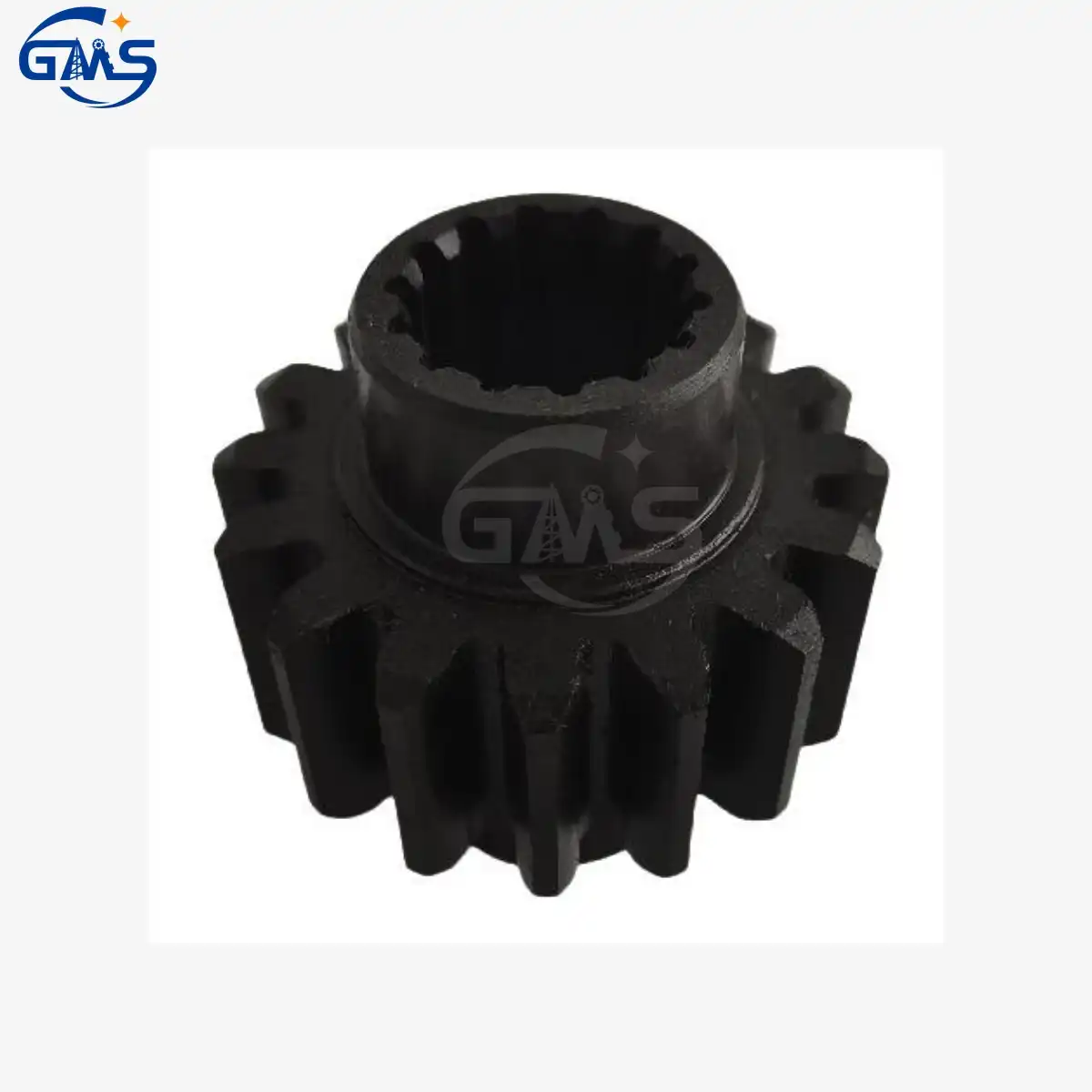
The Stabbing Bell 829-15-0 is an important safety feature in top drive for oil and gas drilling. Its job is to guide and match drill pipe links and keep expensive thread damage from happening. This carefully designed stabbing guide plug cushions impact forces during the stabbing process, keeping the link strong even when conditions are tough. The Stabbing Bell 829-15-0 directly affects drilling efficiency, equipment longevity, and overall operational safety by lowering alignment errors and protecting premium threaded connections.
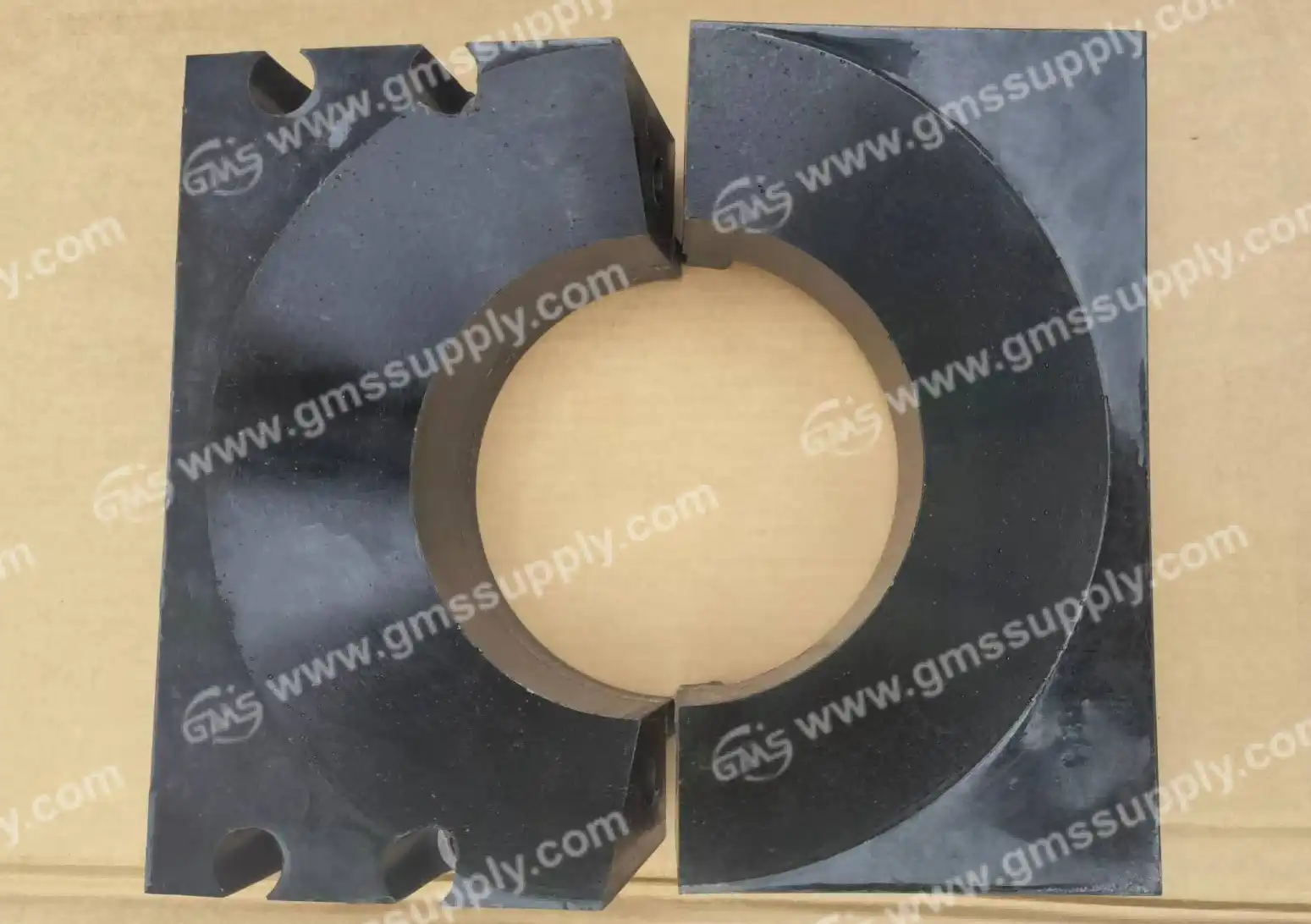
Understanding the Stabbing Bell 829-15-0 and Its Critical Function
Learning about the Stabbing Bell 829-15-0 and how it works is very important. When it comes to oil and gas drilling, each part of the top drive system is important for keeping things safe and running smoothly. Part number 829-15-0 for the 6.70 ID stabbing bell is the first line of defense against thread damage during pipe hookups, which is one of the most common and expensive problems on the rig floor. This part fits into the stabbing guide assembly of top drive systems and works as a padded alignment tool there. The inner width of 6.70 inches is carefully designed to fit certain types of casing and tubes used in oil and gas drilling. The fact that this part works with most big top drive types makes it very useful. The 829-15-0 specification works perfectly with the Canrig 8035, 8050, and 6027, which are used in many oil and gas drilling activities. Because of this standard interchangeability, procurement teams can keep the same supplies on hand for all the different types of rigs.
Addressing Real Operational Challenges in Oil and Gas Drilling Operations
There are constant problems with oil and gas drilling, such as thread damage is still one of the main reasons why work doesn't get done. According to data from the industry, problems with connections can cause 15 to 20 percent of unplanned downtime in busy oil and gas drilling projects. When threads are damaged during stabbing, a chain of events happens: connections have to be broken, damaged pipe parts have to be changed or fixed, and work has to stop until the problem is fixed in oil and gas drilling. The Stabbing Bell 829-15-0 solves these problems by making smart engineering choices. Pipes that aren't lined up right during stabbing operations put rig workers in dangerous situations. These risks are lower with the stabbing bell because it provides uniform mechanical alignment that requires less adjustment by hand in drilling operations. When quality stabbing bells are used, gains in operational effectiveness can be seen in oil and gas drilling. These time savings add up over the course of an oil and gas drilling program's hundreds or thousands of connections, resulting in real cost savings and better oil and gas drilling success measures.
Sourcing Quality Stabbing Bells: What Procurement Teams Need to Know
There's more to choosing the right source for Stabbing Bell 829-15-0 than just comparing prices. People who work in procurement in the oil and gas industry know that the dependability of parts has a direct effect on the continuation of drilling operations. Standards for product quality are the basis for judging a seller. When parts are made with ISO 9001 approval, quality control is recorded throughout the whole production process. This approval shows that the company consistently follows the rules for tests, material specs, and size tolerances. Dimensional precision is very important—the inner diameter of 6.70 inches needs to stay within tight limits, usually +/- 0.05 inches, so that it fits properly in guide housings without binding or having too much movement in oil and gas drilling systems. Inventory availability and lead times have a big effect on choices about what to buy for oil and gas drilling. Suppliers who keep a lot of stock on hand can quickly fill orders, which helps with both planned repair and new needs that come up out of the blue in oil and gas drilling.
Maximizing Performance and Service Life of Your Stabbing Bell Investment
The performance and life of the Stabbing Bell 829-15-0 in drilling operations are directly related to how well they are installed and maintained. To make sure the right placement and safe mounting, installation methods should follow a set of rules for oil and gas drilling. The stabbing bell needs to fit all the way inside the guide box and have all of its locking mechanisms properly engaged so that it doesn't move while it's working in oil and gas drilling. Dimensional checks show that the bell's upper shape and the housing's retention device are compatible. Cuts, gouges, or deformations that make it less able to guide the pipe correctly can be seen. The frequency of regular inspections depends on how busy the oil and gas drilling operations are, but a weekly check is enough to give most oil and gas drilling programs a good level of confidence. Keeping track of the number of connections helps operating teams figure out when replacements will be needed and keep enough spares on hand for oil and gas drilling. Performance improvement is more than just maintaining individual parts; it also takes into account the whole system in oil and gas drilling. As long as the whole stabbing guide system is lined up correctly, the forces will be spread out evenly across the bell's surface in oil and gas drilling. This system's method improves safety and makes tools last longer in oil and gas drilling operations.
Conclusion
In top drive systems, the Stabbing Bell 829-15-0 is more than just a simple wear part. As an important way to protect expensive drill pipe, make the rig safer for workers, and improve operating efficiency, it has a measurable effect on oil and gas drilling performance. When procurement professionals understand the strategic value of good stabbing bells, they make investment choices that cut down on idle time, increase the useful life of equipment, and lower the total cost of oil and gas drilling. By choosing Stabbing Bell 829-15-0 providers whose products are of good quality, have enough stock, and offer quick service, you can build relationships that help all of your oil and gas drilling programs run smoothly.
FAQ
1. What determines when to replace a stabbing bell during drilling operations?
Visual inspection is the main way to decide if something needs to be replaced. Connection numbers between 500 and 1,000 usually mean that the service is almost over, but the real length of time it lasts varies on how it is used.
2. Does the stabbing bell affect torque readings during connection make-up?
The Stabbing Bell 829-15-0 does not directly affect torque data because it is an inactive guide part that is not connected to the torque shoulder. But extreme misalignment that makes the pipe and bell rub against each other can cause fake torque spikes that show that the alignment needs to be fixed.
3. Can the 829-15-0 specification work with automated pipe handling systems?
This part is perfect for automated rig floor tasks where robotic systems need to be aligned in the same way every time during connection processes because its dimensions are standard and it has mechanical guidance qualities.
GMS Supply: Your Reliable Partner for Top Drive Components
Drilling companies gain a competitive edge through reliable partnerships. GMS has supported oil and gas professionals for over ten years, providing ISO 9001–certified Stabbing Bell 829-15-0 parts that match OEM performance. Each unit undergoes strict testing for hardness, accuracy, and durability to ensure stable operations. We offer fast response times, expert guidance for top drive systems, and compatibility support for Canrig 8035, 8050, and 6027 models. With stocked inventory, we meet urgent and planned needs efficiently. Flexible pricing, combined shipping, and global logistics reduce costs. Ongoing after-sales support ensures long-term reliability, helping you maintain performance and meet project deadlines. Email our team at sales@gmssupply.com to talk about your particular Stabbing Bell 829-15-0 needs. We'll give you thorough specs, pricing information, and delivery plans that are specific to your needs.
References
1. American Petroleum Institute. (2019). Recommended Practice for Top Drive Systems. API RP 8B. Washington, DC: API Publishing Services.
2. Chambers, R.L. & Thompson, P.D. (2021). Drill String Component Reliability in Modern Drilling Operations. Journal of Petroleum Technology, 73(4), 45-58.
3. International Organization for Standardization. (2020). Quality Management Systems - Requirements for Oil and Gas Drilling Equipment. ISO 9001:2015. Geneva: ISO Standards Catalogue.
4. Mitchell, B.J. & Waring, S.C. (2022). Thread Protection and Connection Integrity in Harsh Drilling Environments. SPE Drilling & Completion, 37(2), 112-125.
5. National Institute for Occupational Safety and Health. (2018). Safety Guidelines for Drilling Rig Floor Operations. NIOSH Publication 2018-142. Cincinnati, OH: DHHS Publications.
6. Weatherford International. (2023). Top Drive Systems: Component Selection and Maintenance Best Practices. Technical Manual Series TD-500. Houston, TX: Weatherford Technical Publications.
Learn about our latest products and discounts through SMS or email